



 For all latest news, follow the Daily Sun's Google News channel.


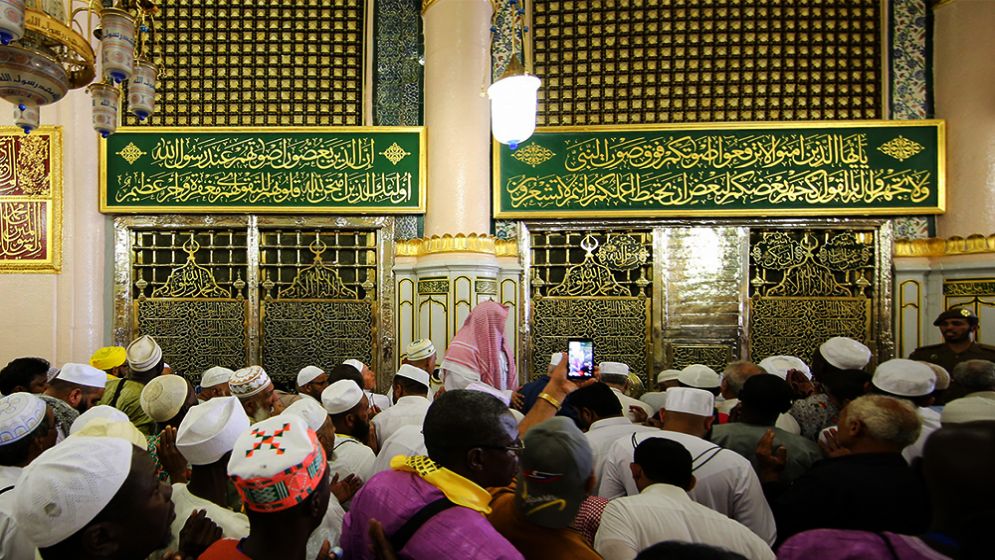
The Tomb of Prophet Muhammad (Sallallahu Alaihi Wasallam). Photo : Collected
The Prophet Muhammad (Sallallahu Alaihi Wasallam), the last messenger of Islam, was born in the month of Rabi al-Awwal and illuminated the world with his arrival. He also passed away in the same month. Throughout his life, he left an exemplary model for the Muslim community, and following that model remains one of the central responsibilities of Muslims.
When Was Prophet Muhammad (Sallallahu Alaihi Wasallam) Born?
The Prophet Muhammad (Sallallahu Alaihi Wasallam) was born on a Monday at dawn in Makkah, in the house of Abu Talib. His birth on a Monday is clearly mentioned in an authentic hadith.
Abu Qatadah (RA) reported that when the Prophet (Sallallahu Alaihi Wasallam) was asked about fasting on Monday, he said: “That is the day on which I was born and the day on which revelation was sent down to me.” (Sahih Muslim, Hadith 2807)
Date Of His Birth
According to one view regarded as authentic, the Prophet (Sallallahu Alaihi Wasallam) was born on 8 Rabi al-Awwal. This view has been attributed to Abdullah ibn Abbas (RA) and Jubayr ibn Mut'im (RA). However, the widely known view places his birth on 12 Rabi al-Awwal. (Sirat al-Mustafa, Vol. 1, p. 51)
Month And Year Of His Birth
The Prophet (PBUH) was born in Rabi al-Awwal. Before the Hijri calendar was introduced, Arabs often dated historical events by referring to major incidents.
One such event was the Year of the Elephant, when Abraha, the ruler of Yemen appointed by the King of Abyssinia, marched towards Makkah with an army that included elephants with the intention of destroying the Kaaba. According to the Quran, Allah destroyed the invading army through birds carrying stones.
A separate chapter of the Quran, Surah Al-Fil, was revealed in connection with this event. The Prophet (PBUH) was born in April 570 CE, according to the account presented here.
Did The Prophet Celebrate His Birthday?
The birth of the Prophet (Sallallahu Alaihi Wasallam) was naturally a source of joy for his relatives and others around him. According to traditional accounts, when Abu Lahab's servant, Thuwaybah, brought him the news that his nephew had been born, Abu Lahab was so pleased that he set her free.
While it is natural for family members to rejoice at the birth of a child, neither the Prophet (Sallallahu Alaihi Wasallam) himself nor his Companions are reported to have celebrated his birthday as an annual occasion.
Instead, the Prophet (Sallallahu Alaihi Wasallam) expressed gratitude to Allah by fasting on Mondays. He explained that Monday was the day on which he was born and the day on which revelation was first sent down to him.
Thus, the emphasis was not on marking his birth with an annual celebration, but on expressing gratitude and following his example.
The Prophet's Death
The Prophet Muhammad (PBUH) passed away on a Monday in Rabi al-Awwal in 11 AH. The most widely known view places his death on 12 Rabi al-Awwal, although other opinions give 1 or 2 Rabi al-Awwal as the date.
According to Fath al-Bari, a renowned commentary on Sahih al-Bukhari, the view that he passed away on 2 Rabi al-Awwal has been given preference. (Sirat al-Mustafa, Vol. 3, p. 172)
What Should Muslims Do?
Birth and death are part of the life of every human being, including the prophets and messengers. What matters is how a person lives and whether they fulfil the purpose for which they were created.
The Prophet Muhammad (Sallallahu Alaihi Wasallam) came with a mission and spent his life establishing and demonstrating an ideal way of life. For Muslims, the essential responsibility is to follow that example.
The Quran says: “Nor does he speak from his own desire. It is only a revelation sent down to him.” (Surah An-Najm, verses 3–4)
The lives of the Prophet's relatives also demonstrate the importance of accepting and following his message. Although Abu Talib and Abu Lahab were close relatives of the Prophet (Sallallahu Alaihi Wasallam), their relationship with him did not by itself bring them salvation. Surah Al-Masad was revealed concerning Abu Lahab and his wife.
By contrast, Zayd ibn Harithah (RA), who had once been enslaved, attained a distinguished position through his devotion to the Prophet's teachings. His name is explicitly mentioned in the Quran in Surah Al-Ahzab, verse 37.
The lesson, therefore, is clear: Muslims should strive to become worthy followers of the Prophet Muhammad (PBUH) by incorporating his teachings and example into their lives. Following his character, conduct and guidance is the enduring way to honour his legacy and seek success in this world and the Hereafter.
........................................
The writer is a Senior Sub-Editor Md Shahadat Hossain at Daily Sun. He can be reached at [email protected]