





 For all latest news, follow the Daily Sun's Google News channel.


How Islamic Law Governs Transfer Of Property Ownership
Md Abdul Majid Molla
Published: 14 Sep 2026, 09:18 AM
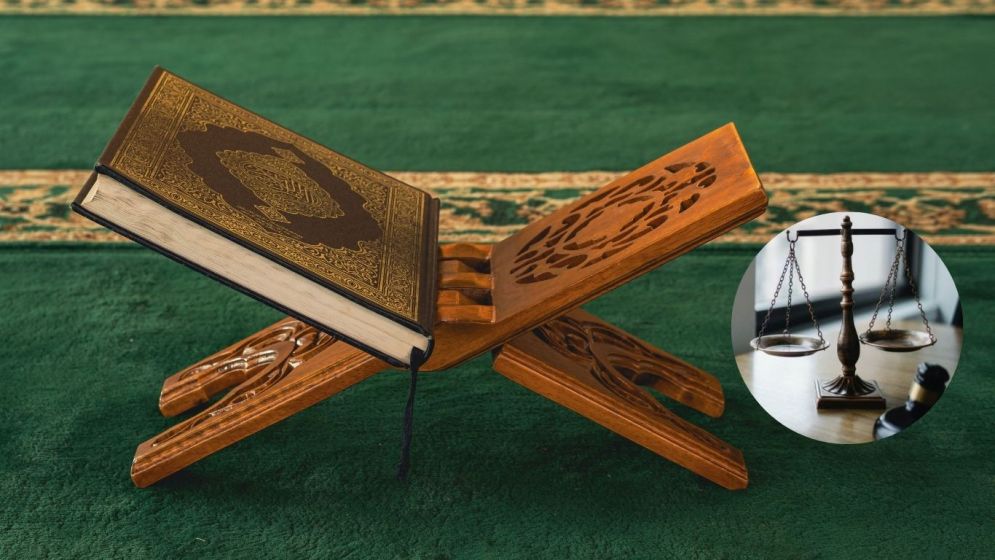
Islamic Shariah sets out clear principles governing not only the acquisition of property but also the transfer of its ownership. Depending on whether the transfer takes place during the owner’s lifetime or after death, Shariah recognises several distinct methods of transferring property. Islamic jurisprudence broadly divides the transfer of ownership into two categories — during one’s lifetime and after death.
According to Tuhfat al-Fuqaha, a sale transfers ownership of an asset during the owner’s lifetime in exchange for consideration, while a gift and charity transfer ownership without consideration. A loan grants another person the right to benefit from an asset, while a bequest transfers ownership or benefit after the owner’s death without consideration. (Tuhfat al-Fuqaha, 3/283)
Transfers during a person’s lifetime
Sale
A sale is the transfer of ownership of property to another person in exchange for a price or other consideration. Trade and commerce are permissible under Islamic law.
Allah the Almighty says: “Allah has permitted trade and forbidden interest.” (Surah Al-Baqarah, 2:275)
Islamic jurists have identified seven basic conditions for a valid sale. Both parties must consent to the transaction and be legally competent to enter into a contract. The property must be lawful and owned by the seller, or the seller must have permission from its owner to sell it.
The buyer and seller must also have adequate knowledge of the property, including its identity, characteristics, qualities and quantity. The price must be clearly determined, and the property must be capable of being transferred. (Al-Mawsu'ah Al-Fiqhiyyah, 2/387)
Hiba or gift
Hiba refers to transferring ownership of property to another person during the donor’s lifetime without any consideration.
According to the Hanafi school of jurisprudence, a valid hiba requires an offer by the donor and acceptance by the recipient. The donor must have lawful authority over the property and must be legally competent to conduct financial transactions.
The property being gifted must exist, have financial value and be privately owned. It must not be undivided jointly owned property or public property accessible to everyone.
Most importantly, the recipient must take possession and control of the gifted property. Without such possession, known as qabdh, the gift is not considered complete. (Al-Fiqh al-Islami wa Adillatuhu, p. 3,871)
Sadaqah or charity
Sadaqah means giving something to another person for the sake of seeking the pleasure of Allah.
Although both hiba and sadaqah involve giving property to others, they differ in their purpose and legal implications. Sadaqah is generally intended to earn reward from Allah and is commonly given to the poor and needy. A hiba, however, may be given to either a rich or poor person and does not necessarily have to be motivated by the expectation of reward in the Hereafter.
While hiba is generally voluntary, certain forms of sadaqah, including zakat and sadaqat al-fitr, are obligatory. Sadaqah is an act of worship, whereas hiba is not necessarily an act of worship.
For sadaqah to be valid, the intention must be sincere and the property must be lawful and acquired through lawful means. In the case of obligatory charity, it must be given to those who are legally entitled to receive it under Shariah. (Al-Mawsu'ah Al-Fiqhiyyah)
Waqf or endowment
Waqf means dedicating property for the sake of Allah while retaining its substance so that its benefits can continue to be enjoyed.
According to Al-Mughni, the essence of waqf is to preserve the property itself while allowing its benefits to be used. (Al-Mughni, 6/5)
For a valid waqf, the person establishing it must have lawful and unrestricted ownership of the property and must be legally competent to conduct financial transactions.
The property must have financial value, be clearly identified and quantified, and not be undivided. It must belong to the person establishing the waqf and must not be subject to another person’s rights.
The property must also be capable of providing a lawful benefit in accordance with customary practice. (Al-Mawsu'ah Al-Fiqhiyyah, 2/496)
Mu'awadah or exchange
Mu'awadah refers to exchanging one property or asset for another. It is a recognised method of transferring ownership under Islamic law.
As mu'awadah is considered a form of sale, the conditions that apply to a valid sale also apply to an exchange transaction. (Al-Mawsu'ah Al-Fiqhiyyah, 38/187)
Sulh or settlement
Sulh is an agreement between two disputing parties aimed at resolving their dispute. Such a settlement may also result in the transfer of property ownership.
For a sulh agreement to be valid, the parties must be legally competent to conduct financial transactions. The property or item offered in exchange must be lawful and have financial value.
The property must belong to the person offering it, and its quantity and nature must be clearly specified. The parties must also have a legitimate right or claim concerning the matter being settled.
According to Islamic jurisprudence, sulh in this context must concern the rights of individuals rather than matters regarded as the exclusive rights of Allah. (Bada'i al-Sana'i, 6/40; Al-Mughni, 4/482)
Transfers after death
Islamic law recognises two principal methods through which property ownership is transferred after a person's death — bequest and inheritance.
Bequest
In Islamic legal terminology, a wasiyyah or bequest is a person's instruction that another individual should receive ownership of property, a debt or a benefit after the person's death.
As a general rule, a person may bequeath up to one-third of their property to a non-heir. A bequest to an heir is subject to separate Islamic legal rules and cannot ordinarily be used to override the prescribed shares of inheritance.
For a valid wasiyyah, there must be an offer and acceptance, and the person making the bequest must be an adult, of sound mind, free and acting with full consent.
The beneficiary must be identifiable and legally capable of acquiring ownership. The beneficiary must not have unlawfully killed the person making the bequest and must not be an heir under the relevant inheritance rules.
The property being bequeathed must have financial value, be recognised as property under Shariah and be capable of being owned. It must also be owned by the person making the bequest at the time the bequest is made. (Al-Mawsu'ah Al-Fiqhiyyah, 43/281–283)
Inheritance
Inheritance is the transfer of a deceased person's property to eligible heirs on the basis of blood or family relationships recognised by Islamic law.
The basic rules of inheritance are prescribed in the Quran, making inheritance distinct from voluntary transfers such as gifts and charity.
Several conditions must be fulfilled for inheritance rights to arise. The death of the person whose estate is to be inherited must be established. The heir must have been alive at the time of the person's death and must not have died beforehand.
The relationship that establishes the right of inheritance must also exist under Shariah.
Classical Islamic jurisprudence further states that a slave cannot inherit or be the person whose estate is inherited, reflecting the legal framework of the historical institution of slavery discussed in classical texts.
An heir who unlawfully kills the person from whom they would otherwise inherit is also disqualified under the relevant rules.
Another fundamental rule concerns religious difference. Under the classical rule cited in Islamic jurisprudence, a Muslim does not inherit from a non-Muslim, nor does a non-Muslim inherit from a Muslim. (Al-Fiqh al-Islami wa Adillatuhu, p. 7,707)
A structured system of ownership transfer
Islamic jurisprudence therefore provides a structured framework for transferring property, distinguishing between voluntary transactions during a person's lifetime and transfers that take effect after death.
Sales, gifts, charity, endowments, exchanges and settlements operate under different conditions, while bequests and inheritance govern the transfer of property after death.
Understanding these distinctions is important for ensuring that property transactions are conducted in accordance with the principles of Islamic law.
May Allah grant us beneficial knowledge and guide us to act upon it. Ameen. Recommended Stories