


 For all latest news, follow the Daily Sun's Google News channel.


Why do earthquakes occur? A lesson in spiritual reflection
What do the Holy Quran and The Hadith say about natural disasters?

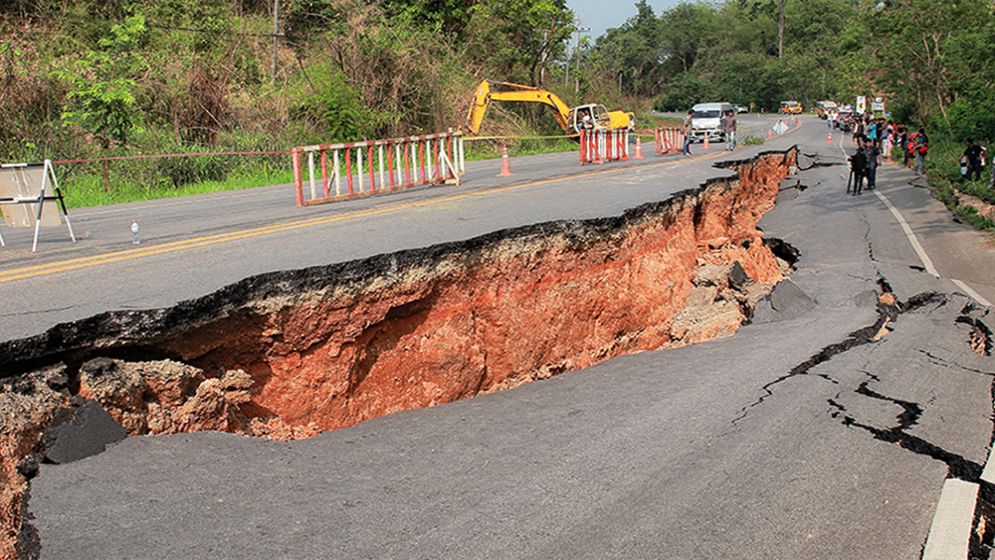
File Photo
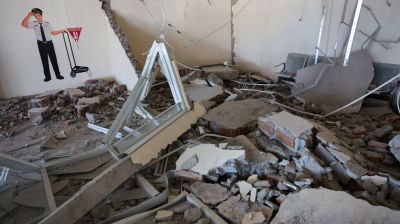
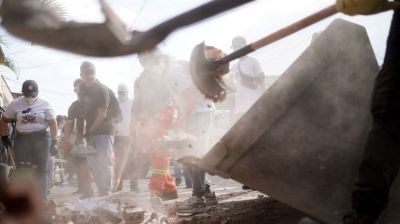
Earthquakes are among the most devastating natural disasters on Earth. Although some earthquakes may be preceded by minor warning signs, most strike so suddenly that people have little or no time to prepare. Within seconds, powerful tremors can cause buildings to collapse, disrupt communication systems and trigger widespread panic.
Scientists attribute earthquakes to several factors, including the movement of tectonic plates beneath the Earth’s surface, the sudden release of energy accumulated along faults and volcanic activity. From an Islamic perspective, however, every event in nature can also remind believers of Allah’s power and control.
The Quran and Hadith refer to earthquakes and the shaking of the Earth in various contexts—as lessons, warnings, tests and reminders of the tremendous events of the Day of Judgement.
Earthquakes in the Quran
The Holy Quran uses the term “Zilzal” to describe violent shaking of the Earth. The 99th chapter of the Quran is named Surah Al-Zilzal (The Earthquake). It begins with a description of the Earth being shaken with its ultimate convulsion.
This primarily refers to the great earthquake that will occur as part of the events of the Day of Resurrection. Similarly, the opening verses of Surah Al-Hajj describe the convulsion of the Hour as a tremendous event and call upon people to fear their Lord.
Therefore, it would not be appropriate to directly equate every earthquake mentioned in the Quran with earthquakes occurring in the present day. In many Quranic verses, the great convulsion described is specifically associated with the Day of Resurrection.
Are Disasters the Result of Human Deeds?
The Quran says: “Whatever misfortune befalls you is because of what your hands have earned, and He pardons much.” — Surah Ash-Shura, Ayat:30.
This verse teaches people to reflect on their own actions. However, it would be inappropriate to definitively claim that a particular person or community affected by an earthquake has suffered Allah’s punishment because of their sins. A disaster may be a test for some, a warning for others, or part of a divine wisdom that humans cannot fully comprehend.
Earthquakes in the Hadith
The Prophet Muhammad (Sallallahu alaihi wasallam) said, “The Hour will not be established until knowledge is taken away, earthquakes become frequent, time passes rapidly, tribulations appear, and killing becomes widespread. Your wealth will become so abundant that it will overflow.” (Sahih al-Bukhari, Hadith 1036).
A Hadith of the Prophet Muhammad (Sallallahu alaihi wasallam) mentions punishment in the form of the Earth collapsing, people being transformed and stones being rained down. In a narration reported by Imran ibn Husain (RA), the spread of singing, musical instruments and alcohol consumption is mentioned in connection with such events. The narration appears in Jami` at-Tirmidhi, Hadith 2212.
However, scholars have differed over its grading; Imam al-Tirmidhi described it as gharib, while some later scholars have considered it weak.
Another narration mentions various forms of social and moral decline—including unlawful accumulation of wealth, betrayal of trusts, regarding zakat as a burden, neglecting family ties and appointing unqualified people to positions of authority—in connection with calamities including earthquakes. This narration has also been regarded as weak. Therefore, caution is necessary when citing such narrations.
Is Every Earthquake a Punishment from Allah?
This is an important point. From an Islamic perspective, it is not appropriate to automatically declare every natural disaster, including an earthquake, to be Allah’s punishment. Human beings cannot know with certainty the ultimate purpose behind a particular event or the specific nature of Allah’s decree.
The Quran reminds us that everything that happens in the world and in human life is within Allah’s knowledge and control. Therefore, when an earthquake occurs, believers should not only feel fear but also recognise their own vulnerability and turn towards Allah.
What Should Muslims Do During and After an Earthquake?
During an earthquake or any other disaster, the first responsibility is to protect human life. People should move to a safe place, help the injured and follow emergency instructions. At the same time, Muslims may pray to Allah, seek forgiveness and increase their good deeds.
A Muslim may respond to an earthquake by:
Praying to Allah for safety and mercy.
Repenting and seeking forgiveness.
Being more diligent in performing the five daily prayers.
Giving charity according to their means.
Helping people affected or injured by the disaster.
Prioritising the safety of themselves and their families.
Remembering Allah’s immense power and human vulnerability.
Science and geology provide important explanations for the physical causes of earthquakes. At the same time, Muslims can regard such natural events as opportunities for self-reflection, repentance and remembrance of Allah.
However, just as it is inappropriate to declare every earthquake a direct punishment for sin, it would also be wrong to ignore the spiritual lessons that such events can inspire. The Quran and Hadith repeatedly remind us that human beings are vulnerable, life is uncertain and everything ultimately remains under Allah’s control.
An earthquake may last only a few seconds, but its lessons can endure far longer. The brief shaking of the ground can remind us that even the Earth we consider so stable is beyond our control. Every such moment can therefore become an opportunity to reassess our lives, actions and faith—and to turn back to our Creator.
...................................................................
The writer is a Senior Sub-Editor at Daily Sun. He can be reached at [email protected]