


 For all latest news, follow the Daily Sun's Google News channel.


Female students complete training on leadership in media
Daily Sun Report, Dhaka
Published: 18 May 2026, 04:05 PM
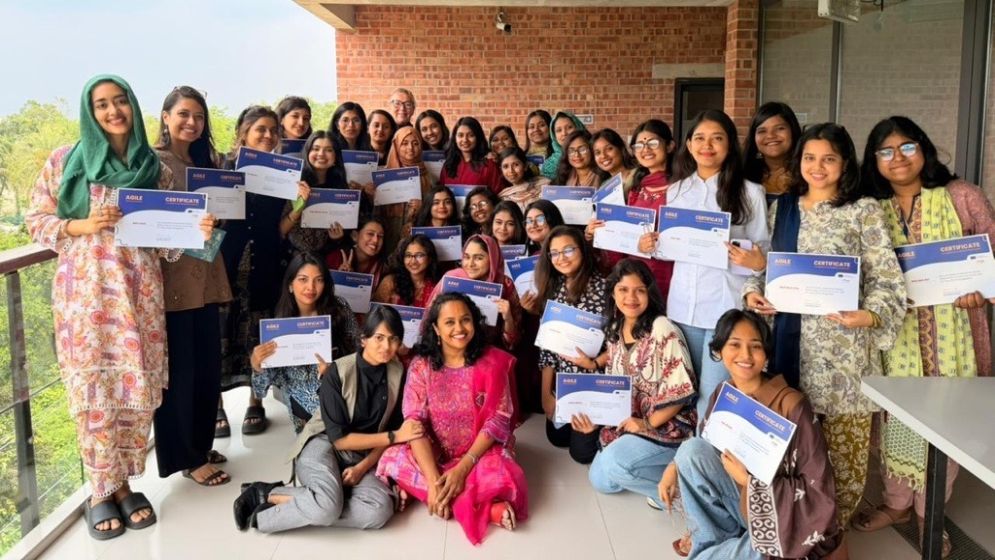
Photo: Courtesy
Thirty-two female students from
four leading universities have completed a three-day training programme
designed to prepare the next generation of women leaders in journalism.
The course, part of the “AGILE project: Women Media Leaders of Tomorrow (WMLT)”, was organized by the Swedish Fojo Media Institute in collaboration with the Bangladesh Communication and Journalism Educators Network (CJEN), with support from the EU, says a press release.
Held from 9 to 11 May at Gonokollan Trust (GKT) in Manikganj, the workshop brought together students from four universities across Bangladesh: the University of Dhaka, University of Rajshahi, Independent University, Bangladesh, and the University of Barishal.
Rather than following a
traditional classroom format, the programme used immersive, practical and
experience-based learning to deepen participants’ understanding of leadership
in journalism. The curriculum focused on self-leadership, role models, and ways
to stay motivated in a demanding media industry where working conditions and
compensation are often challenging.
The students explored the
journey from entering the profession as young women journalists to becoming
experienced newsroom leaders. Discussions also examined the important
distinction between being a supervisor or manager and being an effective
leader. Sessions were facilitated by a distinguished group of mentors,
including Kersti Forsberg of Sweden, former Executive Director of the Fojo Media
Institute, Bangladeshi journalist Jesmin Papri, Nazia Afrin, Fahim Ahmed, CEO
of Jamuna Television, Tanvir Mahmud, Editor, GIJN Bangla, and Moriem Aziz
Mourin, Staff Correspondent of Channel 24 Television.
A major component of the
programme addressed safety and professional resilience in response to workplace
risks and harassment faced by journalists. Using resources such as the WAN-IFRA
Sexual Harassment Handbook, mentors guided participants on identifying,
documenting, and responding to threats and harassment both in the field and
inside newsrooms. The sessions emphasized that harassment and abuse should
never be considered a normal part of the profession and highlighted the legal
and institutional mechanisms available for support.
The programme concluded with a
reflective discussion on the future of women in Bangladeshi journalism,
highlighting the importance of mentorship, professional networks, and
supportive newsroom cultures in overcoming isolation and barriers to
leadership.
Tangila Tasnim, a student from
the University of Dhaka, said the training helped shape the perspectives of
emerging media professionals and reduced apprehension about field reporting.
She highlighted that it provided practical skills in reporting, newsroom
management, and handling workplace sexual harassment issues, along with
guidance on legal protections and access to GIJN and fellowship opportunities,
helping students, especially outside Dhaka, feel more confident about their
careers.
Tasnim Kalam, a student from
Barishal University, said the programme was informative and inspiring, offering
practical learning in media leadership, communication, and teamwork. She noted
that interactive sessions and mentorship strengthened her confidence and
professional skills, and she particularly valued the supportive environment and
exposure to experienced media professionals.