


 For all latest news, follow the Daily Sun's Google News channel.


Economist urges social movement for quality education in Bangladesh
Daily Sun Report, Dhaka
Published: 07 May 2026, 01:39 PM
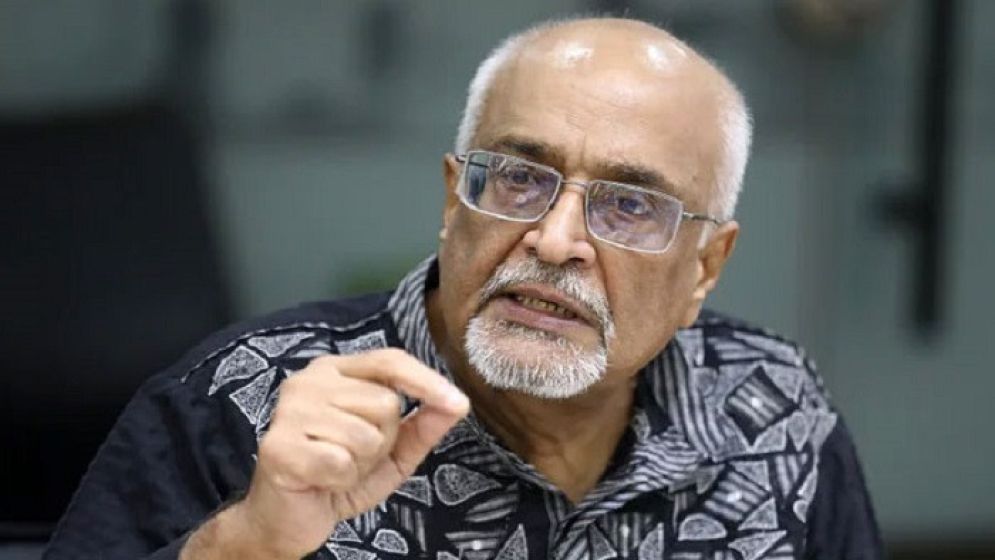
Debapriya Bhattacharya. Photo: Collected
Economist Debapriya Bhattacharya, Distinguished Fellow of the Centre for Policy Dialogue (CPD), believes that a new social and political movement is needed to improve the quality of the country’s education system.
He said that ensuring access to education alone is no longer enough; the real concern now is the quality of education students are receiving.
He made the remarks on Thursday at a dialogue titled “Government Priorities and the Education Sector: Budget and Reality” held at the Bangladesh-China Friendship Conference Center of Agargaon in the capital.
The event was organized by Citizen’s Platform for SDGs. The keynote paper was presented by Towfiqul Islam Khan, Additional Director (Research) at CPD.
Speaking at the dialogue, Debapriya Bhattacharya, Convener of the Citizen’s Platform, said that past movements focused on ensuring access to education, but the current need is a movement aimed at guaranteeing the quality and outcomes of education.
According to him, although students are enrolling in schools, the key issue now is what kind of skills and educational standards they possess upon graduation.
He also revealed that discussions are underway to form an alliance involving newly elected members of parliament in order to transform the education movement into a broader social and political movement.
He commented that meaningful reform in the education system cannot be achieved through technical recommendations alone.
In his words, there is no alternative to quality education. To move Bangladesh to the next stage of development, improving educational standards and addressing disorder within the education system are essential.
He further said that although the government claims to prioritise the education sector, questions remain regarding the actual allocation of funds and their effective utilisation.
In his view, importance should be given not only to infrastructure development but also to improving the quality and skills of teachers.
Mentioning that stipends alone cannot fully address the educational expenses of underprivileged families, he said policymakers must also consider the broader financial burdens faced by households.
The economist also expressed concern about the future labor market. He warned that due to artificial intelligence, robotics, and technological changes, nearly 56 lakh jobs in the country could be at risk.
Although around 50 lakh new jobs may also be created, he questioned whether the country’s youth are adequately prepared for those opportunities.
Among others present at the dialogue were Rasheda K Choudhury, economist Anu Muhammad, independent lawmaker Rumeen Farhana, and Member of Parliament Shafiqul Islam Masud.