




 For all latest news, follow the Daily Sun's Google News channel.


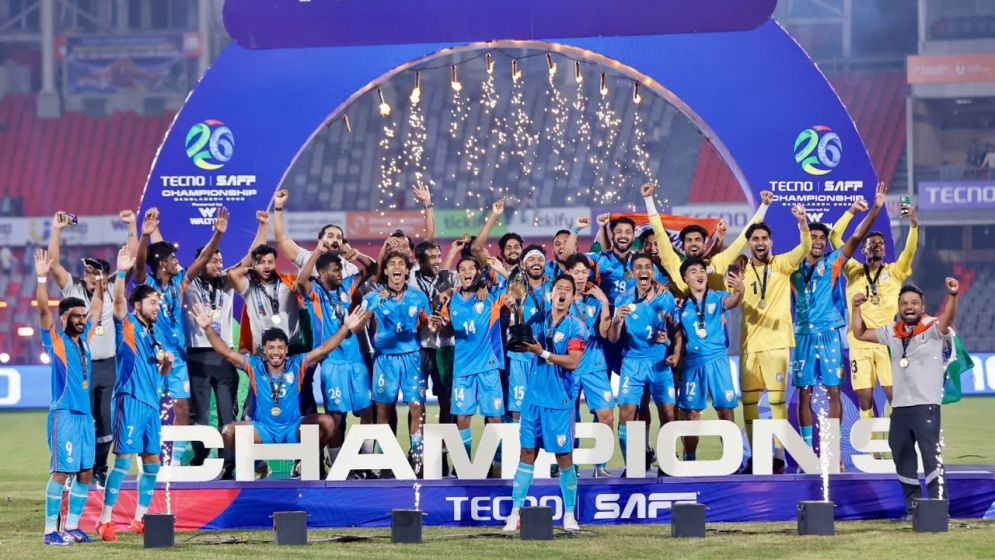
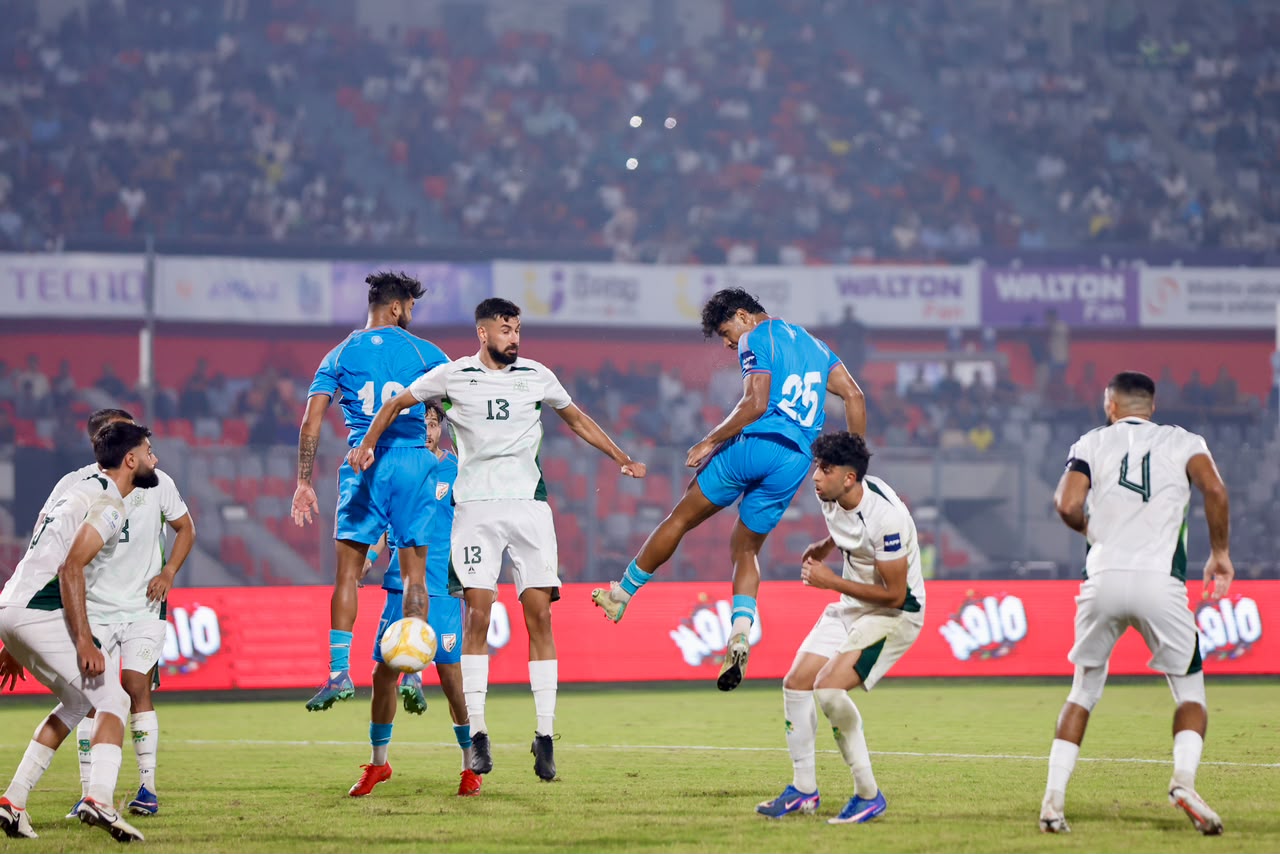
Photo - Tanvin Tamim
South Asian football was dealt a stinging slap in the face on Tuesday night and India did not even need their best players to deliver it.
As India's youngsters celebrated a third successive SAFF Championship title under the floodlights of Dhaka's National Stadium, their record-extending 10th regional crown was more than another trophy.
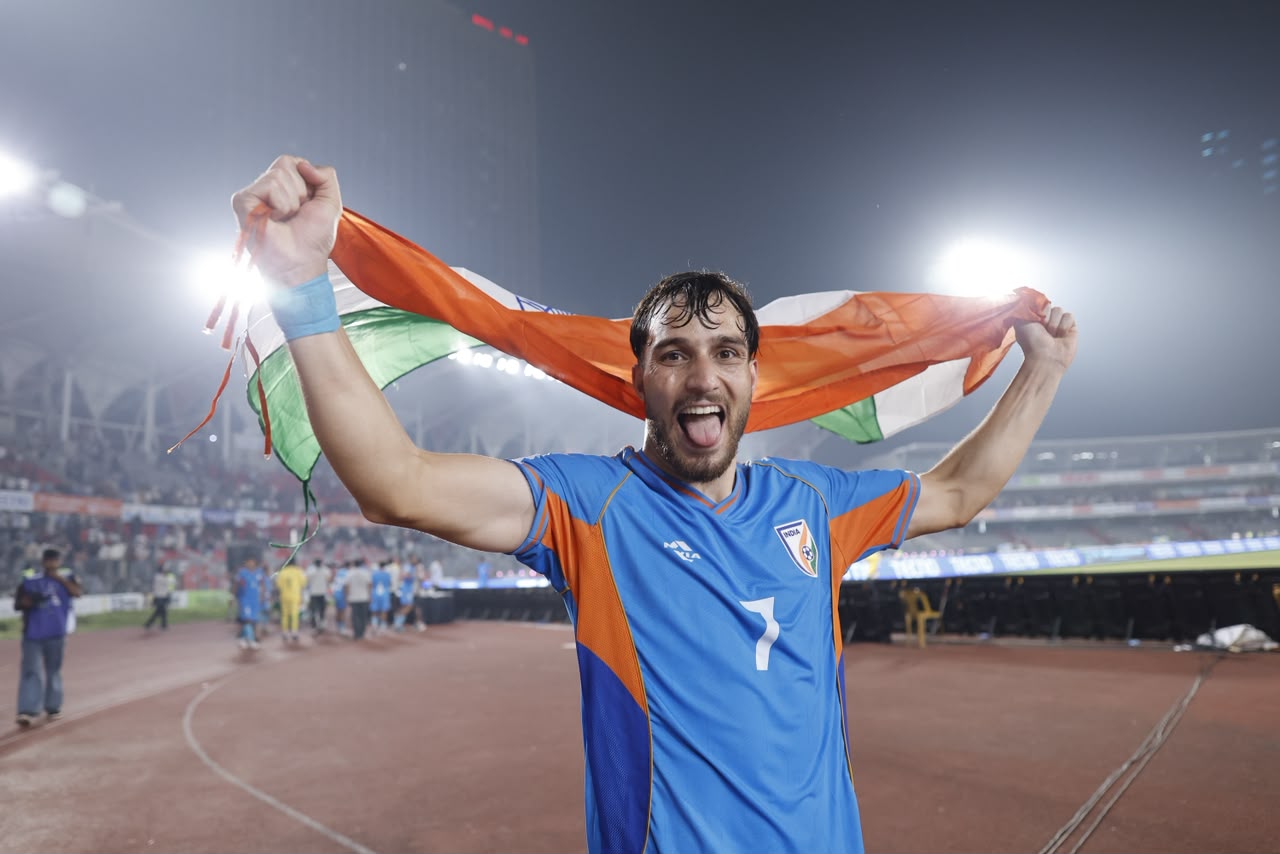
It was a damning statement about the widening gulf between India and their neighbours and an embarrassing reflection of how far the rest of the region have fallen behind.
While Bangladesh, Pakistan and Sri Lanka scoured Europe and North America for diaspora players in the hope of finding a shortcut to success, India arrived with a youthful and novice side.
The message was unmistakable: India's young reserves were good enough to rule a region whose leading nations had assembled their strongest possible squads.
For the last 13 days in Dhaka, Naushad Moosa's youngsters exposed that gulf.
Their veterans were busy testing themselves against New Zealand while their successors were busy collecting another regional title.
Even after losing five key players midway through the tournament—including skipper Muhammad Suhail, Liston Colaco and Bijoy Varghese, who were recalled to Khalid Jamil’s senior side for the New Zealand tour—India had enough squad depth to overcome Maldives, survive Bhutan's challenge in the semifinals and beat Pakistan twice to seal the championship.
New players were flown in from India, given barely two days to train and thrown into the competition.
Moosa made seven changes to his starting XI for the next match, yet India's momentum remained largely untouched.
Even the coach's public complaints about hotel accommodation and food in Dhaka could not distract his players from their task.
While the SAFF Championship remained a major prize for India's neighbours, India treated it as little more than a proving ground for their next generation—a contrast that stung the most.
The writing was on the wall long before the tournament kicked off.
The 15th edition had to be rescheduled after India's participation in the FIFA ASEAN Cup and their international commitments complicated the original calendar.
When the tournament was eventually fixed for November in Dhaka, India already had two friendlies against New Zealand lined up during the FIFA window.
Later, India skipped the ASEAN Cup as well, playing against South American football powerhouses Brazil and Uruguay during that window instead.
The choice was telling. Several Indian football officials and analysts openly argued that facing a team that had qualified for the World Cup would offer far greater value to their development than competing for a regional trophy they had already won nine times.
India eventually agreed to participate following discussions with SAFF, including commercial and broadcasting considerations. But their team selection made their priorities unmistakable.
Instead of sending the full-fledged senior national side under head coach Khalid Jamil, the All India Football Federation (AIFF) entrusted the campaign to U-23 coach Naushad Moosa and youth-team assistant coach Bibiano Fernandes, turning a senior regional championship into an audition.
Their squad management was even more revealing. While SAFF permitted each team to register 28 players, India arrived in Dhaka with just 19, citing injuries and difficulties in securing the release of footballers from Indian Super League (ISL) clubs.
In the middle of an international tournament, India were effectively recalling their best performers for another assignment, seemingly confident that their remaining players could still get the job done.
Beyond squad rotation, the most damning aspect of India's triumph lay in how the participating nations built their teams.
Across South Asia, the search for overseas-born players has increasingly become a substitute for developing football at home.
Rather than strengthening domestic leagues, building academies and creating a steady supply of young talent, national federations have looked abroad for players who can provide an immediate lift.
Bangladesh's campaign was the clearest example. Their hopes of ending a 23-year wait for the SAFF crown revolved heavily around England-raised Hamza Choudhury and Farhaan Ali Wahid, Canada-born Shamit Shome and other diaspora recruits, including players with roots in the USA and Japan.
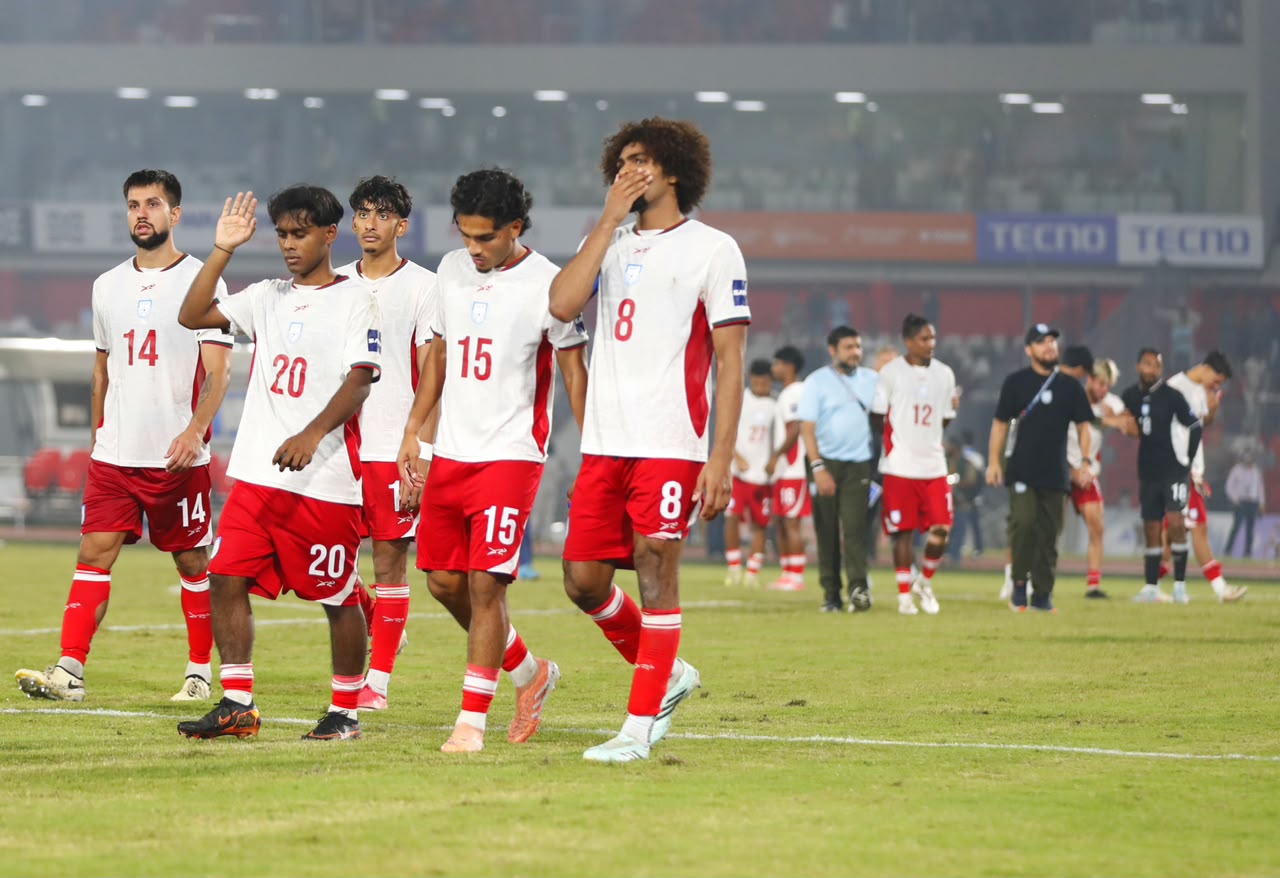
Instead, the dream collapsed in the semifinals amid dressing-room unrest and public criticism of the coach's tactics.
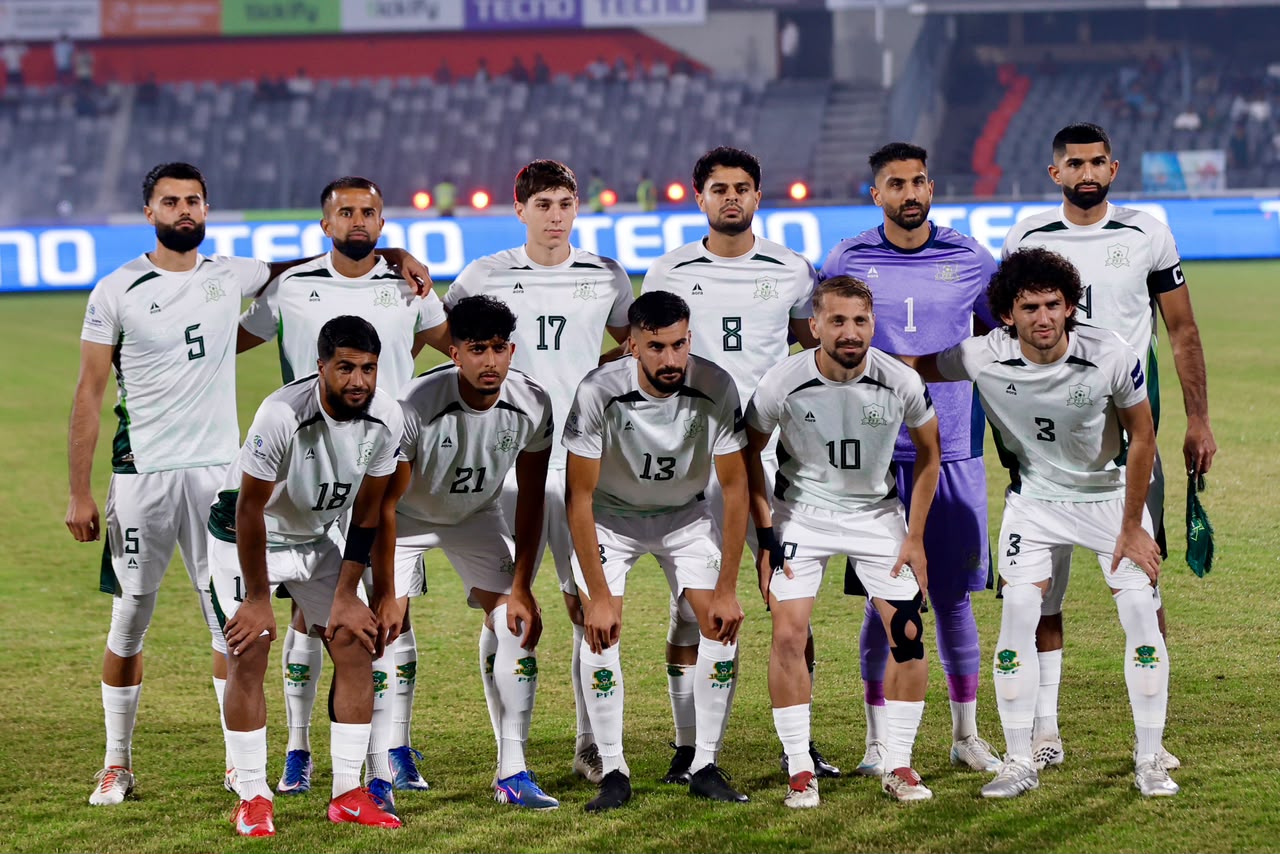
Pakistan went down a similar route. After losing to India's young side in the group stage, they brought in five more diaspora players from leagues in Sweden, Denmark, England and Azerbaijan, featuring European-developed footballers such as Isa Suliman, Adil Nabi and Abdullah Iqbal alongside goalkeeper Yousuf Butt.
Sri Lanka, too, relied on players from lower divisions in Germany, Australia and France.
Yet it was India's largely home-grown youngsters who ultimately came out on top. Suhail Ahmed Bhat, Manglenthang Kipgen, Sandeep Mandi and Bryson Fernandes were among the young talents who helped underline the value of a domestic system.
India's progress has not come overnight. Over the past decade, the Indian Super League, I-League and Reliance Foundation Development League have helped create a more competitive environment, with clubs investing in youth academies and reserve teams.
The youngsters who conquered Dhaka were products of that system. At clubs such as Mohun Bagan, Jamshedpur and Bengaluru FC, young players have opportunities to train and compete in organised leagues rather than wait indefinitely for a chance in the senior team.
Regular competition develops more than technical ability. It builds match fitness, tactical understanding and the temperament required to perform under pressure.
India's young reserves may not have the international reputation of their senior stars, but they have been exposed to a level of domestic competition that many of their neighbours' established internationals still struggle to match.
Having previously sent their U-17 side to win the SAFF U-19 Women's Championship earlier this year, India have made this systematic dominance a habit.
The question for SAFF's other members is no longer why India do not send their strongest team.
It is why they have failed to create an environment that would make India feel compelled to do so.
A novice side should not be able to lose key players midway through a tournament, make wholesale changes and still emerge champions without raising serious questions about the competitiveness of the opposition.
Bangladesh, Pakistan and Sri Lanka cannot expect to close that gap by collecting more diaspora players.
Overseas recruits can add quality and individual brilliance, but they cannot build a country's football foundations. That requires stronger domestic leagues, proper youth academies, better coaching and sustained investment at the grassroots level.
Unless their neighbours start building footballers at home instead of searching for ready-made solutions abroad, India's second-string sides will continue to rule the region while their rivals are left watching.
And while India look towards making their mark beyond South Asia, the rest of the region may remain trapped dreaming of winning the SAFF.