



 For all latest news, follow the Daily Sun's Google News channel.


COLLECTED PHOTO
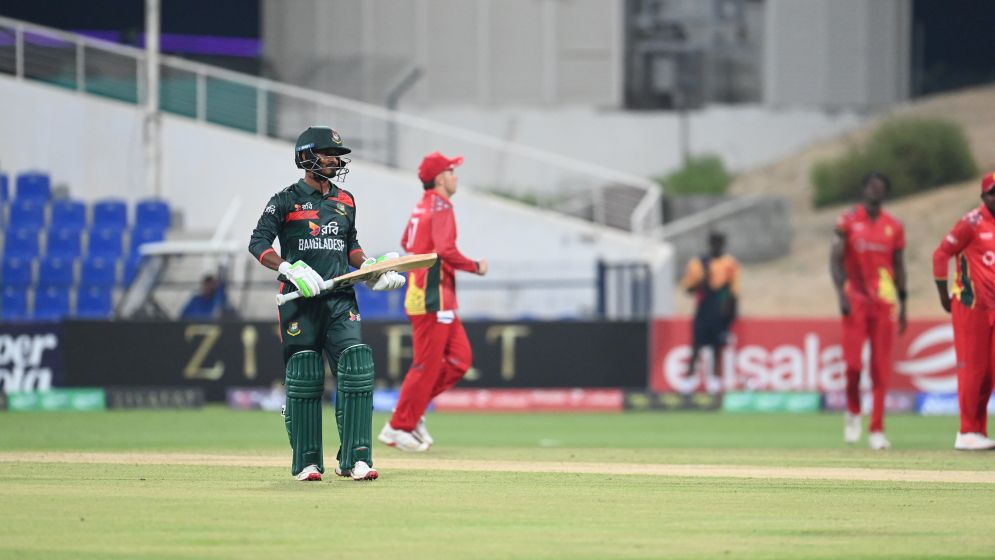
Bangladesh’s struggles against Zimbabwe continued in Abu Dhabi, where a dismal batting display handed them a 99-run defeat in the opening match of the tri-nation ODI series. Despite sitting two places above Zimbabwe in the ODI rankings, Bangladesh looked a long way from bridging the gap between the two sides.
The defeat was another painful reminder of Bangladesh’s 1-2 series loss to Zimbabwe in Harare last July. With Litton Das ruled out of the tournament through injury, the conditions offered little comfort either. The heat was intense, the pitch slow, and a target of 272 was never going to be easy. But Bangladesh’s batting collapse made the task far more difficult than it needed to be.
Medium-pacer Brad Evans led Zimbabwe’s attack with four wickets for 45 runs as Bangladesh were bowled out for 172, with 98 balls remaining. A team that had once chased down 313 against Zimbabwe in an ODI, 17 years ago, could find no inspiration from that memorable achievement.
The chase began promisingly enough. Tanzid Hasan and Soumya Sarkar put on 47 runs from just 39 balls, giving Bangladesh a much-needed early boost. But the opening stand ended in the seventh over when Soumya, who had scored nine, edged a delivery from Blessing Muzarabani to the slips.
Tanzid, meanwhile, appeared in a hurry to reach his half-century before the end of the powerplay. After hitting a six off Nyamhuri, he went for an upper-cut off the fifth ball of the 10th over. Muzarabani failed to hold on to the chance, but the reprieve lasted only one delivery. Tanzid attempted another cut shot and was caught at point by Ryan Burl for 46 off 38 balls, an innings that included nine fours and a six.
From there, Bangladesh’s chase quickly unravelled. Najmul Hossain Shanto fell for four, trapped lbw by Evans while attempting a cross-batted stroke against a fuller delivery. Stand-in captain Towhid Hridoy followed for 13, also lbw, this time to Sikandar Raza.
Mosaddek Hossain managed 11 off 18 balls before Wellington Masakadza trapped him lbw. Saif Hassan offered some resistance with 26 but edged Masakadza to the wicketkeeper while attempting to play off the front foot.
With wickets falling at regular intervals, Bangladesh never recovered. Evans and the Zimbabwean attack kept the pressure on, exposing the fragility of the batting order and bringing the innings to an early end at 172.
Earlier, Bangladesh’s bowlers had given their side every reason to believe they could control the match. After winning the toss and opting to field, they struck through Taskin Ahmed, who tore into Zimbabwe’s top order with the new ball.
Taskin trapped Brian Bennett lbw in the opening over. Bennett initially appeared to have been given out caught behind, but a review found no contact between bat and ball. The decision was ultimately upheld on the basis of umpire’s call for the impact on the pads.
Taskin struck again in the fifth over, removing Ben Curran lbw despite another review. He then induced an edge from Tafadzwa Tsiga, with wicketkeeper Nurul Hasan completing the catch. Zimbabwe were suddenly three down, with only 24 runs on the board.
Taskin finished his opening spell with three wickets for 18 runs in six overs. Zimbabwe, however, found the experience and composure they needed through Brendan Taylor and Craig Ervine.
The pair added 150 runs off 176 balls for the fourth wicket, rescuing Zimbabwe from a precarious position and laying the foundation for a competitive total. Their partnership transformed the innings, turning early trouble into a platform for victory.
At 40 years and 253 days, Taylor showed that he still had plenty to offer on the international stage. Returning to face Bangladesh after more than two decades in international cricket, he struck 81 off 101 balls, including 10 fours. It was his first ODI half-century since November 2020 and his 40th in the format.
Taylor looked increasingly comfortable as the partnership grew, but Saif Hassan finally brought his innings to an end. Attempting a reverse sweep, the veteran batter was caught at point by Mosaddek Hossain.
The innings nevertheless carried historical significance. Taylor moved past Andy Flower to become Zimbabwe’s leading run-scorer in ODI cricket, taking his career tally to 6,836 runs.
Ervine continued to anchor the innings after Taylor’s departure, looking well placed to reach a century. But he fell just seven runs short, caught behind off Shoriful Islam for 93 from 106 balls, with nine fours.
Bangladesh briefly threatened to regain control late in the innings. Saif finished with two wickets for 17 runs in three overs, while Shoriful claimed two for five in his final spell. Zimbabwe, however, found a late boost through a 37-run stand for the ninth wicket, scored off just 26 balls, to finish on 271 for eight.
Taskin ended with three wickets for 44 runs from his 10 overs, while Rishad Hossain conceded 66 runs in nine overs for one wicket. Mustafizur Rahman went wicketless, giving away 44 runs in his 10 overs.
For Bangladesh, the defeat was particularly disappointing because their bowlers had initially put them in a strong position. Taylor and Ervine rebuilt Zimbabwe’s innings, but it was the batting collapse that ultimately settled the contest.
After drawing their Abu Dhabi Test against Afghanistan, Bangladesh have now begun the tri-nation ODI series with a heavy defeat. The performance raises familiar concerns about the team’s consistency, particularly their ability to recover when early momentum slips away.
One defeat does not define a tournament, but Bangladesh will need a significant improvement with the bat if they are to avoid another frustrating campaign.