


 For all latest news, follow the Daily Sun's Google News channel.


Domestic Leapfrog!
Bangladesh surpass Pakistan, Sri Lanka, South Africa and New Zealand in domestic fees
BCB Logo
There was a time when cricketers in Bangladesh’s National Cricket League (NCL) received neither match fees nor salaries. Although the first-class competition was launched in the 1999-2000 season to fulfil an International Cricket Council (ICC) requirement, a player’s only income was a daily allowance of Tk500. That remained the case for eight seasons.
In the 2007-08 season, the daily allowance was increased to Tk1,000. The following season, 2008-09, professional structures were introduced into first-class cricket. Players outside the national team began receiving monthly salaries of Tk20,000, Tk15,000 and Tk10,000 in three grades.
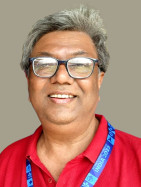
Hafizur Rahman Joarder, then member-secretary of the tournament committee, took the initiative to increase the NCL’s daily allowance and match fees. Recalling the situation, he told Daily Sun on Friday: “It was impossible to have three meals a day at a reasonably priced restaurant with Tk500. To ease the hardship faced by NCL cricketers, I told the tournament committee chairman Boby (Ahmed Sazzadul Alam) to double the daily allowance. He accepted my reasonable demand and took the necessary steps.”
Match fees were finally introduced in first-class cricket in the 2013-14 season. In the two tiers of the NCL, players received Tk20,000 and Tk15,000 per match, respectively. The match fee in the Bangladesh Cricket League (BCL) was Tk40,000.
Match fees and salaries gradually increased after that. This time, however, the rise has been substantial.
Despite deciding not to stage the Bangladesh Premier League (BPL) this season, the Bangladesh Cricket Board (BCB) has not closed off the income stream for domestic cricketers. The board has doubled match fees in domestic first-class, List A and T20 cricket.
At Thursday’s meeting, the match fee for first-class cricket, including the NCL, was raised from Tk75,000 to Tk150,000. The fee for one-day cricket was doubled from Tk50,000 to Tk100,000, while the T20 match fee increased from Tk40,000 to Tk80,000.
The decision comes as the BCB plans to introduce the NCL and a three-format package of tournaments under an ownership model. With earnings from the Dhaka Premier Division Cricket League added to the equation, regular domestic cricketers now have significantly greater earning potential than before.
According to calculations by the tournament committee, a player who takes part in every match of the NCL, Bangladesh First T20, Bangladesh First Four-Day and Bangladesh First One-Day tournaments could earn as much as Tk2.94m solely from match fees.
Match fees were also increased following the cricketers’ movement in 2019, led by Shakib Al Hasan, Tamim Iqbal, Mushfiqur Rahim and Mahmudullah Riyad. At that time, the fee in the NCL’s first tier rose from Tk35,000 to Tk60,000 and in the second tier from Tk25,000 to Tk50,000. The daily allowance also increased from Tk1,500 to Tk2,500.
This time, however, the match fees have been doubled without any player movement or protest.
The new structure is also significant by international standards. Bangladesh’s match fees are now higher than those in Pakistan, Sri Lanka, South Africa and New Zealand across all three formats: first-class, List A and T20.
In Pakistan, the first-class match fee is PKR200,000, equivalent to around Tk88,635. The List A fee is PKR125,000, or approximately Tk55,397, while T20 players receive PKR100,000 rupees, around Tk44,317.
In Sri Lanka, the first-class fee is SLR30,000, approximately Tk11,244, while the List A fee is SLR7,500, around Tk2,811.
In South Africa, players receive approximately Tk42,000 for a first-class match, Tk21,600 for a List A match, and Tk14,000 for a T20.
In New Zealand, the first-class match fee is approximately Tk126,500, compared with around Tk57,800 for List A and Tk41,600 for T20 cricket.
India’s domestic cricket, however, continues to offer higher match fees than Bangladesh. In the Ranji Trophy, players in the three categories receive INR200,000, INR240,000 and INR160,000 respectively, equivalent to approximately Tk312,000, Tk260,000 and Tk208,000.
There is no comparison between Bangladesh and the BCCI, the world’s richest cricket board, in terms of financial resources. But in terms of increasing domestic match fees, the BCB has undoubtedly made a significant leap, moving ahead of several established cricketing nations outside South Asia.
After the decision to double the match fees, BCB president Tamim Iqbal said: “We wanted to do something sustainable for the long term. According to Tamim, even a cricketer who does not get a place in the national team could have the opportunity to earn Tk3m to Tk4m a year if he plays regularly throughout the domestic season.
The new match-fee structure suggests that the BCB is now trying to make domestic cricket more than simply a platform for players outside the national team. It is seeking to make it a more sustainable profession in its own right.