


 For all latest news, follow the Daily Sun's Google News channel.


Ashraful Huq stands by Imran Khan
From a Dhaka cricket ground to a lifelong friendship
Daily Sun Report, Dhaka
Published: 04 Sep 2026, 03:49 AM
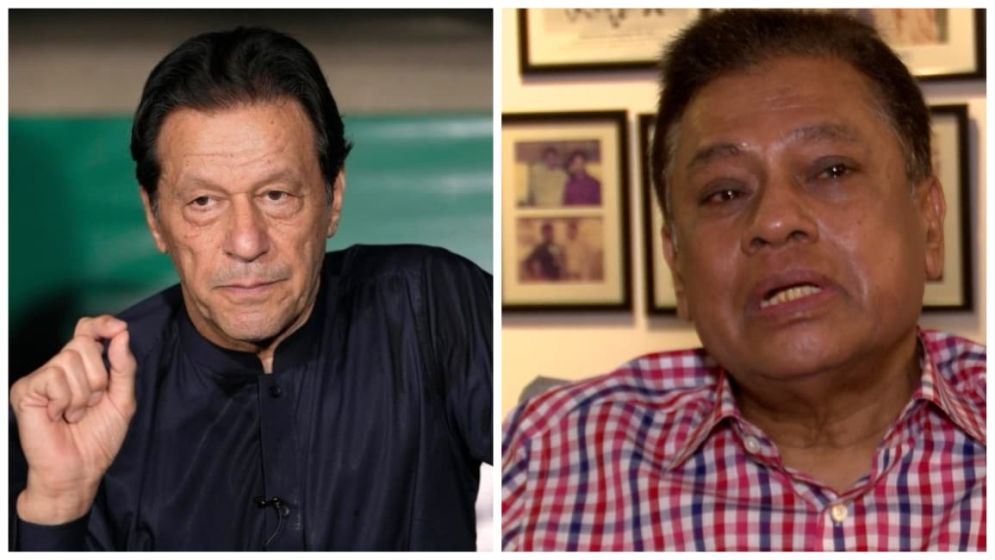
Collage Photo
In February 1971, before Bangladesh had become a country and long before Imran Khan became one of the most recognisable political figures in the world, two young cricketers met on a cricket ground in Dhaka.
One was Syed Ashraful Huq, then a promising cricketer from what was East Pakistan. The other was a bright, athletic teenager from Lahore, playing for the Lahore Under-19 side.
That teenager was Imran Khan.
More than five decades later, the cricket has become history, the political landscape has changed beyond recognition, and the young fast bowler from Lahore has gone on to become Pakistan’s prime minister. Yet the friendship forged during that match has endured.
Now, as Imran remains behind bars in Pakistan, Ashraful has once again spoken out for his old friend, describing his treatment as “inhuman” and “barbaric” and calling for the world to unite in seeking relief for him.
“To keep him in jail in inhuman conditions is not what the world wants or what any civilised nation would want,” Ashraful said in a statement. “It is completely illegal in terms of human rights and unconstitutional. The treatment of Imran Khan amounts to barbarism.”
But Ashraful’s words carry a significance that goes beyond politics.
They come from someone who knew Imran long before the political speeches, the elections, the controversies and the prison walls — someone who remembers him simply as a young cricketer who bowled fast, scored a century and became a friend.
A friendship born on a cricket field
Ashraful vividly remembers their first encounter.
Imran had travelled to Dhaka with the Lahore Under-19 team in February 1971. He was already attracting attention as a promising fast bowler, but against Ashraful's side, the young Imran showed another side of his talent.
“I remember he ended up scoring a century against us,” Ashraful recalled.
The match became the beginning of a friendship that would survive the birth of Bangladesh, political upheavals, geographical distance and Imran’s extraordinary transformation from international sporting icon to politician.
After Bangladesh’s independence, the two friends crossed paths again in England, where both were studying.
Ashraful would visit Imran at Keble College, Oxford. Their meetings were not always about cricket. Imran, even then, was a gifted all-round sportsman and would sometimes play hockey.
Their friendship continued as their lives took them across different countries.
Ashraful visited Imran during Pakistan’s tours of India and met him in various parts of the world. Cricket had brought them together, but it was their personal bond that kept them connected.
And when Imran eventually entered politics, the friendship did not disappear.
“Ash, it’s Allah’s will”
There was, however, one thing that increasingly worried Huq as Imran’s political career progressed.
He feared for his friend’s life.
Political rivalry in Pakistan had become increasingly intense, and Huq says that whenever he met Imran during those later years, he worried about what might happen to him.
Imran, however, did not share that fear.
A deeply God-fearing man, according to Ashraful, he would respond to his friend’s concerns with a philosophy that reflected the courage with which he had approached much of his life.
“Ash, if I am destined to die like that, I will die like that,” Imran told him.
“You cannot save me, nobody can save me. It's Allah’s will. So if a bullet is written in my name, it will go through me. So why should I get worried about it and forget about principles in life?”
For Ashraful, those words offer an insight into the man behind the politician — a man who, in his view, was prepared to accept personal consequences rather than abandon his principles.
From cricketer to political leader
Imran’s journey was extraordinary.
He became one of Pakistan’s greatest cricketers, led the country to its first and only men’s Cricket World Cup title in 1992 and subsequently turned his attention to politics.
Ashraful believes Imran entered politics for a simple reason: to fight corruption and improve Pakistan.
“He wanted something good to be done in Pakistan,” Huq said.
Ashraful also believes Imran had received a clear mandate from the Pakistani people to lead the country, making his continued detention particularly troubling in his eyes.
His criticism is not merely political. It is deeply personal.
For more than half a century, Ashraful has watched his friend move through vastly different chapters of life — from an ambitious young cricketer in Dhaka to an international sporting hero, from a university student in Oxford to Pakistan’s prime minister.
He has also seen the personal sacrifices that accompanied that journey.
“Imran could have led a family life, but he gave all that up because of his principles,” Ashraful said.
A memory from the Buriganga
Among Ashraful’s fondest memories is not one from a cricket stadium or a political gathering.
It is from Dhaka.
In the 1990s, Ashraful recalls spending time with Imran’s family and taking a boat ride together on the Buriganga River.
It was a simpler moment, removed from the political storms that would later surround Imran.
For Ashraful, memories like that make the current situation even more difficult to watch.
A connection forged before 1971 became history
There is another dimension to Ashraful’s admiration for Imran — one that carries particular weight for a Bangladeshi.
Ashraful remembers Imran as the first Pakistani politician to insist that Pakistan apologise for the atrocities committed during the 1971 Liberation War of Bangladesh.
For Ashraful, that stance is inseparable from the respect he has developed for his friend over the years.
Their friendship began in the final months before Bangladesh’s independence. It survived the enormous historical rupture that followed.
More than half a century later, Ashraful continues to believe that the man he met as a teenager deserves dignity and justice.