


 For all latest news, follow the Daily Sun's Google News channel.


Full Circle of Football Fate: How Brazil Legend Zico’s Vision Fuelling Japan's World Cup Dream
Between 2002 and 2006, Zico returned as head coach of the Japanese national team, taking the Samurai Blue to the 2006 FIFA World Cup in Germany
Daily Sun Report, Dhaka
Published: 29 Jun 2026, 04:29 PM
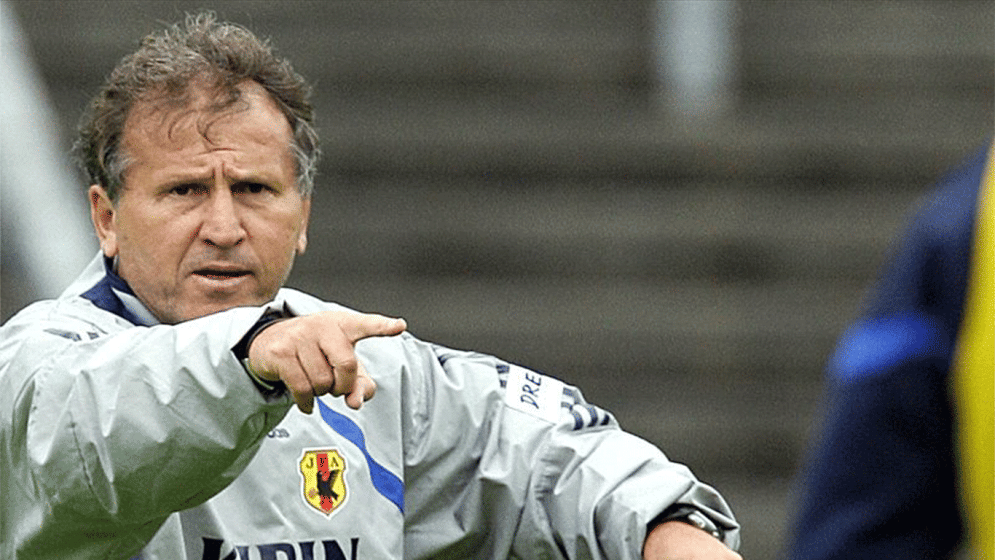
Brazilian Star Zico. Photo: Collected
Football is sometimes more than a game—larger than life itself. And at an event like the greatest show on earth, the World Cup, each match carries a subtle meaning beyond the scoreline: of persons, nations, and dreams.
Monday's Round of 32 clash between Japan and Brazil
is one of them—a game that carries the weight of a man who crossed an ocean,
fell in love with a nation, and quietly lit a fire the world is only now
beginning to fully see.
That man is Arthur Antunes Coimbra, aka Zico.
A Brazilian Arrives in the Land of the Rising Sun
When Zico arrived in Japan in 1991 to play for
Sumitomo Metals—a club that would soon be reborn as Kashima Antlers—it was not
an obvious move for a man considered one of the finest footballers Brazil had
ever produced. But he observed a purpose there.
Japan had no professional football league yet. Zico
integrated himself not just as a foreign star but as a football
missionary—teaching, mentoring, demanding, and believing. After the J League
launched in 1993, Kashima Antlers eventually went on to become the most
decorated side in Japanese football history. He also served the club as
technical director & manager between 1996 and 2002.
His contribution to the growth of Japanese football
is not just significant; it is one of the very bedrock upon which the nation's
modern footballing identity was built. He worked hand-in-hand with the Japanese
people, integrating into their society and football infrastructure to build a
passionate, enduring community around the beautiful game. That was the Zico
blueprint.
Coaching, Philosophy, Revolution
Between 2002 and 2006, Zico returned as head coach
of the Japanese national team, taking the Samurai Blue to the 2006 FIFA World
Cup in Germany. He brought with him the Brazilian philosophy of expressive,
attacking, technically intelligent football—the idea that the game should not
merely be played but felt. That philosophy was incorporated into the
consciousness of Japanese football, into its academies, its coaching manuals,
its very identity.
The coaches and technical staff who work with
Japan's national team today grew up watching and learning in that era. They
remember.
"Zico-san didn't just bring football to
Japan," a former JFA technical director once reflected. "He brought a
standard. He made us realise we didn't have to imitate Europe or South America.
We could build our own way, rooted in respect for the game and relentless
improvement."
The culture Zico adopted—one that treats football as
both art and discipline—has transformed Japan into Asia's most consistent
footballing nation. Today's Samurai Blue is the reflection of that practice:
technically secure, tactically intelligent, and unafraid to press high or play
out from the back. Japanese coaches still reference his training methodologies.
Academy directors still quote his insistence on "playing with the head
before the feet."
Ancelotti's Brazil and the Samba Dance They're
Trying to Reclaim
On the other side of Monday's pitch stands a Brazil
in search of itself. Under Carlo Ancelotti, the Seleção has been trying to
rediscover the jogo bonito—the beautiful game that defined their golden
generations but feels pale in the modern era. Ancelotti, the Italian master, is
bringing the samba rhythm back together with a European touch of discipline; credit
to his vast experience of success, he's trying to mold a team blessed with
talent but still searching for its soul.
Brazil remains a favorite on Monday, carrying a win
probability of over 57%. But football, as Zico understood better than most, is
not played on paper.
Japan's Dare to Dream—and the Full Circle
Japan arrives at this round of 32 as believers. A
team systematically and deliberately built over three decades to compete in
exactly these moments. Their pressing is relentless, their tactical discipline
exceptional, and the belief they have cultivated over years is now fuelling
them to go toe-to-toe with the most decorated nation in international football.
Brazil will look to unlock space through
transitional fluidity and individual brilliance. Japan will respond with
structural discipline, collective pressing, and the technical composure Zico
spent years drilling into their football DNA.
The stage is set. The samba awaits. But as the
Samurai Blue take the field, they will do so with the heart of a Brazilian
legend beating in their chests—ready to write a thrilling chapter in their
football history.