


 For all latest news, follow the Daily Sun's Google News channel.


The curious case of M Najmul Islam
BCB flushes player dignity to shield controversial director
Daily Sun Report, Dhaka
Published: 25 Jan 2026, 10:47 PM
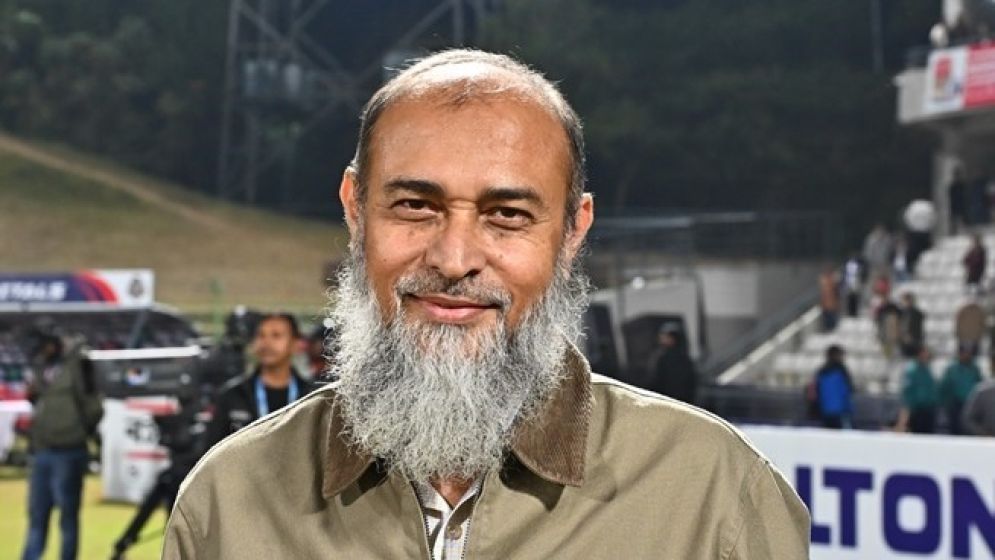
FILE PHOTO
In the corridors of the Sher-e-Bangla National Cricket Stadium, accountability appears to be a foreign concept. The "curious case" of M Najmul Islam—the Bangladesh Cricket Board (BCB) director who infamously insulted the nation’s leading cricketers—has reached a predictable, if shameful, conclusion.
In a move that reeks of institutional
cynicism, the BCB has quietly paved the way for Islam’s return to the powerful
chair of the Finance Committee, proving once again that in Mirpur, the dignity
of players is a secondary concern to the preservation of the "old
guard."
The saga began when Najmul launched a
series of extraordinary public attacks on national cricketers. His rhetoric was
as toxic as it was unprofessional, ranging from labelling veteran opener Tamim
Iqbal a "proven Indian agent" to demeaning the team’s efforts by
suggesting the board does them a "favour" by not clawing back match
fees after losses.
The resulting fallout was unprecedented: a
player-led boycott of the Bangladesh Premier League (BPL) on 15 January,
spearheaded by Mohammad Mithun and the Cricketers' Welfare Association of
Bangladesh (CWAB).
At the time, the BCB’s hierarchy promised
swift action. They needed the BPL to continue; they needed the players back on
the field. It was a classic firefighting exercise. Najmul was temporarily
relieved of his duties, and the board made grand gestures about protecting the
"pride" of the cricketers.
Fast forward to Saturday’s marathon
eight-hour board meeting, and the mask has slipped.
When questioned by journalists, BCB Media
Committee Chairman Amzad Hossain offered a masterclass in obfuscation. He
claimed the matter "was not on the agenda," before admitting that the
disciplinary committee was "satisfied" with Najmul’s response to a
show-cause letter.
It was a coy performance designed to avoid
media wrath, but the truth inside the boardroom was far more blatant.
During the course of the meeting Najmul
raised the question whether he will remain only as a director or not when a
board member insisted that they should go for a slow policy in this regard that
was more or less accepted by other members present in the meeting.
Sources confirm that as the meeting drew to
a close, BCB boss Aminul Islam effectively bypassed the disciplinary sentiment.
Claiming a lack of personal expertise in financial matters, the President
insisted that Najmul return to his post as Finance Committee Chairman.
The shock felt by several directors in the
room was not shared by the executive, who seemed eager to bury the hatchet at the
players' expense.
Former BCB director Khaled Mahmud did not
mince his words, branding the entire episode a "drama" staged for
public consumption.
"What else could it be apart from
drama?" Mahmud remarked.
"They probably told him, ‘Brother,
stay out just until this BPL ends, then we’ll fix it.’" It is a damning
assessment of a board that seemingly views its players not as assets, but as
temporary inconveniences to be managed with "eyewash" tactics.
The constitutional defence—that an elected
director cannot be removed except under extreme circumstances—is a convenient
shield. While the board may not be able to strip him of his directorship, the
decision to reinstate him to a position of leadership, mere weeks after he
insulted the very core of the sport, is a choice, not a legal necessity.
By bringing Najmul back into the fold, the
BCB has sent a chilling message to the dressing room: your pride is negotiable,
and our promises are written in water. If the board truly believes that
satisfying a disciplinary committee behind closed doors atones for public
slander, they are more disconnected from the spirit of the game than previously
feared.
For now, the drama concludes with the
status quo restored. Najmul remains, the players remain insulted, and the BCB remains
a bastion of political expediency.