


 For all latest news, follow the Daily Sun's Google News channel.


Ensuring Green Development and Commissioning Green Infrastructure Projects: Learning from China

The BNP government has set a target of building a trillion-dollar economy by 2034. The government aims to nearly double the size of the economy within this decade, prioritise industrial diversification, shift real GDP growth towards a target of 8.5 per cent by the end of 2030-2031, and expand power infrastructure to reach 35,000 megawatts by 2030.
Given the scale and extent of these plans and targets, Bangladesh will require capital, investment, and infrastructure support from its development partners, based on its needs and priorities.
Viewed in this context, there are ample opportunities for Bangladesh to benefit from green infrastructure initiatives in the international arena, especially those undertaken by China. This is particularly relevant because, under the Belt and Road Initiative, one of the five pillars of cooperation is connectivity (large-scale infrastructure development). The second pillar, road infrastructure, is also linked with green development, environmental cooperation, and flood control.
Climate change and green infrastructure are closely related in two important ways: first, through climate change mitigation and adaptation; and second, because green infrastructure can help reduce the causes of climate change while also protecting communities and economies against its impacts.
In the annals of Bangladesh-China cooperation, green infrastructure development may become one of the most productive areas of cooperation because it connects immediate needs – energy security, industrial competitiveness, and climate adaptation – with longer-term ambitions for economic transformation. It also respects the noble and lofty goals of environmental conservation and ensuring a healthy and sustainable future for succeeding generations.
The objective should be to place greater emphasis on the overall quality of projects rather than their quantity. Priority should be given to projects that strictly comply with international environmental standards and guidelines and pass rigorous Environmental Impact Assessment checks. Policymakers feel that projects should be selected that generate greater external benefits and ensure high, sustainable returns for Bangladesh.
Foundational Basis for
Green Infrastructure Projects
A foundational basis for green infrastructure projects is the growing awareness among G20 countries, including China, of the need to prioritise green projects when considering infrastructure financing.

I would like to state that the international community’s commitment to achieving the 17 Sustainable Development Goals (SDGs) by 2030 has created unprecedented opportunities and awareness for ecosystem conservation and green development. Although G20 countries have agreed to reduce greenhouse gas emissions, they have not agreed on a single, legally binding emissions cap applicable to all members.
Successive global climate conferences have resulted in some incremental progress. At the 2024 Rio de Janeiro Summit, G20 leaders declared their commitment to achieving global net-zero greenhouse gas emissions, or carbon neutrality, by or around mid-century; supporting the tripling of renewable energy capacity; and doubling the rate of energy-efficiency improvements by 2030.
Let us examine the national climate commitments of some G20 countries.
European Union: It has set a 2030 target of reducing net domestic emissions by at least 55 per cent compared with 1990 levels, with a climate-neutrality objective for 2050.
China: It is encouraging to note that a rapidly industrialising country like China has set a target of peaking carbon dioxide emissions before 2030 and committed itself to achieving carbon neutrality before 2060.
India: It has set a target of reducing greenhouse gas emissions intensity by 45 per cent from 2005 levels by 2030 and achieving net-zero emissions by 2070.
Japan: Its updated targets include reducing emissions by 60 per cent by 2035 and 73 per cent by 2040, compared with 2013 levels.
There are several potential breakthroughs to watch at COP31 in Türkiye (Turkey), scheduled for 9-20 November 2026, particularly in climate finance, renewable energy, the transition away from fossil fuels, and the protection of vulnerable countries. However, these are prospects and negotiating priorities, not guaranteed outcomes.
The COP31 Presidency has proposed increasing electricity’s share of global final energy demand to 35 per cent by 2035, from just over 20 per cent today. This could encourage investment in renewable electricity, electric transport, grid infrastructure, and energy-efficient industries.
Türkiye is promoting practical action on green industrialisation, resilient cities, sustainable agriculture, and waste reduction. Proposed targets include halving the growth of global waste by 2035 and reducing energy-consumption intensity in buildings by at least 25 per cent by 2035.
How Does Bangladesh Fit into the Global Climate Talks Scenario?
For a climate-vulnerable country like Bangladesh, green infrastructure development is very important.
Green infrastructure means infrastructure designed to reduce environmental damage, use resources efficiently, remain climate-resilient, and withstand climate risks. However, the essence is that it should be adapted to the local environment and circumstances. Floods, storm surges, storms, and cyclones are recurring calamities in Bangladesh because of its geographical location. Unless we prioritise these issues, we face the prospect of further environmental degradation and disasters.
Statistics indicate that Dhaka, a megacity with one of the world’s highest population densities, ranks among the cities facing the most serious liveability challenges. Its atmosphere is affected by toxic and various chemical pollutants.
Priority Areas for Green
Infrastructure Development: The Pathway to a Green and Sustainable Future
Broadly speaking, we should emphasise green development. It refers to a framework that prioritises environmental sustainability, eco-friendly practices, and resource efficiency alongside conventional economic and infrastructure growth.
For Bangladesh, green development is particularly important because of its climate vulnerability, rapid urbanisation, dependence on imported energy, and need to modernise transport and industrial facilities. As economic growth accelerates and rural-to-urban migration continues, Bangladesh will face increasing environmental challenges.
It has been said that green development highlights the need to prioritise green infrastructure. Green infrastructure is defined as a network of natural and semi-natural areas that is strategically designed and managed to deliver a wide range of ecosystem services and enhance well-being (reference: A Review of Green Infrastructure Research in Europe: Challenges and Opportunities by Anastasia Chatzimentor and Evangelia Apostolopoulou).
China’s Commitment to Environmental Sustainability
China is at the forefront of environmental efforts. An ancient Chinese proverb states, “When the path is just, the common good will reign over all under heaven.”
Chinese President Xi Jinping has said that “we must work together to forge a new partnership of mutually beneficial cooperation and create a human community with a shared future.” He has further stated that “we should build an environmental system that puts nature and green development first.”
Building an ecological civilisation is vital for the future of humanity, and all members of the international community should work together. We must raise awareness of the need to respect, protect, and adapt to nature and remain committed to the path of green, low-carbon, circular, and sustainable development.
The Chinese President has also urged developed countries to undertake their historical responsibilities, honour their commitments to reducing emissions, and help developing countries mitigate and adapt to climate change.
We are encouraged by China’s commitment to meeting the goals set out in the Paris Agreement. The Paris Climate Conference took some historic decisions and adopted benchmarks and reduction targets that were subsequently reflected in the Agreement. Adopted in 2015, the Agreement states that efforts should be made to hold the increase in global average temperature to well below 2°C above pre-industrial levels and to pursue efforts to limit it to 1.5°C.
China’s 2015 Pledge: Four Principal Commitments
China’s four principal commitments were:
1. Carbon emissions peak: CO2 emissions to peak around 2030, with efforts to peak earlier.
2. Carbon intensity: Reduce CO2 emissions per unit of GDP by 60–65 per cent from 2005 levels by 2030.
3. Clean energy: Raise the share of non-fossil fuels in primary energy consumption to around 20 per cent by 2030.
4. Forest carbon sinks: Increase forest stock volume by around 4.5 billion cubic metres above the 2005 level by 2030.
China’s pledge at the Conference was important because, given the rapid pace of its industrialisation and economic growth, the scale and intensity of its emissions had the potential to increase manifold if they were not checked and controlled.
This step was also welcomed by many climate-vulnerable countries because China is a major emitter of CO2 and remains the world’s largest annual emitter of greenhouse gases.
China’s declaration in Paris was therefore welcomed and raised hopes and expectations. Moreover, it was seen as a positive sign because China was widely recognised as having the capacity to expand renewable energy and promote low-carbon technologies.
For Bangladesh, China’s progress matters both for global climate outcomes and for access to affordable green infrastructure, including solar panels, batteries, and electricity-grid technology.
In 2020, Chinese President Xi Jinping officially pledged that China would peak its carbon dioxide emissions before 2030 and achieve carbon neutrality before 2060.
Recent Trends
It is encouraging that recent figures and assessments suggest that China’s emissions may be approaching a plateau or may have begun to decline slightly as massive investments in solar, wind, and nuclear power outpace the growth of fossil-fuel energy.
Data tracked by the reporting agency Inside Climate News indicate that the expansion of clean energy could help China’s energy-related emissions peak soon.
Analysts and recent energy data suggest that emissions may already have peaked in China around 2024–2025. China’s 15th Five-Year Plan (2026-2030) continues to guide its development priorities, including emissions-intensity reductions and an increase in non-fossil energy consumption. The specific targets and their implementation should be verified against official policy documents.
Chinese President Xi Jinping has emphasised that G7 countries should enable developing countries and least developed countries (LDCs) to adapt to climate change. This requires substantial financial and technical resources, which have not yet been made available at the required scale.
Climate Vulnerable Forum Countries: A Platform for Climate Advocacy and Mobilising Resources for Green Projects
The Climate Vulnerable Forum (CVF) is an international partnership of countries that are highly vulnerable to climate change. Established in 2009, the Forum included Bangladesh among its 11 founding members. It advocates climate justice, stronger global emissions reductions, and greater financial support for vulnerable countries.
The CVF could play the role of a catalyst for Bangladesh in promoting climate finance, advocating climate justice, seeking support for loss and damage, promoting climate-resilient development, and strengthening diplomatic alliances with like-minded countries.
The key strategic point is that the CVF enables Bangladesh to amplify its voice internationally by building coalitions with countries that share similar climate vulnerabilities, even though their economic circumstances and contributions to global emissions differ.
Bangladesh’s share of global greenhouse gas emissions remains relatively small. However, its low contribution to global emissions does not mean that it faces low climate risks. Bangladesh is among the countries highly vulnerable to climate change.
Bangladesh’s coastlines and marine environments are being polluted by the dumping of toxic waste and hazardous chemicals from other countries, although the Basel Convention strictly regulates the transboundary movement of hazardous waste and aims to prevent its environmentally unsound disposal.
Due to the transboundary nature of our rivers, frequent damming and obstruction of their natural flow by upstream riparian countries have raised concerns about desertification, salinity intrusion, habitat loss, and biodiversity loss.
Therefore, international and cross-border investments, especially in vital infrastructure, pose serious challenges for a country like Bangladesh. Given the environmental pressures we already face, we must be very careful when planning, selecting, and implementing projects, including their environmental aspects.
In an article published by the Inter-American Development Bank titled “What Is Sustainable Development?”, it is stated that infrastructure built today will determine our climate future. It is estimated that approximately 60 per cent of global carbon emissions come from the construction and operation of existing infrastructure, while a further 35–40 per cent of the future carbon budget could be taken up by infrastructure (Mueller et al., 2017, The New Climate Economy).
We must be particularly careful to ensure that infrastructure projects respect and comply with environmental guidelines. Technological lock-in and the inherent inertia of long-lived infrastructure assets underscore the need to carefully consider the viability of new fossil-fuel power generation, particularly coal-fired power plants, if the Paris Agreement’s objective of keeping global warming well below 2°C is to be achieved (Hansen et al., 2013).
Whenever infrastructure projects are planned and designed in the context of carbon-peaking and carbon-neutrality objectives, the issue of sustainable infrastructure comes to the forefront.
Sustainable infrastructure comprises projects that are planned, designed, constructed, operated, and decommissioned in a manner that ensures economic, financial, social, environmental (including climate resilience), and institutional sustainability throughout the entire project life cycle.
Challenges to Green Infrastructure Development
The challenges include the following:
(a) Financial Barriers and Constraints, and Critical Funding Gaps
It is not easy to allocate adequate funds and resources to green infrastructure development. The perception that green development involves additional costs often discourages the allocation of sufficient resources.
Green development provides societal benefits and generates positive externalities, but the private sector often overlooks these benefits. Private-sector investment is largely motivated by profit and commercial considerations.
One concern is that the global aggregate investment currently being contemplated falls drastically short of what is needed to keep global temperatures within the 2°C limit, let alone the 1.5°C threshold required to limit the environmental, economic, and perhaps political turmoil caused by climate change.
How large is the investment gap?
According to the Climate Policy Initiative (CPI), its 2024 Global Climate Finance Assessment found that:
n Annual climate finance in 2022 amounted to US$1.46 trillion.
n Annual finance required by 2030 is estimated at US$7.4 trillion.
These figures represent estimated annual investment requirements under a 1.5°C pathway. Actual requirements depend on the scenario and methodology used.
This means that annual climate finance would need to increase approximately fivefold from its 2022 level to meet the estimated 2030 requirement. CPI’s subsequent assessment also indicates that climate finance surpassed US$2 trillion in 2024 but remained below the investment required for the 1.5°C pathway.
(b) Technical and Physical Barriers
There is often a lack of information at the local level, along with inadequate maintenance of existing infrastructure. There is also limited familiarity with green infrastructure development.
A lack of trust and confidence in the science and technology behind green infrastructure may also persist, particularly regarding its relevance to local stormwater-management issues.
Local stormwater problems generally involve excessive runoff, water pollution, and ageing infrastructure. These problems arise when rainwater or snowmelt flows over paved and other impermeable surfaces instead of soaking into the ground.
(c) Community and Institutional Barriers
Community and institutional barriers at the local level are often limiting factors in green infrastructure projects.
My Experience in China
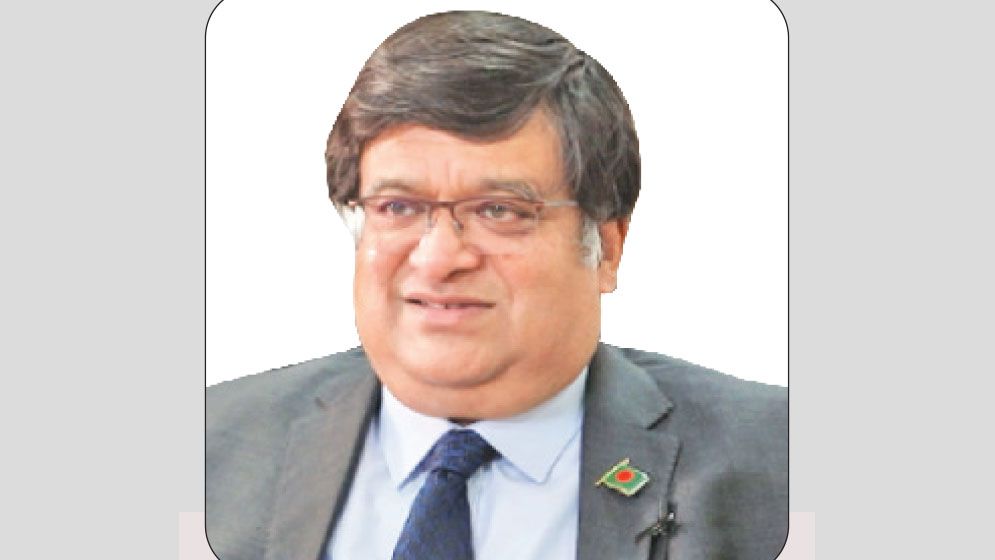
I had the distinction of serving as Bangladesh’s Ambassador to China from 2019 to 2021. During this period, I observed with admiration how China made significant advances in economic recovery, poverty reduction, technology, infrastructure, renewable energy, and space exploration.
The period was also marked by the COVID-19 pandemic. Through our sincere and dedicated efforts, together with China’s cooperation and assistance, Bangladesh secured almost 78 million doses of COVID-19 vaccines produced by Chinese state-owned enterprises, Sinopharm and Sinovac. In addition, China donated around 2.1 million vaccine doses. Medical equipment and supplies to combat COVID-19 were also provided by China to Bangladesh.
This period also witnessed some significant political and strategic milestones that will go down in history:
I. Centenary of the Communist Party: China celebrated the 100th anniversary of the founding of the Communist Party of China in July 2021.
II. First Centenary Goal: The Chinese leadership declared that China had achieved its goal of building a moderately prosperous society in all respects by 2021.
III. Long-term Development: China began implementing its 14th Five-Year Plan, with greater emphasis on technological self-reliance, domestic demand, innovation, and environmental objectives.
It is by no means a small feat that China has pledged to peak carbon emissions before 2030 and achieve carbon neutrality before 2060. To meet its commitments under the Paris Agreement, China has made significant progress in the renewable energy sector and invested heavily in low-carbon technologies, although its continued reliance on coal remains an important challenge.
Today, Chinese firms produce around 80 per cent of the world’s solar modules, 85 per cent of lithium-ion batteries, and 75 per cent of wind turbines.
From a policy perspective, a defensible summary would be that China controls more than four-fifths of key global solar and battery manufacturing capacity and roughly three-quarters of global wind-nacelle manufacturing capacity, based on recent assessments from 2024–2025.
For Bangladesh, this industrial concentration creates opportunities to import competitively priced clean-energy equipment, attract Chinese manufacturing investment, and develop local solar-panel assembly and battery-related industries.
Conclusion: Applying Environmental Sustainability Principles in Bangladesh
How can growing awareness of environmental conservation and the conscientious pursuit of sustainability be applied in Bangladesh, particularly in the planning, design, and implementation of projects?
For example, when preparing a new highway, bridge, power plant, or industrial zone, the project authority could require:
i. Environmental Impact Assessment before approval
ii. Climate-risk screening and appropriate resilience measures in the design.
iii. Comparison of alternative sites and engineering solutions.
iv. An Environmental Management Plan with a dedicated budget.
v. Quantifiable indicators for emissions, energy consumption, water use, and ecosystem protection.
vi. Periodic environmental monitoring during construction and operation.
It should be underlined that environmental sustainability is only one dimension of overall project sustainability. Economic viability, financial affordability, social impacts, and institutional capacity should also be assessed during project planning and design.
As Watkins et al. (2017) note, the loss of natural resources and ecosystem services, pollution, limited local benefits in terms of infrastructure services or job creation, and reduced local access to resources can create social conflicts in some areas and regions. Combined with inadequate planning, insufficient consultation, and a lack of transparency, these problems can lead to infrastructure project delays, cost overruns, and reputational damage to governments, financiers, and private-sector participants.
_____________________________________
The writer is a former Ambassador of Bangladesh