



 For all latest news, follow the Daily Sun's Google News channel.


For many decades, Rangpur was known as a Monga-prone area, a curse for the region. The local Bengali term “Monga” was used to describe a famine-like situation in northern Bangladesh in which the poor suffered acute deprivation caused by their lack of purchasing power arising from seasonal scarcity of gainful employment. This acute seasonal distress recurred each year as an inherent feature of greater Rangpur districts, which were very much dependent on agriculture.
Evidence available indicated that the people of the greater Rangpur districts of northern regions of Bangladesh used to face severe food insecurity every year during mid-September to mid-November (Awshin-Kartik). During this period, the rural poor who relied on farm work regularly suffer severe seasonal hardship when household food availability and farm employment dry up. When this Monga period arrived, the food stocks of the poor people had been heavily depleted, while opportunities for farm labouring work dried up before the next peak, which fell during the Aman rice harvest in December. Hence, the rural poor living in these months passed days, even months, with very little work and therefore income. These families may have to survive extended periods without proper meals and sometimes with no food at all.
During 1998-2000, I conducted a study to know the causes of Monga, where my study revealed that approximately 67 per cent of the total population of greater Rangpur districts are landless and fully dependent on agriculture as agricultural day-labourers. They owned no farmland of their own and were dependent on wages earned by working on other people’s agricultural land to feed their families.
After harvesting Aman rice in December, farmers in the region cultivated a variety of crops, including late Boro rice, potatoes, maize, mustard, wheat, vegetables, tobacco, etc., where agricultural day-labourers found employment at different times between January and May through different farming activities.
However, the situation changed dramatically during the rainy season from June to August, when almost one hundred per cent of farmers are coming to cultivate Aman rice on nearly all their farmland, as they have no choice but to cultivate Aman rice in the monsoon. Due to heavy rainfall during this monsoon season, there is limited opportunity to go for anything other than rice, while most of the farm households are fond of Aman rice cultivation as a staple food. The varieties commonly grown in the area had long growing cycles, taking approximately 150-170 days from sowing to harvest.
Consequently, from June and July, when Aman seedbeds were prepared, seedlings raised and fields prepared for transplantation, agricultural labourers remained engaged in various activities, including weeding and fertiliser applications, until around the middle of September.
After that, however, there was virtually no agricultural work on the rice fields for approximately two months – from mid-September to mid-November, corresponding to Awshin and Kartik. Since Aman rice crop cultivation is universal, almost one hundred per cent of day-labourers and hardcore poor households are fully dependent on employment in various stages of rice cultivation, and as there were no job opportunities in the rice field during mid-September to mid-November, farm households and day-labourers passed their lives with limited or no income during these days.
With employment disappearing, their earnings fell almost to zero. They had no money to purchase food, and desperate conditions prevailed in household after household. To buy food, many borrowed money from local moneylenders at high interest rates. Others sold cattle, goats, ducks and chickens at distressingly low prices to survive. Many were forced to sell their labour in advance for meagre wages or leave their villages in search of work in towns and cities.
People were compelled to endure inhumane living conditions – a devastating seasonal crisis that afflicted Rangpur regions of northern Bangladesh during Awshin and Kartik, leaving people struggling to survive on inadequate food or facing outright starvation.
For generations, Monga had followed this pattern in the Rangpur region. When the rice ripened at the end of November or in December, agricultural labourers once again found work harvesting and threshing paddy. Monga would then disappear. Then, I realised that I needed reliable data to establish whether any farmers in northern Bangladesh harvested mature Aman rice during Awshin and Kartik (mid-Sep to mid-Nov).
During 2000-02, I visited government and non-government institutions, asking questions and gathering information. I specifically wanted to know whether there was any evidence of Aman rice ripening and being harvested during Awshin-Kartik months.
One day, after hearing my question, an agricultural officer asked me whether I was actually an agricultural scientist or not! When I answered yes, he expressed surprise that someone with my professional background would ask such a foolish question!
He explained that harvesting Aman rice during Awshin and Kartik was out of the question because, according to him, Aman rice did not even ripen before Agrahayan (November). He added that the answer was already reflected in a familiar line from the national song of Bangladesh in Bengali: “O mother, what sweet smiles have I seen in your fields, heavy with grain in Agrahayan? “ I felt embarrassed by his response and left the office. However, I could not find a single farmer cultivating any short-duration Aman rice variety anywhere in the greater Rangpur region.
Nevertheless, after nearly a month of collecting information, I reached an important conclusion: in the prevailing farming system of the region, farmers could neither harvest Aman rice before Agrahayan nor obtain a harvest-ready crop earlier using the varieties then commonly cultivated.
The evidence convinced me that the root cause of Monga lay in the long duration of the traditional Aman rice varieties grown during the rainy season. A lasting solution would therefore require a new cultivation technique that would enable farmers to harvest Aman rice during Awshin and Kartik instead of waiting until Agrahayan.
If that could be achieved, agricultural labourers would find work during the Monga period, farmers would obtain their rice harvest, and their cattle would have access to straw. In this way, Monga could be brought to an end.
To find the root causes of Monga, I conducted another research during 2000-2002, where it was confirmed that farm households are facing serious problems cultivating the following crops (next to Aman rice) at the right time, i.e., in November. Normally in high- and medium-highland areas, farmers are cultivating potato, maize, tobacco, mustard, vegetables, etc. after harvesting of Aman rice. The proper time to cultivate these crops in northwestern Bangladesh is in November. But due to the presence of long-duration Aman rice crops in most of the lands in November, farmers had no scope to avail the right time to cultivate such crops. This delayed cultivation hampers the normal yield and also increases the production cost.
Under separate research, it is also mentionable that when farm households will be able to cultivate potato, maize, mustard, etc. at the right time, i.e., in November, farmers will get more yield for timely cultivation and, side by side, could be able to minimise the production cost by reducing the use of pesticides, irrigation and other inputs, while farmers will get a good price for their products for early marketing.
After identification of the root causes of Monga through above research programs, I concluded that the region needed a technology on short-duration Aman rice variety with high-yielding capacity alongside the existing rice varieties. These new varieties and technologies would have to mature early enough for farmers to harvest rice during Awshin and Kartik while maintaining satisfactory yields.
In 2002, I collected seeds of nine short-duration local rice varieties, like Shaita, Pariza and Kataktara, etc., and began research trials at the Rangpur RDRS farm. I also incorporated an analysis of the costs and benefits of the proposed technology into my research. I knew farmers would adopt a new technology only if it proved economically viable. They would not adopt a technology that reduced their profits. I found that several local varieties matured much earlier, around the beginning of the Monga period. Their yields, however, were substantially lower. I realised that farmers would not be satisfied with such low yields, even if the varieties matured early.
In 2003, I have established a trial plot of BRRI dhan33 (developed by BRRI in 1997, as the most short-duration variety, requiring 120 days instead of 150-160 days) under the assistance of the PETRA-BRRI-RDRS-ICM project to assess its potential for addressing Monga. The rice began ripening at the beginning of Kartik, which was highly encouraging. However, the small trial plot was surrounded by extensive fields of green Aman rice. Before the crop could be harvested, birds and rats damaged it so severely that the harvest became impossible. Despite this setback, the trial generated valuable practical information that contributed significantly to my subsequent research. In addition, in 2003-04, I had established a PhD research programme with six sub-components on “Adjustment of Rice-Based Cropping Pattern and Agro-Techniques to Mitigate Seasonal Food Security in Northwest Bangladesh” at RDRS Rangpur farm.
In 2004, the Adaptive Research Division of BRRI extended their hand with seeds of the short-duration rice variety BRRI dhan 33. In addition, Dr M. A. Hamid Miah of IRRI’s Liaison Scientist also helped with the IRRI-developed Drum-Seeder for direct seeding. Thus, I had an opportunity to investigate the performance of a short-duration rice variety under direct seeding technology, compared with the traditional transplanting system of a short-duration rice variety to mitigate Monga.
Using the drum seeder for direct seeding, BRRI Dhan33 matured in just 105 days instead of 120 days. This meant that rice could be harvested at the very beginning of the Monga period. The yield was also satisfactory, at approximately 4.1 tonnes per hectare. However, owing to several limitations, farmers did not readily adopt the direct-seeding method for rice cultivation.
The transplanting method proved more promising. When seedlings were transplanted at the end of June or in the first few days of July, the crop could be harvested from early October to early November (through the entire Kartik). The yield was encouraging, averaging approximately 3.8 tonnes per hectare.
On 22nd October 2004 (7 Kartik) – more than a hundred people gathered at the Rangpur RDRS farm and observed the historical event, where, for the first time, people in Rangpur witnessed Aman rice being harvested on 7 Kartik as research outcomes to overcoming Monga. DAE, IRRI (Dr Zainul Abedin), BRRI (Dr Mushrraf Hussain and Dr M. A. Mazid), BINA, NGOs, and electronic and print media with hundreds of farmers participated in the event. The event received extensive coverage on television and in newspapers. People across the country saw that a potential and sustainable solution to Monga was emerging.
The ability to harvest Aman rice during Kartik’s creation created a major opportunity for farmers in Rangpur. November is normally the appropriate time to cultivate Rabi and winter crops. However, when Aman rice remained in the fields during that period, farmers could not plant potatoes, maize, wheat, mustard, winter vegetables, tobacco and other crops at the proper time. Late planting often resulted in lower yields, pest and insect infestations, and increased production costs.
By harvesting Aman rice during Kartik (partly October), farmers could begin cultivating Rabi and winter crops at the appropriate time in Agrahayan (November). Timely planting improved crop performance and increased yields. Because the crops matured earlier, farmers could also obtain better market prices. Together, all these benefits helped farmers secure better incomes.
Short-duration Aman rice cultivation therefore offered multiple advantages. Agricultural labourers could obtain employment during the Monga period, farmers could harvest their rice earlier, and they could earn additional income from subsequent crops due to timely plantation.
An analysis of the combined yields of short-duration Aman rice and the following Rabi crops showed that, when farmers cultivated short-duration Aman rice and planted their Rabi crops on time, the total yield and income of the two crops could increase by 25–50 per cent simply because the second crop was planted at the appropriate time.
This finding disproved the claim that short-duration Aman rice cultivation would reduce national agricultural production, which was raised by some scientists intentionally during that period. On the contrary, total production increased, contributing to higher food production across northern Bangladesh.
The Northwest Crop Diversification Project (NCDP), led by DAE, organised a national workshop titled “Updates on Monga Research in Northwest Regions of Bangladesh” at Dhalia, Nilphamari, on May 14, 2005. The chief guest was the then State Minister for Agriculture, Mirza Fakhrul Islam Alamgir, who is now the Hon’ble President of Bangladesh, while the special guest was the then Deputy Minister, Asadul Habib Dulu, who is now a minister.
I was invited to present my research alongside two other researchers. The lead presenter was a rice scientist from Rangpur who discussed oil production from rice husks, a subject not related to Monga issues, while the second presenter also addressed a topic not related to Monga issues. As the third presenter, I delivered a paper entitled “A Sustainable Solution to Monga through Short-Duration Rice Technology”, where I shared my research findings, which were held in 2004.
In his remarks, the chief guest pointed out that my research paper was the only presentation directly related to the central theme of the workshop, while the other presentations are not relevant to Monga mitigation. He expressed hope that my research findings could provide a lasting solution to Monga in northern Bangladesh and described it as highly promising. He also assured me of all possible assistance and said that he would bring the findings to the attention of the other policymakers, mainly the agriculture minister and the prime minister.
Following the workshop, various research organizations and scientists began taking an active interest in Monga research issues. I was surprised to learn that, even after twenty years, the then State Minister for Agriculture still remembered the workshop.
A few days later, Dr Kamal Uddin Siddiqui, the then Principal Secretary to the Prime Minister, invited me to present my research at the Prime Minister’s Office in Tejgaon. In the presence of several secretaries and nearly a hundred senior policymakers, I presented my research findings related to Monga issues.
After a question-and-answer session, Dr Siddiqui praised the research and assured me of the government’s full cooperation. The Executive Director of RDRS also congratulated me and provided enthusiastic support for refining the technology and disseminating the technology throughout the remote areas of the greater Rangpur district.
After the successful research on short-duration Aman rice in 2004, I began investigating how its yields could be improved at the farmers’ level. In 2005, I established 18 field trials on farmers’ land across five districts of greater Rangpur, working directly with farmers to assess the technology’s practical viability. The research showed that satisfactory yield improvements could be achieved by observing just three important principles when cultivating short-duration rice.
First: Prepare seedbeds using the soil solarisation method: Seedlings raised in soil solarised seedbeds were more vigorous and grew larger in less time. Instead of the usual 30–40 days, healthy seedlings could be lifted from the seedbed and transplanted within 20–25 days. This method also helped improve rice yields.
Second: Transplant seedlings at closer spacing: Short-duration rice varieties tend to produce relatively fewer tillers. Therefore, seedlings should be transplanted at intervals of 6-7 inches rather than the conventional 8-10 inches. This helps achieve a plant population comparable to that of long-duration varieties and improves the potential for a good harvest.
Third: Apply the final top-dressing of fertiliser earlier: Since short-duration rice varieties reach the panicle initiation stages in less time, the final top-dressing should be applied 30–35 days after transplanting rather than the usual 40-60 days. Timely fertiliser application helps secure a satisfactory yield.
By following these three principles, farmers could obtain yields comparable to, and in some cases higher than, those of long-duration rice varieties despite the shorter cultivation period.
In 2006, RDRS disseminated the technology to 9,427 farmers through 22 non-governmental organisations (NGOs) operating in remote areas of the five Monga-affected districts of greater Rangpur. The Department of Agricultural Extension extended its support during this phase. Another organisation, RIB, also helped disseminate the technology through four organisations, including RDRS, across hundreds of acres of land.
In 2007, with support from the Department of Agricultural Extension (DAE), RDRS expanded the technology to 5,928 farmers through 25 local NGOs. On October 4, 2007, Major General Syed Fatemi Ahmed Rumi, the then GOC of the Rangpur Cantonment, visited a remote area of Kaliganj in Lalmonirhat to observe the early-rice production technology (Ratoon Rice) in practice. Attending a farmers’ field day as chief guest, he exchanged views with farmers and expressed satisfaction with the research findings, which he found to be the most useful technology to mitigate Monga.
In 2008, the Government of Bangladesh incorporated the technology into its national programme and supported its expansion across 40,000 hectares in northern Bangladesh. In parallel, RDRS disseminated the technology to 7,000 farmers through 28 NGOs in remote areas of the five Monga-affected districts of greater Rangpur.
Through successive trials and refinements, a major transformation took place in the traditional cropping pattern of Monga-prone northern Bangladesh. Several research institutions subsequently began developing short-duration rice varieties, and a number of high-yielding short-duration rice varieties were introduced that produced even better yields than BRRI dhan33. Farmers are now cultivating these newly developed rice varieties instead of BRRI Dhan 33. Many are also producing huge short-duration hybrid rice with assistance from various private seed companies.
I remember collecting data on Monga issues in remote parts of Rangpur between 1998 and 2002. At that time, I could not find a single farmer whose field contained mature Aman rice during Awshin and Kartik. By 2025, however, farmers in northern Bangladesh were harvesting short-duration, mature Aman rice and short-duration hybrid rice on approximately 50 per cent of their farmland during Kartik. As a result, Monga had been brought to an end in the region. Farmers were engaged in agricultural activities throughout the year, including during Ashwin and Kartik.
Monga has now been sustainably overcome. Agricultural labourers in the Rangpur region are harvesting and threshing rice during Awshin and Kartik and earning enough to put food on their tables. This research was the first comprehensive research initiative aimed at permanently eliminating Monga. It also formed the basis of my PhD research. In recognition of my contribution to eliminating Monga, the Government of Bangladesh honoured me with the Independence Award, the country’s highest civilian award for contributions to science and technology. I express my sincere gratitude to the government and the people of Bangladesh for this recognition and support. I also expressed my sincere thanks to RDRS also.
____________________________________________________________
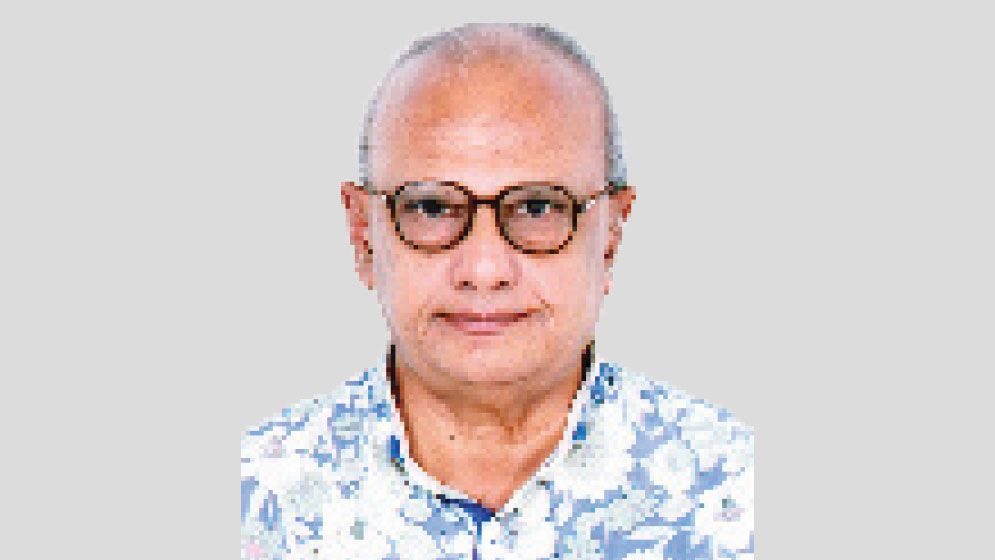
Dr. M G Neogi is the recipient of the highest prestigious state award “Independence Award for contribution in Science and Technology. He can be reached at [email protected]