




 For all latest news, follow the Daily Sun's Google News channel.


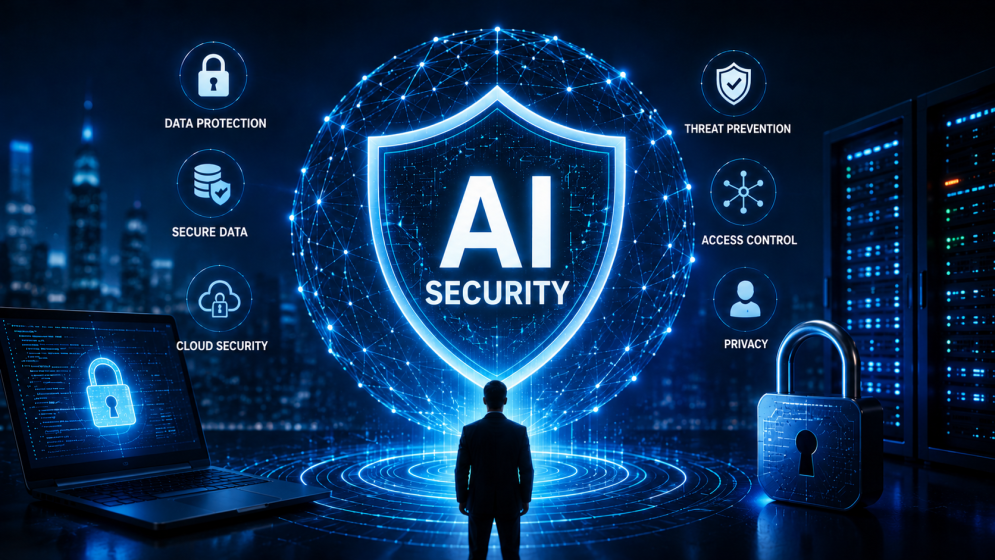
AI security highlights the importance of protecting data, securing AI systems, controlling access and preventing cyber threats.
Artificial intelligence is transforming how businesses
operate, people communicate and organisations manage information. From AI
chatbots and automated customer services to data analysis and business
applications, AI is becoming an essential part of the digital world.
However, as the use of artificial intelligence increases, so
do concerns about its security. AI systems can handle sensitive information,
connect with business databases and perform tasks with limited human
involvement. If these systems are poorly protected, they can become targets for
cyberattacks, data theft and manipulation.
This makes AI security an important part of modern
cybersecurity. Protecting AI systems means protecting not only technology but
also the data, businesses and people that depend on it.
What Is AI Security?
AI security refers to the technologies, practices and
policies used to protect artificial intelligence systems, models, data and
infrastructure from cyberattacks, unauthorised access and misuse.
It includes protecting training data, securing AI
applications, preventing model manipulation and controlling access to sensitive
information.
For example, a company using an AI chatbot to assist
customers must ensure that private customer information cannot be accessed or
exposed by unauthorised users.
Unlike traditional cybersecurity, AI security also addresses
specific threats such as prompt injection, data poisoning and adversarial
attacks that target how AI models process information.
Why Is AI Security Important?
AI systems increasingly support business operations and
handle valuable information. A security failure can therefore create
consequences beyond the technology itself.
Protecting sensitive data: AI applications may
process customer details, financial records, employee information and
confidential business documents. Weak security controls can expose this
information.
Preventing cyberattacks: Attackers may manipulate AI
inputs, exploit software vulnerabilities or attempt to access protected systems
through connected applications.
Maintaining business operations: Companies relying on
AI-powered services may face disruption if their systems are compromised or
become unavailable.
Building customer trust: Businesses must protect the
information customers share with their services. Strong security practices help
maintain confidence and protect organisational reputations.
What Are the Major AI Security Risks?
AI systems face several security threats depending on how
they are developed, trained and connected to other services.
1. Prompt Injection Attacks
Prompt injection occurs when attackers create malicious
instructions designed to manipulate an AI system into ignoring its intended
instructions or revealing restricted information.
For example, malicious text hidden inside a document could
attempt to influence an AI assistant that has permission to read company files.
Without proper safeguards, this could lead to unintended information disclosure
or actions.
2. Data Poisoning
AI models learn from training data. If attackers introduce
misleading or manipulated information into that data, they may affect the
model's behaviour and accuracy.
For example, manipulated training data could make a
fraud-detection system less effective at identifying suspicious transactions.
3. Data Leakage
AI applications may process private documents, personal
information and confidential business data. Poor access controls, insecure
integrations or unsafe use of AI tools can expose this information.
Employees sharing confidential company documents with
unapproved AI services may also create data protection risks.
4. Model Theft and Adversarial Attacks
Attackers may attempt to copy proprietary AI models or
extract valuable information from them.
Adversarial attacks involve specially designed inputs that
cause AI systems to make incorrect predictions. For example, slightly modified
images may confuse an image-recognition model even when the changes are
difficult for people to notice.
5. Insecure AI Integrations
AI applications often connect with external tools,
databases, APIs and business software. If these connections have weak security
controls or excessive permissions, they can create opportunities for
unauthorised access.
How Can AI Security Threaten Businesses?
AI security problems can affect an organisation in several
ways:
- Financial
losses: Security incidents may lead to fraud, recovery expenses and
operational disruption.
- Data
exposure: Customer and employee information may become accessible to
unauthorised users.
- Business
interruption: Compromised AI services can affect customer support and
internal operations.
- Intellectual
property theft: Attackers may attempt to access proprietary models,
research or confidential business information.
- Reputational
damage: Customers may lose confidence in organisations that fail to
protect their information.
These risks become more significant when AI systems are
connected to multiple business applications.
How Can Businesses Protect AI Systems?
Protecting AI requires a combination of cybersecurity
measures, responsible development and continuous monitoring.
1. Protect sensitive data: Use encryption, secure
storage and appropriate access controls to protect personal and confidential
information.
2. Secure training data and models: Check data
sources for suspicious information and protect model files, development
environments and software dependencies.
3. Test AI applications: Regularly test systems for
prompt injection, data leakage, malicious inputs and other AI-specific
vulnerabilities.
4. Control access and permissions: Give AI
applications and employees access only to the information and tools they need.
5. Monitor system activity: Watch for unusual
requests, suspicious access patterns and unexpected behaviour. Maintain a
response plan for security incidents.
6. Train employees: Establish clear rules about
approved AI tools and explain why confidential information should not be shared
without permission.
7. Maintain human oversight: Require additional
verification or human approval before AI systems perform sensitive actions,
such as accessing confidential records or processing important transactions.
AI Security and the Future of Cybersecurity
Artificial intelligence is changing both sides of
cybersecurity. Organisations can use AI to identify suspicious activity,
analyse security information and support threat detection. At the same time,
attackers may use AI to create convincing fraudulent content, automate certain
tasks and develop more targeted attacks.
The growth of AI agents introduces additional challenges.
These systems can interact with applications, access files and perform
multi-step tasks. Without appropriate permissions and monitoring, an agent
could expose information or carry out unintended actions.
Organisations such as NIST, CISA and OWASP are developing
guidance and security practices to address risks associated with AI
technologies. As AI adoption expands, security will need to become part of the
development and deployment process rather than an afterthought.
Conclusion: Building a More Secure AI Future
Artificial intelligence offers significant opportunities,
but its growing use also creates new cybersecurity challenges. Prompt
injection, data poisoning, data leakage and insecure integrations demonstrate
why AI systems need specialised protection.
Businesses must secure their data, test AI applications,
control access and monitor system activity. Developers and users also share
responsibility for ensuring that AI tools are used safely.
Ultimately, AI security is not just about protecting
technology. It is about safeguarding information, maintaining business
operations and building trust in an increasingly AI-driven world.
What is AI security?
AI security involves protecting artificial intelligence
systems, models, data and infrastructure from cyberattacks, unauthorised access
and manipulation.
Why is AI security important for businesses?
It helps businesses protect sensitive information, prevent
cyberattacks, maintain operations and build customer trust.
What are the major AI security risks?
Common risks include prompt injection, data poisoning, data
leakage, adversarial attacks, model theft and insecure integrations.
Can AI systems be hacked?
Yes. Attackers can exploit software vulnerabilities,
compromised accounts, malicious inputs and weaknesses in connected services.
How can companies improve AI security?
Companies can protect data, limit access permissions, test
AI applications, monitor suspicious activity and maintain human oversight.
What is the difference between AI safety and AI security?
AI safety focuses broadly on reducing harm
caused by AI systems. AI security specifically focuses on protecting AI models,
applications, data and infrastructure from attacks and unauthorised access.