


 For all latest news, follow the Daily Sun's Google News channel.


Nvidia’s future: Can it thrive without Jensen Huang
Leadership upheaval puts the chipmaker’s innovation engine, AI dominance and long-term growth strategy to the test

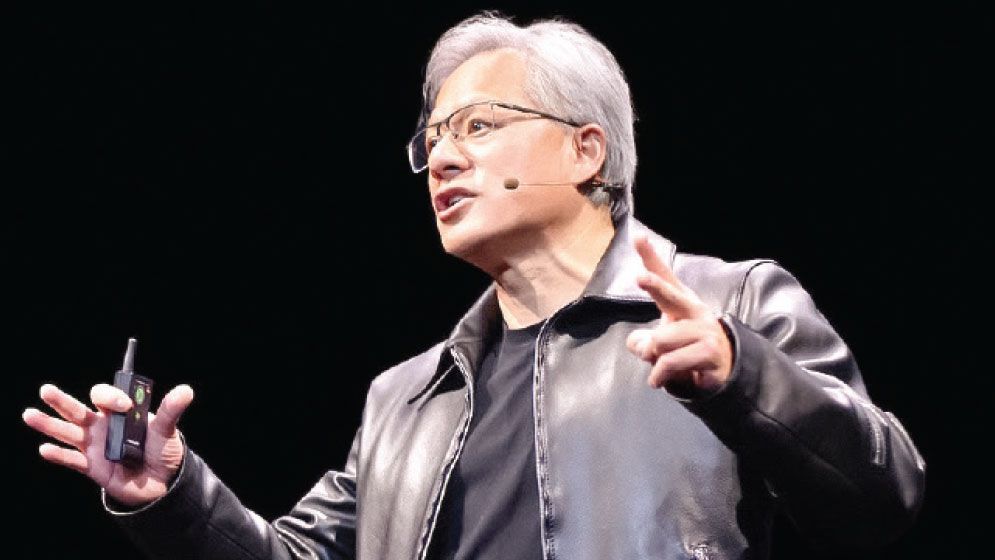
Nvidia faces one of the most consequential transitions in its history.
The sudden resignation of co-founder and longtime chief executive Jensen Huang raises questions about whether the world’s leading artificial intelligence (AI) chipmaker can sustain its technological dominance without the leader who drove its remarkable growth.
Huang’s departure marks a turning point for the California-based technology giant, whose rise has been closely tied to the global AI revolution.
His technical vision, strategic decisions and customer relationships transformed Nvidia from a graphics processing unit (GPU) manufacturer into a dominant supplier of computing infrastructure for advanced AI.
Last Thursday, Nvidia announced that its board had accepted Huang’s resignation the previous day.
Chief Financial Officer Colette Kress, who joined the company in 2013, was appointed interim chief executive and will retain her financial responsibilities while the board searches for a permanent successor.
Longtime director Harvey C Jones was named the company’s first board chairman.
The leadership shake-up follows reports of Huang’s alleged personal relationship with a woman suspected by US intelligence agencies of having links to China.
The allegations have raised concerns about corporate security, governance and national security. Nvidia has not publicly specified the reason for his resignation.
Beyond the controversy, the transition presents a broader challenge: whether Nvidia has built an institutional foundation strong enough to sustain its growth and innovation independently of its most influential figure.
Innovation remains Nvidia’s greatest strength
Despite the leadership disruption, Nvidia’s technological ecosystem remains its strongest competitive advantage.
Its GPUs are essential to training and running advanced AI models, while its CUDA software platform, networking technologies and integrated computing systems have created an ecosystem that competitors face considerable difficulty replicating.
This combination of hardware, software and developer relationships gives Nvidia an advantage extending beyond chip performance.
Its technologies are deeply embedded in the operations of major cloud providers, technology companies, research institutions and AI developers worldwide.
The company’s rapid introduction of increasingly powerful AI chips has reinforced its market position, helping it stay ahead of established semiconductor manufacturers and emerging competitors.
Crucially, Nvidia’s innovation pipeline does not depend entirely on its chief executive. Advanced chip development involves years of research, engineering, software optimisation and collaboration among specialised teams.
Much of the work on upcoming products is already under way, potentially allowing development to continue despite the leadership change.
Experienced engineers and senior technical executives will therefore play a central role in maintaining the company’s innovation culture and development momentum.
Kress brings substantial institutional knowledge to the interim leadership role. Having overseen Nvidia’s finances for more than a decade, she understands its operations, customers and investment priorities.
Her immediate challenge, however, extends beyond financial management to maintaining confidence among employees, investors, customers and strategic partners while ensuring continuity in decision-making.
Competition and geopolitical pressures intensify
Nvidia’s leadership transition comes as competition in the global AI semiconductor market intensifies.
Major technology companies are investing heavily in developing their own AI processors to reduce dependence on Nvidia, control computing costs and gain greater command over their infrastructure.
Rival chipmakers are also pursuing improvements in performance, energy efficiency and operating costs.
Although Nvidia’s integrated ecosystem creates substantial competitive barriers, the growing availability of alternative processors could gradually weaken customers’ dependence on its products.
Geopolitical tensions present another challenge. US export controls on advanced semiconductors have already complicated Nvidia’s access to China, a major technology market.
Further restrictions or changes in trade and technology policies could affect its international sales and long-term growth prospects.
The allegations surrounding Huang have also intensified scrutiny of corporate security and governance.
While the claims remain subject to investigation and independent verification, the controversy could attract further regulatory and political attention, particularly given the strategic importance of advanced AI chips.
Managing these risks will require Nvidia to combine technological leadership with effective governance, regulatory compliance and a clear strategy for navigating an increasingly fragmented global technology market.
Third-quarter earnings offer early test
Nvidia’s third-quarter fiscal 2027 financial results, scheduled for 17 November, will provide an early indication of its business momentum following the leadership upheaval.
Investors will closely examine revenue growth, demand for AI processors, major customers’ capital expenditure plans and management’s outlook for the coming quarters.
Updates on product development, production capacity and supply constraints will also help determine whether Nvidia can maintain its growth trajectory.
The earnings announcement and management commentary will give Kress an opportunity to demonstrate leadership continuity and reassure investors, customers and technology partners about the company’s strategic direction.
However, the immediate market reaction should not be confused with Nvidia’s long-term competitive position.
Its underlying strength will depend on maintaining technological leadership, meeting growing demand and translating massive AI infrastructure investments into sustainable customer value.
Can Nvidia thrive beyond its founder?
The central question facing Nvidia is not simply who will succeed Huang, but whether the company can preserve the strategic vision and entrepreneurial culture that made it a global technology powerhouse.
Huang was more than a corporate executive. He was the public face of Nvidia’s AI ambitions, a technology strategist and a central figure in developing relationships across the global computing industry.
His ability to anticipate market shifts and position Nvidia ahead of technological trends played a decisive role in its transformation.
Replacing that combination of technical expertise, commercial judgement and industry influence will be difficult.
Even with an experienced leadership team, Nvidia must demonstrate that its strategic capabilities and innovation culture are institutional strengths rather than extensions of one individual’s leadership.
There are grounds for cautious optimism. Nvidia retains a powerful technology ecosystem, an established global customer base, substantial engineering capabilities and deep relationships across the AI supply chain.
These advantages cannot easily be replicated by competitors or undermined by a leadership change.
Nevertheless, the next phase of AI development will demand continued breakthroughs in computing architecture, energy efficiency, software and infrastructure.
Any loss of strategic direction or development momentum could give competitors opportunities to narrow the gap.
Ultimately, Nvidia’s future will depend less on the circumstances of Huang’s departure than on how the company responds.
Its ability to sustain innovation, strengthen governance and navigate geopolitical challenges will determine whether it remains at the forefront of the AI revolution.
For Nvidia, this is more than a leadership transition. It is a defining test of whether one of the world’s most successful technology companies can evolve beyond its founder into an enduring institution in the age of artificial intelligence.
The writer is a journalist and can be reached at [email protected]