


 For all latest news, follow the Daily Sun's Google News channel.


Chinese humanoid robots serve, dance and play football
They demonstrate applications in healthcare, hospitality, industry and entertainment

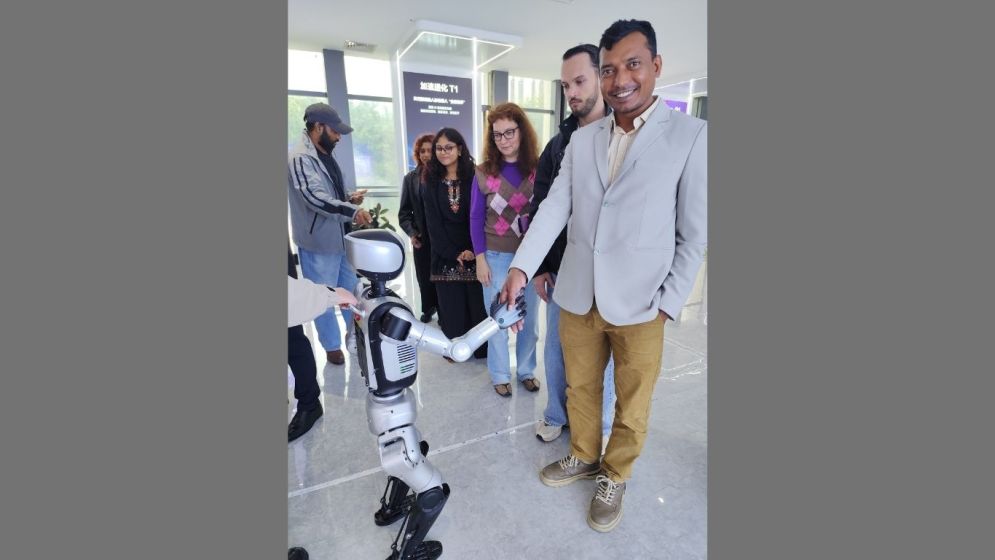
A humanoid robot at the Chongqing Robotics and AI Application Exhibition Center shaking hands with Aminul Islam, a journalist from The Daily Sun, on 1 November 2026. Photo: Daily Sun
A Bangladeshi media delegation visited the Chongqing Robotics and AI Application Exhibition Center on 1 November, where they got a glimpse of China's emerging artificial intelligence (AI) technologies and humanoid robots, as well as their growing applications across various sectors.
The delegation witnessed demonstrations of how robots are being used in healthcare, industrial production, hospitality, sports and entertainment.
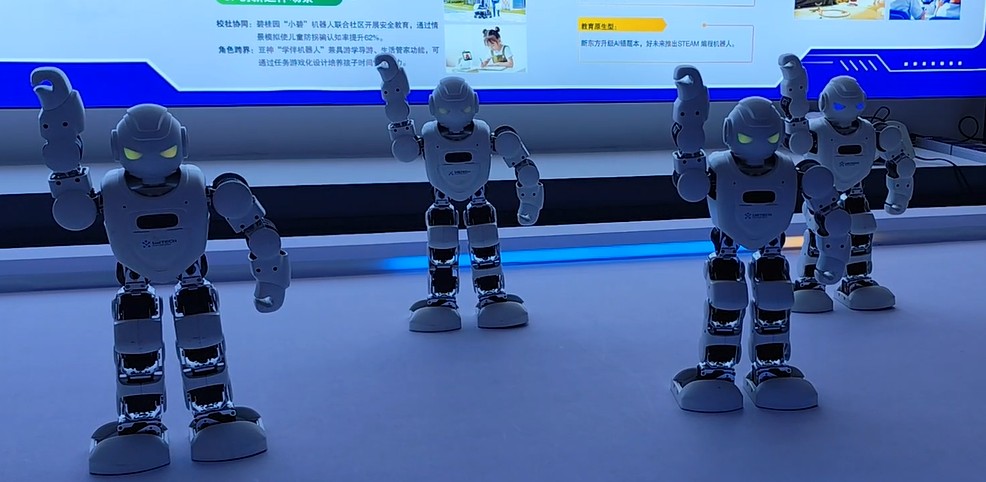
The exhibition featured several categories of robotics, including entertainment, mobile, educational, humanoid and industrial robotics, highlighting their diverse capabilities and practical applications.
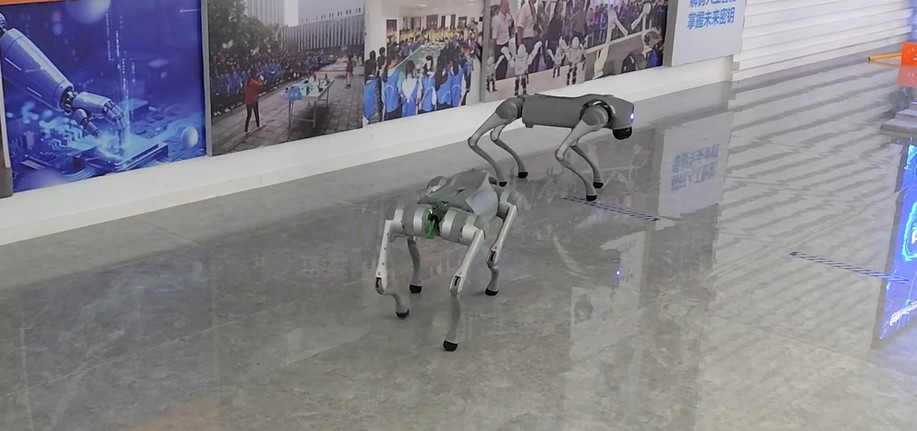
In the entertainment section, robots sang, danced and interacted with visitors. Four-legged mobile robots demonstrated their mobility and inspection capabilities, while educational robotics showcased robot building, programming and robot racing.
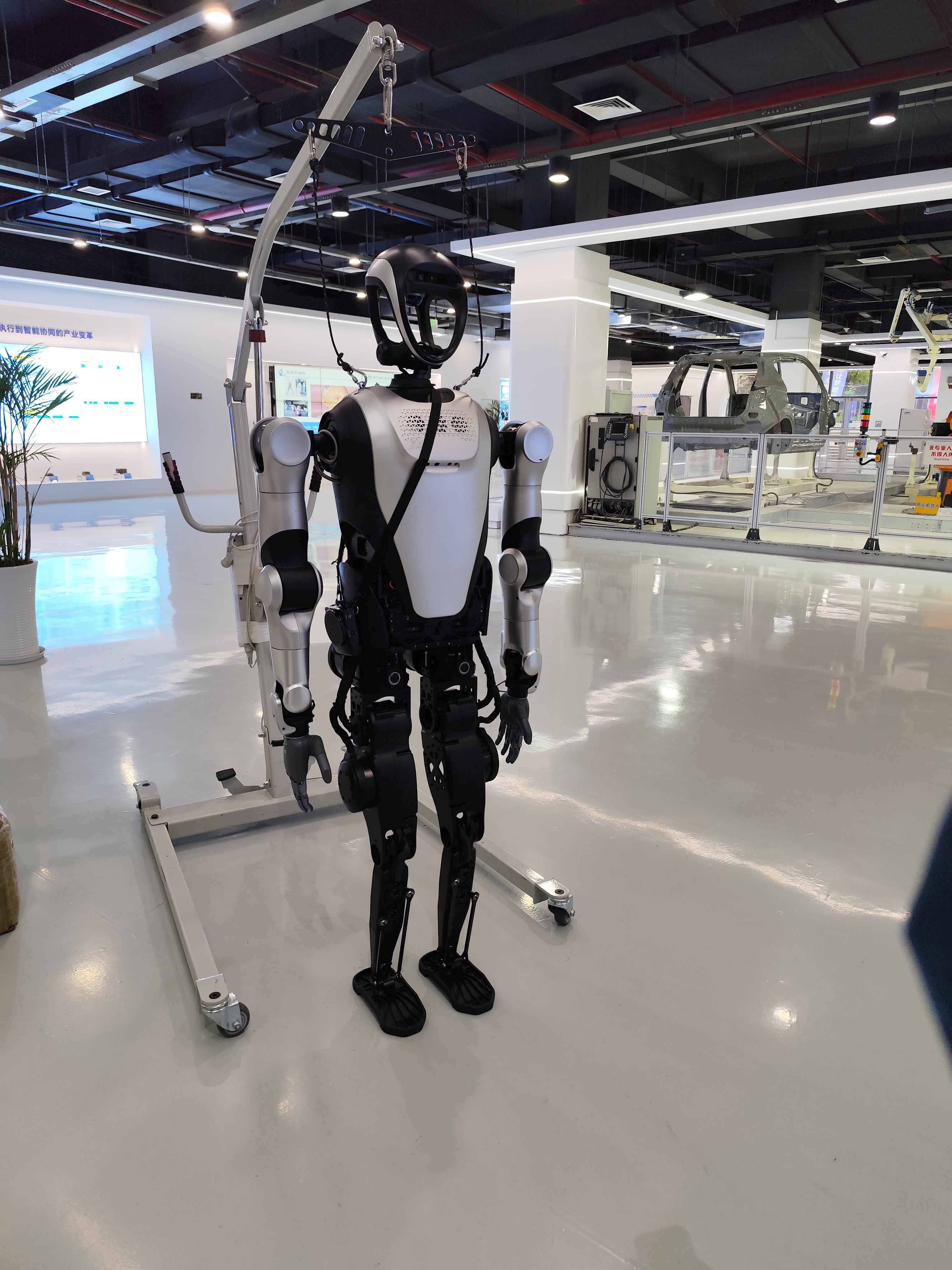
Humanoid robots demonstrated human-like movements and functions. In the industrial robotics and automation section, robotic systems showcased their ability to sort objects by colour, identifying and separating them according to colour. A humanoid robot also displayed its football skills by kicking a ball into a goal.
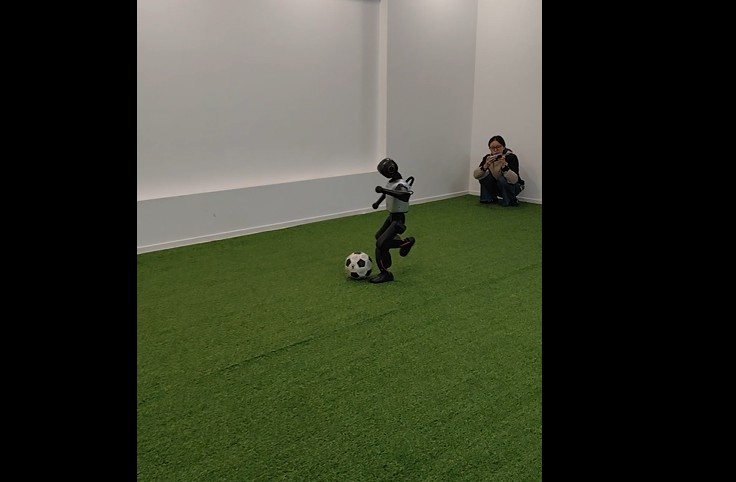
The demonstrations highlighted the growing role of humanoid robots in environments where they can assist people and interact directly with them.
One of the highlights was the display of surgical robots, showcasing the potential applications of advanced robotic technology in surgery, where precision, stability and controlled movements are crucial.
Visitors also watched robots perform coordinated dance movements to music, demonstrating their ability to combine movement and entertainment.
In another demonstration, humanoid robots played football, showcasing their balance, movement coordination and ability to respond to changing situations during a game.
The delegation also witnessed the use of service robots in the hospitality sector outside the exhibition centre. At a hotel, a robot delivered food to guests, illustrating how robotic technology is being integrated into routine hotel operations.
These applications demonstrate how robotics is expanding beyond factories and research laboratories into public spaces, hotels and other service-oriented businesses.
The demonstrations also highlighted China's efforts to make AI-powered robots more practical and capable. Developers are combining artificial intelligence, mechanical engineering, sensors and advanced control systems to enable robots to interact with people and perform increasingly complex tasks.
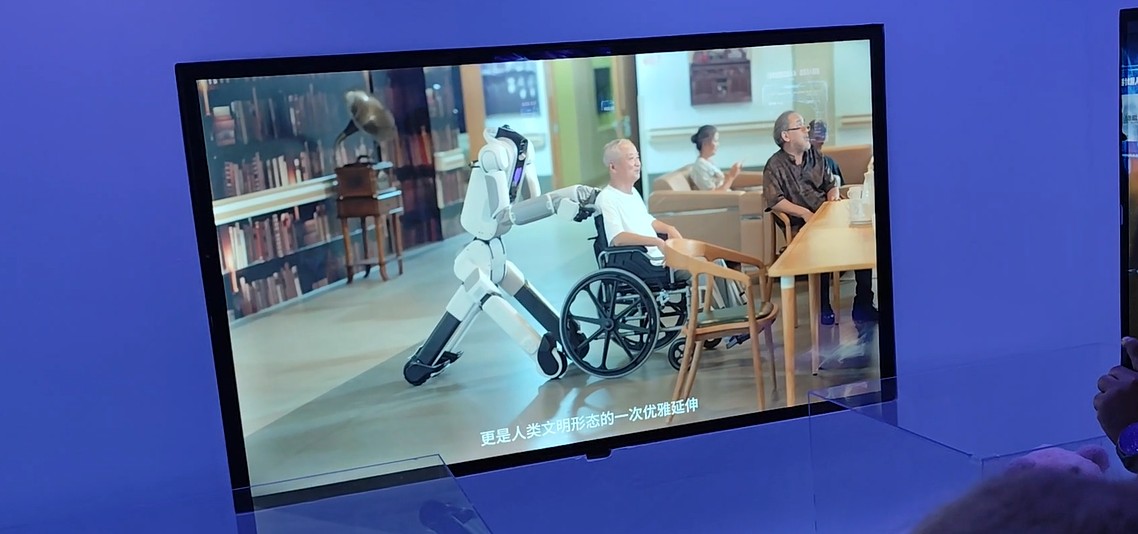
From assisting doctors and supporting industrial production to delivering food in hotels, robots are being developed to address a growing range of real-world needs.
Their applications in sports and entertainment also highlighted the potential of robotics to bring technological innovation closer to the public.
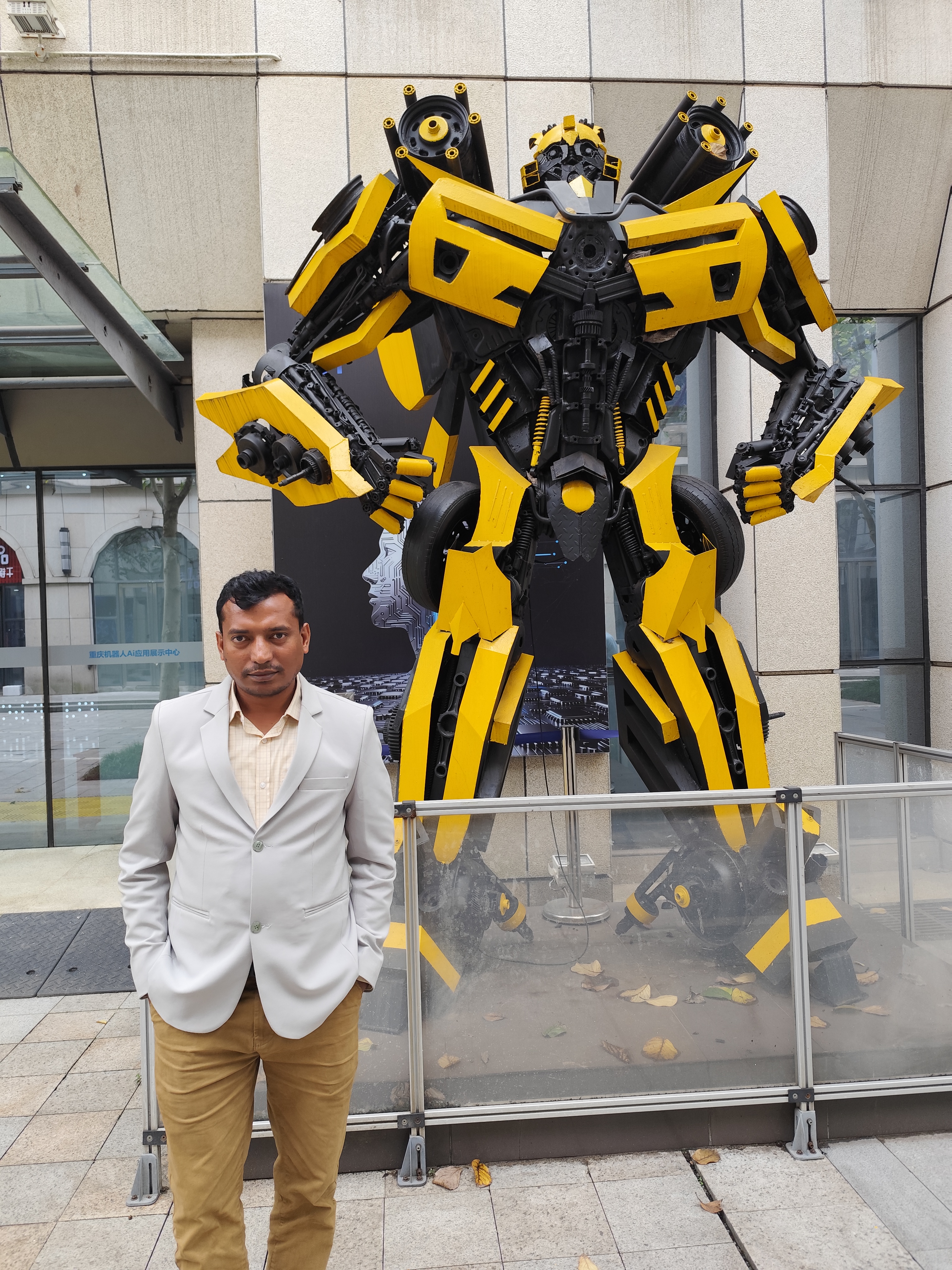
The visit gave the Bangladeshi media delegation an opportunity to observe advances in robotics and artificial intelligence in China and explore their potential impact on healthcare, industry, services and everyday life.