


 For all latest news, follow the Daily Sun's Google News channel.


‘Energy-stricken Bangladesh lags in adopting cheaper renewables’
91% of new renewable projects commissioned globally cheaper than fossil fuels alternatives, says study
Daily Sun Report, Dhaka
Published: 24 Jul 2025, 12:35 AM
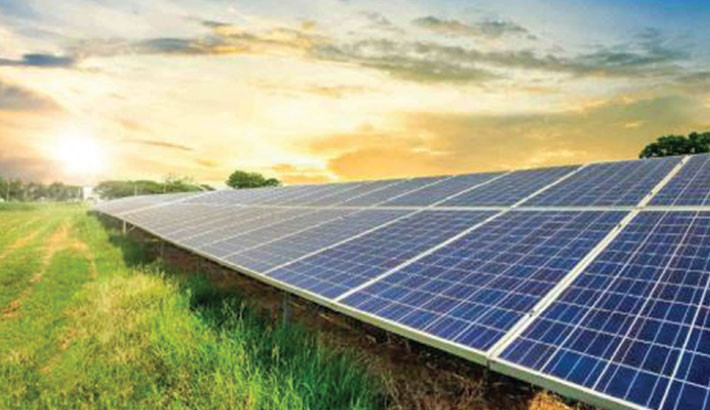
Energy-stricken Bangladesh is struggling to transition to renewable energy, despite it being significantly cheaper than fossil fuels and widely embraced by other countries.
A new report by the International Renewable Energy Agency (IRENA), titled Renewable Power Generation Costs in 2024, reveals that 91% of all renewable power projects commissioned globally last year produced electricity at lower costs than any fossil fuel alternative.
Despite this global shift, IRENA warns that developing and capital-constrained nations, including Bangladesh, face substantial obstacles to keeping pace with the transition.
“The cost of renewable energy is falling in Bangladesh too,” said Shafiqul Alam, lead energy analyst for Bangladesh at the Institute for Energy Economics and Financial Analysis (IEEFA). “However, the decline is slow due to high land prices, complex acquisition processes, and high transmission costs.”
Alam noted that the most recent tariff for utility-scale solar power in Bangladesh, before the suspension of the Special Power Act 2010, was $0.0985 per kilowatt-hour. “With government land allocation and competitive bidding including transmission cost coverage tariffs could drop significantly. Special Economic Zones (SEZs) could also host large-scale solar projects,” he added.
Globally, renewable power capacity grew by 582 gigawatts in 2024, helping to avoid around $57 billion in fossil fuel consumption. IRENA highlighted steep cost reductions in solar and wind power, with onshore wind emerging as the cheapest source at $0.034 per kWh, followed by solar photovoltaic (PV) at $0.043.
However, IRENA cautioned that renewable energy development in the Global South including Asia, Africa, and Latin America faces systemic barriers such as weak grid infrastructure, high capital costs, limited financing, policy uncertainty, and bureaucratic delays.
“In Bangladesh, investor reluctance in recent renewable energy tenders signals a crisis of confidence,” Alam said. “Restoring implementation agreements in tender processes could help rebuild investor trust.”
The report, released on Wednesday, noted that in many developing countries, a significant portion of project costs comes from interest and financing, which drives up the overall cost of electricity. While wind generation costs are similar between Europe and Africa, financing remains the largest expense in African projects.
UN Secretary-General António Guterres commented: “Clean energy is now smart economics. But unless we expand grids, streamline administration, and make financing accessible, the renewable revolution risks leaving developing nations behind.”
IRENA Director-General Francesco La Camera added, “Renewable projects in 2024 helped avoid roughly $467 billion in fossil fuel costs. To sustain this momentum, urgent investments in policy, financing tools, and infrastructure are essential especially across the Global South.”
The report also notes that battery storage costs have dropped by 93% between 2010 and 2024, improving the stability and reliability of renewable systems.
The report also highlights technological advancements that have driven down battery storage costs by 93% between 2010 and 2024, significantly enhancing the stability and reliability of renewable energy systems.
Bangladesh has set a target to generate 3,000 megawatts of rooftop solar power by 2025. However, Alam stressed that accelerated on-the-ground implementation is vital to boost investor confidence and secure long-term energy sustainability.