


 For all latest news, follow the Daily Sun's Google News channel.


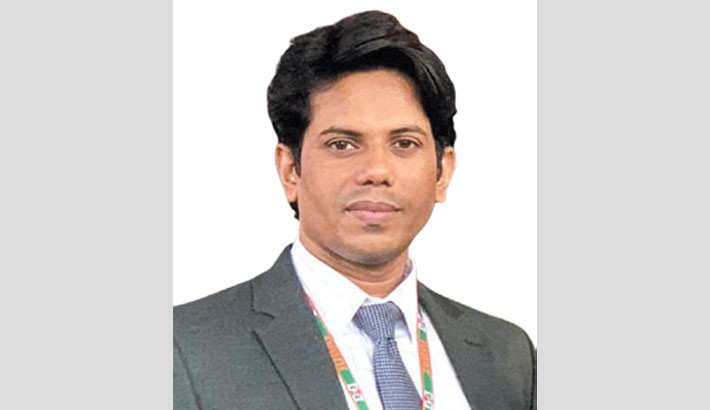
Md Kawsar Uddin
Chaos, corruption and crime have taken a deep root into our society. It seems that they are everywhere: on the streets, in public offices, at marketplaces and in the way people do their business. After the July Revolution, the absence of police personnel in the public spaces revealed how quickly the situation can take a dangerous turn if the law enforcement bodies do not perform their duties. When the police discontinued their work for a few days, the country did not just pause, it exploded. Robbery, rape, lynching, theft, mob violence, and killings—everything happened rampantly at night and in broad daylight. People could neither feel safe in cities nor in villages. Then, a question really strained my mind: why do so many people turn to crime the moment they get a chance to commit so? And why has this kind of behaviour become so common among people in our society?
Maybe the truth is we have never built a good society. Or maybe we built one without the foundation it needed, which is moral education. It was not that some isolated crimes triggered momentary chaos. These incidents point to a much deeper sickness. We are observing a total collapse of values, civic sense, and basic social responsibility. And if we trace it back, it all leads to one place: our broken education system.
For decades, our education has been treated as a tool to get a certificate, find a job, or climb up the social ladder. Surely, these are necessary. But education was never meant to stop there. It is supposed to shape people’s character, teach them values and prepare them as responsible citizens. But what did we do instead? We have produced thousands of graduates who know formulas and facts but do not know how to act like good human beings. In this kind of system, right and wrong become blurry. Personal responsibility disappears. And society, slowly, collapses.
In Bangladesh, moral and civic education is either ignored completely or treated like a side dish: something you include in textbooks but never discuss seriously in classes. Most teachers are not even trained to talk about these things, let alone live by them. And our schools lack efforts to promote a culture of respect or social responsibility. So when the system falters and the police vanish for a few days, we see anarchy in society. Educated citizens must act responsibly even at the time when nobody is watching them. That is what education is supposed to do. That is how the nation should be built.
But right now, our education system is not just failing individuals; it is failing the country. And we all are paying the price. A broken system leads to poor governance, unproductive workforces, healthcare that does not work, and a security system that cannot be protected. When people cannot even tell what is right and what is wrong, corruption becomes unpreventable. And when young people have no space for growth or outlet for expression, they fall into the traps of extremism, frustration or crime.
And let us not forget how easily misinformation spreads here. After the recent mass uprising, fake news and rumours flew all over social media. It added fuel to the fire. Now we have got a society that not only struggles with crime and disorder—but with basic logic, empathy and reason. That is terrifying.
Now, what is the way out? Well, we must wake up. This moment in history cannot just pass by. If we want political and economic stability, we also need to look at our education system with fresh eyes. It is time for real change, not just in policies, but in our priorities as a nation. The ministry of education has to lead this charge, but the responsibility belongs to all: teachers, parents, community leaders and policymakers. In schools, some subjects should be taught (along with their regular subjects), which will help students become thoughtful, responsible and empowered members of society.
First, practical, real-life-based moral and civic education should be introduced at all levels, not just through textbook lessons, but through real conversations in the classroom as well. These should be included in exams, projects and daily school culture. Second, teachers should be trained not just on specific subjects but on empathy, leadership, and ethical teaching methods. A good teacher can shape an entire generation. Third, community work and volunteering should be made a normal part of school life. Students need to get involved, take responsibility, and apply what they have learnt outside the classroom. Fourth, students should be taught to evaluate information, question what they hear, and resist manipulation. In a world full of fake news, this will help them to remain safe. Fifth, schools should be safe, just, inclusive spaces where students feel heard and respected. Schools should reflect the kind of society we want to build.
We must no longer languish in the same cycle of corruption, violence and hopelessness. If we use this time to ask the right questions, to rethink what truly matters, and to rebuild from the ground up, we have a real chance to bring a positive change in society. Let us not miss that chance. Let us start reform from the classroom.
_____________________________________________
The writer is Associate Professor, Department of English and Modern Languages, IUBAT