


 For all latest news, follow the Daily Sun's Google News channel.


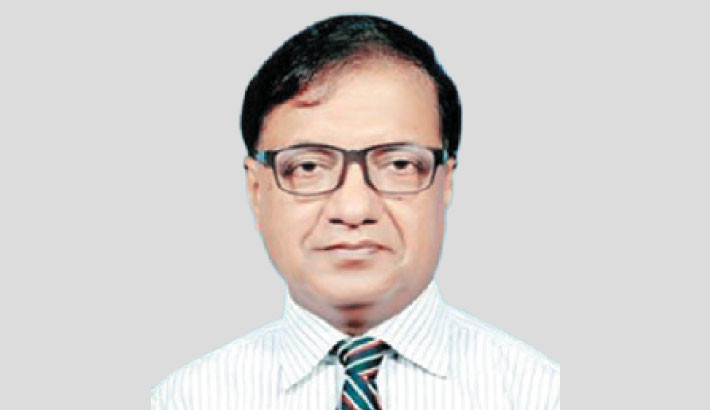
Mohammad Rukanuddin
The cultural landscape of Bangladesh lost its sheen with the passing away of Mustafa Zaman Abbasi, a renowned folk musicologist, singer, writer and educator. Abbasi, who passed away on 10 May 2025 at the age of 87, was a colossus in the area of preservation and promotion of Bengali folk culture.
Born on 8 December 1937 in Balarampur, Cooch Behar, Abbasi was the youngest of the famous folk singer Abbasuddin Ahmed’s sons. He grew up amidst the luxuriant texture of Bengali folk music and was heavily influenced by it. Formal training from maestros like Ustad Muhammad Hussain Khasru and Ustad Gul Mohammad Khan only complemented his musical ability.
Abbasi’s contribution towards music was diverse. He helped preserve the authentic tunes of Lalon songs by recording about 300 of them on the recommendation of Professor Muhammad Mansuruddin. In doing so, he ensured that the songs had their authentic form.
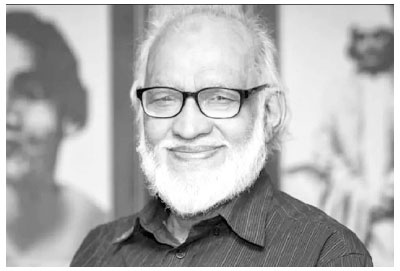 In addition to performance, Abbasi was also a prolific writer, composing over 60 books on music, philosophy, biography and travel. His best works include Abbasuddin Ahmed: Manush o Shilpi; Kazi Nazrul Islam: Man and Poet and Puribo Ekaki. His work in documenting and analysing folk music has been an asset to scholars and admirers alike.
Abbasi was also a Senior Research Scholar at Independent University, Bangladesh, and established the Kazi Nazrul Islam and Abbasuddin Ahmed Research and Study Centre. At this centre, he instructed students in the cultural heritage of Bangladesh, emphasising the importance of folk traditions.
A household name on television, Abbasi hosted programmes like ‘Amar Thikana’, ‘Loukik Bangla’, and ‘Bhora Nodir Banke’, which brought folk music into the living rooms of many Bangladeshis. His engaging narration and extensive knowledge made these shows entertaining as well as informative.
To recognise his humongous contributions, Abbasi was awarded various awards and honours, such as the much-respected Ekushey Padak in 1995. Abbasi was also awarded the title of ‘Bhawaiya Prince’ by Bhawaiya Angan in 2018 for his efforts towards popularising the Bhawaiya genre.
Abbasi’s personal life was as rich as his professional one. He was married to Asma Abbasi and had two daughters, Samira and Sharmini. Samira turned out to be a researcher and a singer like her father, and Sharmini became a lawyer.
A devout Muslim, the life of Abbasi was religion-driven. He believed strongly in knowledge and would emphasise faith in reading and learning about one’s heritage. As he himself said, “Neither wealth nor career can bring peace in life. Being satisfied and loving others can lead to purity.”
Abbasi’s death has evoked a countrywide mourning and tributes. Cultural institutions, artists and music lovers from all over the country grieved the loss, highlighting the permanent mark that he established in Bangladesh’s cultural scene.
As the country bids farewell to Mustafa Zaman Abbasi, his legacy continues in the songs that he preserved, the memories he left behind, and the countless lives that were touched. The collection of his life's work is proof of the ability of music to represent and mold a country's identity.
__________________________________
The writer is Assistant Professor of English at Ahsanullah University of Science and Technology