


 For all latest news, follow the Daily Sun's Google News channel.


Looking back at 1/11: The orchestrated persecution of Tarique Rahman
Daily Sun Report, Dhaka
Published: 26 Apr 2025, 10:55 PM
On 7 March 2007, joint forces suddenly surrounded the cantonment residence of Tarique Rahman late at night. Rumours had already been circulating that the icon of Bangladesh’s youth and grassroots politics might be arrested. Although Tarique was aware of such whispers, he chose not to flee. Instead, he remained at his home on Shaheed Moinul Hossain Road – the residence of his father, the late President Ziaur Rahman, and steeped in historic memories. However, that night, the home was stormed without permission. In a blatant act aimed at executing the de-politicisation formula of the 1/11 regime, Tarique Rahman was arrested in clear violation of all legal procedures.
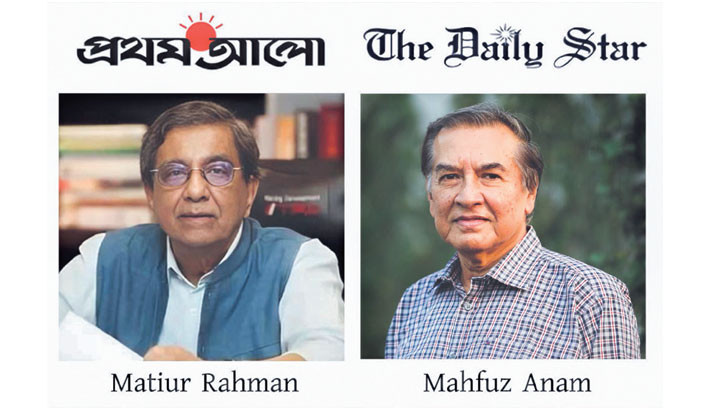
Blindfolded and taken to an undisclosed location, reports from international media later confirmed that Tarique was imprisoned in what came to be known as the regime’s infamous “Aynaghar” (house of mirrors). There, he was pressured to deliver a false confession admitting to corruption, extremist ties, and pledging to leave politics. These baseless accusations stemmed largely from the propaganda machinery led by Prothom Alo and The Daily Star.
As the son of Shaheed President Ziaur Rahman, a decorated war hero, Tarique resisted all forms of coercion. His declaration – “I serve the people through politics and have never engaged in corruption” – was met with barbaric torture. For nearly a month, he was brutally beaten while suspended from a ceiling fan.
The violence fractured his spinal cord. Even today, he continues to receive treatment in London and suffers from persistent leg pain. Despite such inhuman treatment, no evidence was extracted – because there was none.
After failing to extract a confession, the regime fabricated a confessional document, which was later published as fact by Prothom Alo and The Daily Star. These same outlets continued to run misleading stories that built the foundation for his political imprisonment.
The roots of this vendetta trace back to the BNP’s landslide victory in the 2001 elections – much of it credited to Tarique’s leadership. His youthful, reform-minded political energy energised voters, especially women and the youth. Alarmed, segments of civil society aligned with Indian interests, and the Awami League sought to destroy his credibility. Prothom Alo and The Daily Star led this mission from the front, targeting him with sustained character assassination campaigns.
Stories of a fictional “Hawa Bhaban” emerged, positioning it as a shadow power centre. Prothom Alo and The Daily Star relentlessly pushed this narrative. When Khaleda Zia removed her private secretary Nurul Islam for proven misconduct, the media portrayed it as fallout from whistle-blowing on Tarique’s alleged corruption – a claim completely devoid of truth.
From fictitious accounts of irregularities in the power sector to baseless reports concerning those close to Tarique, these outlets painted a picture of a corrupt political prince. These reports were later used as interrogation material after 1/11 to further criminalise Tarique.
The narrative deepened with allegations of extremist ties, once again pushed by the same media entities. They even linked Tarique to the 21 August grenade attack and the 10-truck arms haul – stories recently dismissed by Bangladesh’s Supreme Court as fiction. Despite the lack of evidence, Prothom Alo continued spinning falsehoods, introducing characters such as “Mufti Hannan” and portraying him as a state enemy linked to Tarique.
The goal was clear: to eliminate Tarique from politics in order to dismantle nationalist opposition. Prothom Alo and The Daily Star’s long campaign of misinformation provided the foundation for the brutal repression carried out under the guise of ‘cleansing’ politics. Yet the mission failed.
Tarique Rahman did not yield. He remains unbroken – a steadfast symbol of hope and resilience. Today, he stands not only as a survivor of one of Bangladesh’s darkest political conspiracies but also as a beacon of its democratic aspirations.