
 For all latest news, follow the Daily Sun's Google News channel.


Reflections on Pahela Baishakh
Dahaka Anjum Sadia, Intern, Daily Sun
Published: 13 Apr 2025, 12:13 AM
This day is celebrated on the first day of Baishakh, which is also the name of the first month of the Bengali calendar. The celebration of Pahela Baishakh has a different hype due to its historical and cultural connection. The Bengali calendar, and thus the festival of Pahela Baishakh, started in 1584 with the Mughal Emperor Akbar's reform of the calendar to streamline tax collection, using a combination of the Hijri lunar and Hindu solar calendars.
Initially, Pahela Baishakh was associated with the agricultural tax year and the closing of the business account, with traders opening new ledgers called “Haal Khata” through “Misty Mukh” (the offering of sweets to their customers). Sometimes they also arrange some gifts for their customers as a token of appreciation, signifying the bond with the customers. It has since then turned into a tradition. Over time, it evolved beyond its fiscal origins to become a significant cultural festival, deeply embedded in the social fabric of Bengal. In the 20th century, particularly during the Pakistan era, Pahela Baishakh became a symbol of Bengali identity and cultural resistance.
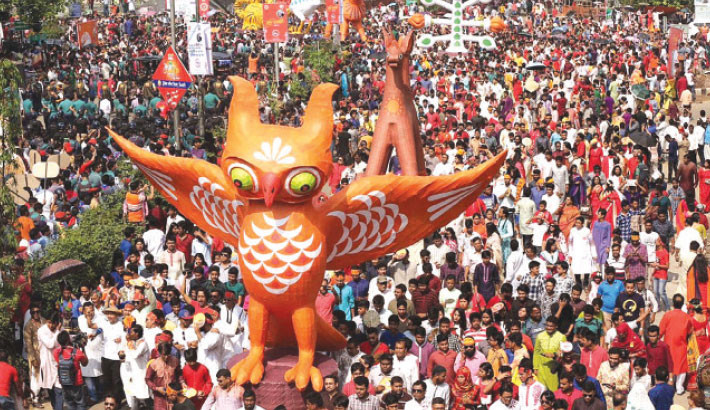
Organisations like Chhayanaut played a crucial role in popularising the celebration through elaborate cultural programmes. After the independence of Bangladesh in 1971, Pahela Baishakh gained even greater prominence, becoming a national holiday celebrated by people of all faiths while marking new beginnings, cultural pride, and unity. The vibrant ‘Mangal Shobhajatra’ (now renamed to ‘Borsho Boron Anondo Shobhajatra’), originating in Dhaka, has also gained international recognition as a UNESCO Intangible Cultural Heritage, further highlighting the festival's cultural significance. Meanwhile, Chhayanaut arranges cultural programme on Ramna Batamul, adding new flavours to the celebration.
The day usually starts with eating traditional dishes like Panta Ilish, and a variety of smashed vegetables, served in a mud pot or on banana leaves. People put on red and white dresses. People from all walks of life enjoy this day a lot. Each year fairs are also being held all around the country, where you may find the taste of Bengali tradition. In some areas, different age-old traditional local games such as boat racing, pillow passing and cockfighting are being organised. This kind of arrangements are made to entertain people and pay tribute to age-old culture and traditions. Farmers, along with other artisans and vendors, participate in these fairs to put agricultural produces on display, creating a melting pot of rich cultural diversity.
In some areas, people paint the roads (widely known as Alpona). In fact, a 14-km road in the Haor region in Kishoreganj was painted last year on the occasion of Pahela Baishakh in an attempt to set a world record. People even draw alpona in their homes on this occasion. On a different note, the Biju, the most important and the biggest festival of the Chakma community, is also held on the same day to represent the new year, showcasing the rich cultural diversity of the Chakma people.
Most importantly, ‘Mangal Shobhajatra’ (Anondo Shobhajatra) is being organised on the first day of the Bengali New Year in Bangladesh. The procession is led by the teachers and students of the Faculty of Fine Arts of Dhaka University. The festival is considered as an expression of the secular identity of the Bangladeshi people and as a way to promote unity.
Pahela Baishakh is not merely a celebration, it is a reminder of our rich tapestry of cultural diversity and heritage. Let this year’s Pahela Baishakh (to be celebrated tomorrow) symbolise the triumph of good over evil.