
 For all latest news, follow the Daily Sun's Google News channel.


“I focus on fostering strong bilateral relations and enhancing cooperation across various areas”
Published: 12 Apr 2025, 12:00 AM
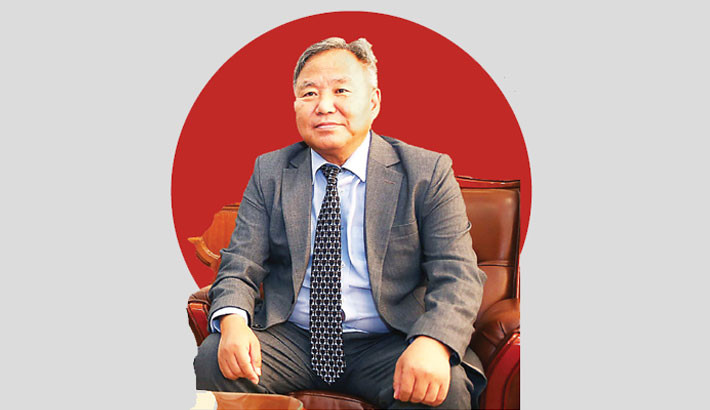
Park Young-sik
Since establishing ties in 1973, diplomatic relations between Bangladesh and South have gone from strength to strength. The East Asian nation has been a significant economic and development partner of Bangladesh, maintaining friendly ties founded on common values, democratic principles, ideals and objectives. Among the various areas in which both nations have been cooperating are trade and business, investment, development cooperation, education and human resource development, ICT, defence and cultural exchanges. With the preferential market access provided by the South Korean government to Bangladeshi products, bilateral trade surged to a record high of over $1.5 billion in 2021. In an exclusive interview, South Korean Ambassador Park Young-sik talks with Rezaul Karim Lotus, the Editor of the Daily Sun, about all of these issues and the future of the relations. Here is the excerpt of the interview.
Korea has a population of around 56 million people, but I came to know that almost half of the population lives in Seoul, the capital. It is a unique character for a country with the 14th largest economy. Why did it develop in this manner? Do all Koreans prefer urban life? You do not like rural life?
Korea’s population concentration in its metropolitan areas stems from historical, economic, and social factors. After the end of the Korean War in 1953, rapid industrialization in the 1970s made Seoul the nation’s political, economic, and cultural hub, offering abundant opportunities for education, employment, and better living standards. The city’s advanced infrastructure, major corporate headquarters, top universities, and medical facilities further enhance its appeal, especially for younger generations seeking career and social opportunities.
However, not all Koreans prefer urban life. Many Koreans value the tranquillity of rural areas, which provide a slower pace and connection to nature. Post-Covid-19, there has been a noticeable trend of relocating to the countryside, driven by a desire for a healthier and more balanced lifestyle.
Recognising the challenges of urban overconcentration, the government is promoting regional development to reduce disparities. Korea’s urban focus reflects its economic transformation, but rural areas remain vital for those seeking peace, showcasing Korea’s diverse preferences and efforts toward a balanced and sustainable environment.
In this respect, the Korean embassy is going to host a Smart City Seminar, titled “Towards Sustainable Cities: A Smart Innovation through Korea-Bangladesh Cooperation” on December 17 in Dhaka. This seminar serves as a vital platform for exploring innovative urban solutions and fostering collaboration in smart city development. I am confident that Bangladesh can derive significant policy insights on Smart City, which can be applied to the development of a new town near the Mirshari Industrial Site.
What exactly is the governing system in Korea? Does the President share power with the parliament?
South Korea operates under the presidential system, where the President serves as both the head of state and government, holding significant executive authority. While the President does not directly share executive power with the unicameral National Assembly, a robust system of checks and balances ensures accountability and cooperation.
The National Assembly drafts and passes laws, which the President can approve or veto. However, parliament can override a veto with a two-thirds majority. The President appoints the Prime Minister and key officials, but these appointments require parliamentary hearing. The National Assembly also oversees the budget, monitors government spending, and holds the executive branch accountable, with powers to investigate and initiate impeachment if necessary. The Prime Minister, appointed by the President, assists in coordinating cabinet functions.
The above system is reflected in the 1987 Constitution which was adopted after long struggle for democracy. The Korean system lays no claim to being complete. Korea is now in a state of transition towards more democracy, and will probably start the discussion on revising the Constitution.
How do you see the influence of the big companies like Samsung, Hyundai, LG, Kia in shaping your economy? Is there any monopoly?
The influence of large companies such as Samsung, Hyundai, LG, and Kia on Korea’s economy is profound. These companies, known as Chaebols, have played a pivotal role in the country’s rapid economic development, transforming Korea from a war-torn nation into a global economic powerhouse.
These firms have spearheaded industrialization and an export-driven economy, contributing significantly to GDP, employment, and global trade. Companies like Samsung and LG have positioned Korea as a leader in semiconductors and consumer electronics, while Hyundai and Kia have elevated Korea’s status in the automotive industry.
Chaebols also support extensive domestic and international supply chains, benefiting thousands of SMEs and fostering economic growth across various sectors. However, their dominance has raised concerns about market concentration and reduced competition, which can hinder innovation among smaller firms.
To address these challenges, the Korean government regulates Chaebols, promotes fair competition, and supports entrepreneurship to diversify the economy and reduce reliance on large corporations.
In summary, while Chaebols are central to Korea’s economic success, balancing their influence with a competitive and diverse economic environment remains key to sustainable growth.
Immediately after the great Asian Economic Crisis of 2007-2008, Korea registered dramatic growth, almost tripled the growth. What was the magic behind this?
South Korea’s remarkable recovery and growth following the 2007–2008 global financial crises was not a result of magic but rather a combination of strategic policies, resilience, and innovation. The government acted swiftly with fiscal stimulus packages, liquidity support, and stabilization measures. An export-driven economy, led by industries like electronics, semiconductors, and automobiles, rebounded quickly as global markets recovered.
Lessons from the 1997 Asian Financial Crisis had strengthened Korea’s financial systems and accumulated significant foreign exchange reserves, ensuring preparedness for economic shocks. Heavy investment in R&D during this period allowed companies like Samsung, LG, and Hyundai to gain a competitive edge globally, driving growth. Collaboration between the government and private sector further supported recovery, creating jobs and expanding businesses.
To sum up, Korea’s post-crisis growth was fuelled by proactive government action, a strong export base, and a steadfast focus on innovation and resilience, enabling Korea to achieve remarkable progress in a challenging global environment.
What are the areas of interest where you are working in Bangladesh?
As the Korean Ambassador to Bangladesh, I focus on fostering strong bilateral relations and enhancing cooperation across various areas, including boosting trade and investment through signing on Economic Partnership Agreement (EPA), and creating opportunities for overseas employment by empowering Bangladeshi workers. These efforts aim to drive economic growth, support sustainable development, and deliver mutual benefits for both nations.
One of the significant areas is to finalise the Economic Partnership Agreement (EPA) between South Korea and Bangladesh. Both nations officially announced the commencement of a bilateral EPA negotiation on November 28, 2024. This agreement is expected to boost bilateral trade and investment by reducing trade barriers, expanding market access, and removing obstacles that hinder foreign investment. It aims to create new opportunities for businesses in both countries and strengthen economic ties.
Another key area of interest is enhancing collaboration in the development of infrastructure. Through the Economic Development Cooperation Fund (EDCF), South Korea actively supports Bangladesh’s development of infrastructure. EDCF loans stand out for their exceptionally favourable terms, including a 0.01% interest rate, a 40-year repayment period, and a 15-year grace period, making them an attractive option for advancing Bangladesh’s socio-economic and infrastructure growth.
Labour mobility is another critical area of focus. Under the Employment Permit System (EPS), many Bangladeshi workers find employment opportunities in Korea. This program not only addresses Korea’s labour demands but also contributes to Bangladesh’s economy through remittances. Pre-departure training, including language and skill development, ensures workers are well-prepared for their roles in Korea.
Korea was once the leading investor in Bangladesh, particularly in the RMG sector and electronics? Do you still consider Bangladesh as lucrative destination for investors? What are the impediments for Korean investment in Bangladesh?
Bangladesh continues to be a promising destination for South Korean investors, offering significant opportunities across various sectors. While the RMG sector has historically been a cornerstone of our economic partnership, there is growing potential in areas such as electronics, ICT, pharmaceuticals, footwear, and light industries. With its rapidly growing economy, strategic location, and abundant labor force, Bangladesh remains an attractive market for investment.
As of FY2024, South Korea ranked as the third-largest foreign investor in Bangladesh, following the UK and China, with an investment of USD 246.35 million, accounting for 16.78% of the country’s total FDI inflows. This reflects Korea’s strong commitment to fostering economic ties and supporting Bangladesh’s growth.
However, in order to fully realize Bangladesh’s potential as an investment destination, several challenges need to be addressed. Diversifying exports beyond RMG into pharmaceuticals, ICT, and light industries would unlock new trade opportunities. Additionally, administrative hurdles, like visa delays for business travel, and customs inefficiencies, including procedural delays and a lack of transparency, increase costs and deter investors. Moreover, the absence of direct air and maritime cargo links adds to shipping costs and delays, highlighting the need for improved logistics infrastructure.
Despite these hurdles, South Korea remains optimistic about Bangladesh’s investment potential. With ongoing reforms and initiatives like the EPA, and given Korea’s strong position as one of Bangladesh’s largest investors, I am confident that these challenges can be addressed, further strengthening our economic partnership and mutual growth.
There are many Bangladeshi workers working in Korea. Though we have mixed experience with our overseas workers, we hear very less complaints from our workers working in Korea. Do you see further scopes to increase Bangladeshi manpower in Korea?
The success of the Employment Permit System (EPS), which provides a structured and transparent framework for foreign workers, has contributed significantly to this positive experience. Bangladeshi workers in Korea not only contribute to Korea’s economy, particularly in sectors like manufacturing, agriculture, and construction, but also send vital remittances back to Bangladesh which support their families and boosting the local economy.
There is certainly potential to further increase the number of Bangladeshi workers in Korea. As Korea faces labour shortages in certain industries, especially in manufacturing and agriculture, Bangladeshi manpower can help fill these gaps. Discussions between our two governments continue to explore ways to expand labour cooperation under the EPS framework, ensuring a win-win scenario for both nations.
However, it’s equally important to focus on skill development to meet Korea’s labour market requirements. Pre-departure training programs, including Korean language proficiency and technical skills, are critical for ensuring the smooth integration of workers into Korean workplaces.
By building on the strong foundation of our labour cooperation, there is significant potential to enhance the contribution of Bangladeshi workers to Korea’s economy while creating more opportunities for individuals to improve their livelihoods and bring benefits back to Bangladesh.
Once upon a time there was a Korean football coach in Bangladesh. Tell us how we can get assistance from you in the area of sports?
Sports have always been a powerful bridge for cultural exchanges among the nations, and I see it as an excellent platform to further strengthen the friendship between our two countries. The story of a Korean football coach in Bangladesh highlights how collaboration in sports can bring significant value, and currently, a Korean taekwondo instructor is actively coaching in Bangladesh, further enhancing our connection through sports.
Korea is globally recognized for its success in sports like football, archery, taekwondo, and baseball. We are open to supporting Bangladesh in its sports development through training programs for athletes and coaches, knowledge-sharing initiatives and exchange programs, allowing Bangladeshi athletes to train in Korea with experienced coaches and advanced facilities.
Tell us something about the Korean Wave, a new global cultural trend originated in Korea.
The Korean Wave is a global cultural phenomenon encompassing K-pop music, K-dramas, movies, fashion, K-beauty, and Korean cuisine. Iconic groups like BTS and BLACKPINK, as well as global hits like Parasite and Squid Game, have showcased Korean creativity and innovation to the world. Beyond entertainment, K-beauty products, Korean cuisine, and traditional culture have gained international attention as well.
The appeal of the Korean Wave lies in its ability to combine modern innovation with a deep respect for tradition, creating a unique cultural identity that resonates globally. This has not only elevated Korea’s soft power but has also strengthened its cultural and economic ties with other countries, including Bangladesh. K-Wave fans are not only enjoying K-contents but also engaging with Korean language and culture through social media and educational opportunities.
We are excited to see this cultural exchange deepen, fostering greater understanding and friendship between Korea and Bangladesh.
Tell us about the role of the internet in Korean society.
The internet plays a pivotal role in Korean society, shaping every aspect of daily life, from communication and education to commerce and entertainment. South Korea is renowned for having one of the world’s fastest and most reliable internet infrastructures, which has significantly contributed to its digital economy and innovation.
The internet drives economic growth, enabling the explosive rise of e-commerce, fintech, and tech startups. Companies like Samsung, Naver, Coupang and Kakao thrive in this digital ecosystem. Additionally, online education and remote work have become integral, particularly after the Covid-19 pandemic, supported by robust digital tools and connectivity.
Socially, the internet fosters a highly connected society where people stay engaged through platforms like social media, messaging apps, and online communities. It has also amplified the global reach of Korean culture, playing a key role in the spread of the Korean Wave to global audiences.
The government has leveraged internet technology to enhance public services through e-governance, offering digital access to various administrative tasks, healthcare, and transportation services. Moreover, Korea’s leadership in 5G technology is paving the way for advancements in AI, IoT, and smart cities.
While the internet brings many benefits, it also presents concerns over privacy, cybercrime, and digital addiction. South Korean government continues to work on policies and measures to address these concerns, while maximizing the positive effect of the internet on society.