
 For all latest news, follow the Daily Sun's Google News channel.


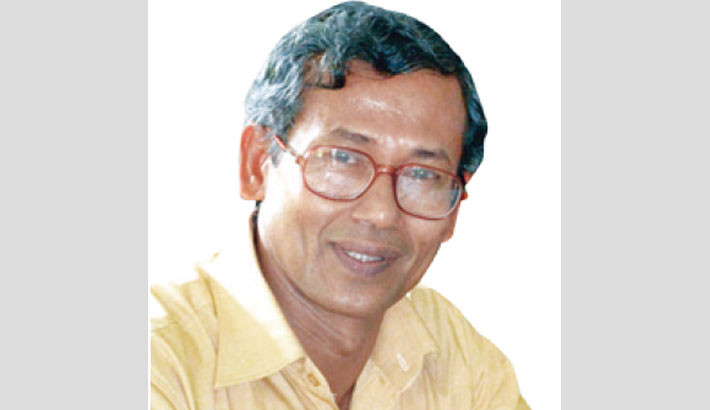
Reverend Martin Adhikary
Palm Sunday is an annual Christian festival. Every year Churches observe this day with due solemnity. This year 2025, this falls on Sunday, 13 April. On this day, the 10th day of the Jewish month of Nisan, Jesus entered the city of Jerusalem riding on a young donkey on which nobody ever rode before. It is interesting to note right here that Israelite people used to choose which lamb they were to slay or sacrifice as the Passover Lamb on 10th Nisan.
The Passion Week or the final week in the earthly life of Jesus Christ commences on this day. Before discussing the theme of Palm Sunday at some length, let’s consider some facts about the four Gospels in the New Testament. Only four chapters in all the gospels are devoted to the first 30 years of Jesus’ life. But eighty-five chapters are devoted to the narratives of the last three and a half of his life on earth. Out of this, 29 chapters are devoted to the final events in his life, which began with the Triumphal entry of Jesus into the city of Jerusalem. The evangelist Matthew spends two-fifth of his gospel on the events during the final week of Jesus’ life, Luke spends two-fifth of his gospel, Mark spends three-fifth of his gospel and John devoted half of his gospel on this period of time. This shows the importance that each of the four gospels attached to the events taking place during the final week in Jesus’ life including the Palm Sunday event, which includes, among others, Jesus’ cleansing of the Temple, Jesus’ last Supper, his betrayal by Judas Iscariot, his six mock trials, his crucifixion and then finally his resurrection. All the events that took place during the last eight days (the Holy Octave) beginning with what is commonly known as the Palm Sunday in the Christian Calendar are of utmost significance for understanding the salvation of man from the bondage of Sin wrought in the life, work and vicarious and unjust suffering and death of Christ at the hands of the unjust.
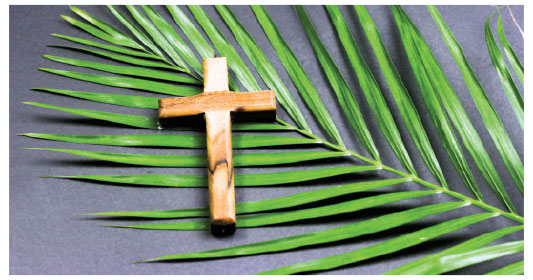
All the four gospels mention this key event of Jesus' triumphal entry into Jerusalem. They are in Matthew 21: 1-17, Mark 11:1-11, Luke 19: 29-40 and John 12:12-19. They differ from one another in details, but the central message is the same. Let’s have part of the John’s account below:
The next day the great crowd that had come for the Feast heard that Jesus was on his way to Jerusalem. They took palm branches and went out to meet him, shouting, ‘Hosanna!’ Blessed is he who comes in the name of the Lord!’ ‘Blessed is the king of Israel!’ Jesus found a young donkey and sat upon it, as it is written, ‘Do not be afraid, O daughter of Zion; see your king is coming, seated on a donkey’s colt.
We note that the Hebrew word ‘Hosanna’ means ‘Save now’. People spread their clothes before Jesus’ donkey as a mark of their deep respect for him. They took him as their new king or the Messiah, who they hoped would deliver them from the colonial rule of Rome. But in riding on a donkey, Jesus showed his humility and peace. People hailed him with palm branches. Palm branches and leaves were symbols of victory and joy. But Jesus was not their worldly ruler or the messiah as present-day Jews still are waiting for. The same crowd that shouted ‘Hosanna’ to Jesus a few days afterward shouted against him, ‘Crucify him! Crucify him! Since all their hopes for an earthly messiah were frustrated by Jesus! Jesus is our spiritual king: he came to save people from the bondage of sin and its curses. He said, “My kingdom is not of this world” (John 18:36).
In those days, kings rode on donkeys sometimes to show their humility and in times of peace. They rode on horses during war, of course. Donkeys are known as the beast of burden. Jesus came to bear the burden of human sin. So, it was taken as a symbol for that.
It is also important to note that Jesus went to visit the Jerusalem temple during that time in the city. The condition of the Temple was too appalling at that time for Jesus to see. All sorts of commercialism rendered the condition of and around the holy temple due to the selling and buying of Passover sacrificial animals and all its paraphernalia that Jesus got so angered that he cited these words from the Scriptures: “My house will be called a house of prayer, but you are making it a den of robbers” (Matthew 21:13). So, Jesus overturned the tables and everything. We find that during his triumphal entry to Jerusalem, Jesus cleansed the temple there and drove away the dishonest and money-mongering ones from that holy place who were dishonestly making money in the name of religious activities.
It should be mentioned that this act of Jesus was one of the factors that made Jesus adversaries to conspire his death in the end. Jesus was always up against people who were interested in material gains in the name of religion. Regrettably, this is the way of so many in the world! Perhaps it is not too much to say that our world today has too many religious hypocrites.
___________________________________
The writer is a Christian Theology teacher and Church leader