


 For all latest news, follow the Daily Sun's Google News channel.


Article 70: Safeguarding Stability or Stifling Democracy?
Md Yeasir Arafat, Student, Department of Political Science, University of Rajshahi
Published: 06 Apr 2025, 12:23 AM

In the ever-evolving journey of Bangladesh’s democracy, Article 70 of the Constitution has long stood as a symbol of both strength and strain. It is like a powerful river, dammed for control but in doing so, leaving some lands parched. Originally crafted to prevent political chaos, this article has often been accused of muting the very heartbeat of parliamentary freedom. Back in 1972, the young nation, still trembling from the trauma of war and political turmoil under Pakistani rule, sought stability above all. So, the main architects of the Constitution aimed to prevent the type of floor-crossing and party betrayal that had paralysed governance in the past. They envisioned a system where loyalty would safeguard the house of democracy from collapsing. The result was Article 70: any MP who resigned from their party or voted against it in parliament would lose their seat. It was a fortress built not just to defend a party, but to uphold a new nation’s fragile spine.
But over time, that fortress has become a cage. MPs, though elected by the people, often sit silently and their opinions shackled by the fear of losing their positions. Like actors handed scripts, they perform under party orders rather than personal conviction. Article 70 has turned the parliament from a place of debate into a choir of compliance, where the diversity of voices fades into uniformity. Many ask: if elected representatives cannot express the will of their constituents, what purpose does representation truly serve? Criticism has echoed across decades. Constitutional experts, civil society members and political thinkers have voiced concerns that Article 70 suppresses the core of parliamentary democracy. Even within the Constituent Assembly of 1972, members such as Hafez Habibur Rahman warned that this article would breed dictatorship under the guise of discipline. Recognising these long-standing concerns, the Constitutional Reform Commission — headed by Professor Ali Riaz — recently proposed a landmark change. The commission recommended that MPs from the lower house be allowed to vote against their party in all matters except one: the finance bill. This reflects a shift from the earlier idea that MPs must follow party orders on issues like confidence votes and constitutional amendments.
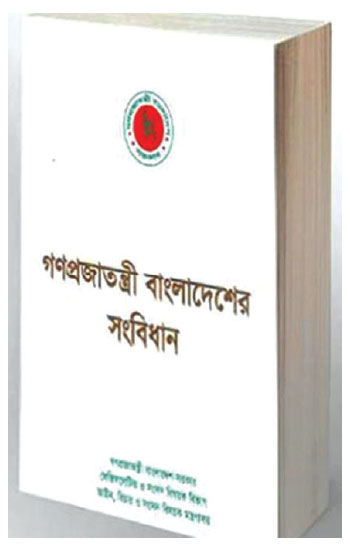
According to the commission, giving MPs such freedom would restore the spirit of representation, allowing them to stand for their people instead of merely echoing party lines. Their report argued that Article 70 has exceeded its original goal, now curbing democratic discussion and undermining accountability within parties. Yet major political parties remain hesitant. BNP, Jamaat-e-Islami, and NCP all oppose granting MPs full voting freedom in confidence motions. They fear that allowing MPs to vote independently on such crucial matters could lead to instability, evoking the chaotic days of the 1950s when governments in East Pakistan collapsed with dizzying frequency. According to them, the political culture has not matured enough to prevent opportunistic defections or vote trading if restrictions are lifted.
Supporters of the reform argue that this fear, while not baseless, should not justify the continued suppression of democratic practice. They believe the time has come to trust the people’s representatives and strengthen their ability to reflect diverse opinions, even within a party system. They argue that true stability does not come from silencing voices, but from nurturing a culture where disagreement is seen as strength, not a threat.
Article 70 stands today as a paradox: designed to prevent disorder, yet accused of silencing democracy. As Bangladesh matures politically, the question is no longer whether this article served its purpose in the past, but whether it still fits the nation’s democratic future. The debate is far from over. It is a dance between unity and independence, discipline and debate, fear and freedom. And in this dance, the rhythm of democracy itself may be rewritten.