
 For all latest news, follow the Daily Sun's Google News channel.


India must acknowledge its minority rights abuse impact on Bangladesh
Says Debapriya
Daily Sun Report, Dhaka
Published: 02 Apr 2025, 11:48 PM
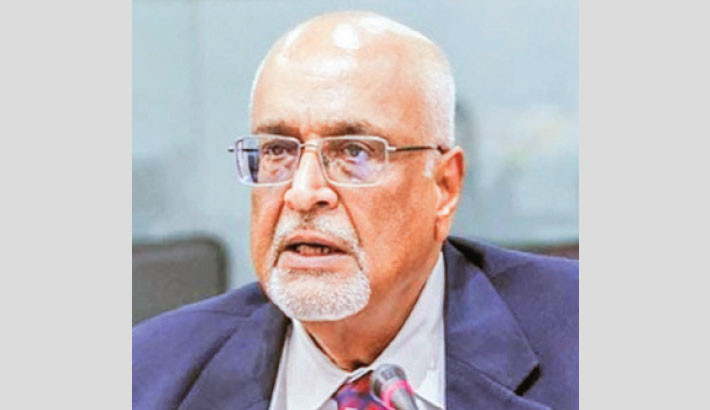
Eminent economist Dr Debapriya Bhattacharya has said that New Delhi must recognise that the mistreatment of minorities, including Muslims, in India has a detrimental effect on Bangladesh’s social fabric.
“Since the ousting of the pro-Indian Awami League government in Dhaka, the Indian government has repeatedly raised concerns over attacks on Hindu minorities in Bangladesh. However, it must also acknowledge that the violence against Indian Muslims by India’s Hindu majority has repercussions on the mindset of Bangladeshi Muslims,” the CPD distinguished fellow told the Chennai-based magazine Frontline.
Debapriya, a prominent member of the Bangladeshi Hindu community, emphasised that both of his parents were human rights activists.
Nonetheless, he has broken away from the trend among some Indian Hindus and certain alleged vested Bangladeshi Hindu groups, who have falsely portrayed Bangladesh as an increasingly Islamist, communal state since the ousting of the Awami League government on 5 August last year.
He believes that a significant portion of Bangladeshi Muslims are committed to safeguarding secularism, human rights, and peaceful coexistence with minority groups, including Hindus, Christians, Buddhists, indigenous people, and the ethnic minorities of the Chattogram Hill Tracts.
Following the ousting of the autocratic Awami League government – which many Hindus in both India and Bangladesh revere for its self-proclaimed secularism and pro-India policies – a large segment of the Indian media and politicians initiated a disinformation campaign against Bangladesh, seeking to tarnish the country's legacy of communal harmony.
The Frontline interviewer noted that the Indian foreign minister recently claimed that 2,400 incidents of attacks on minorities occurred in 2024, with 72 of them happening this year, mostly after the fall of the Awami League secularist government.
Debapriya argued that a brief security vacuum following the fall of the dictatorship encouraged arbitrary attacks, but he dismissed the notion of framing these attacks purely as religiously motivated.
He pointed out that many members of religious minority groups have historically supported the Awami League, despite the party’s totalitarian activities, positioning themselves as potential targets during anti-Awami League waves.
The veteran economist and police expert stated that it is difficult to determine whether the attacks on Bangladeshi Hindus last year were driven by political animosity or religious hatred.
When asked whether he feels safe as a minority Hindu in Bangladesh, Debapriya admitted that he might not be the best person to provide an accurate depiction of the situation for minorities in Bangladesh.
In any country where identity politics plays a significant role, he suggested, people would inevitably feel a degree of insecurity.
Regarding the proposal to replace “secularism” with “pluralism” in Bangladesh’s constitution, Debapriya stated that the issue is still under discussion, and that any overreactions at this stage would be seen as premature.