


 For all latest news, follow the Daily Sun's Google News channel.


International Women’s Day
Why Childcare Is a Right, Not a Luxury
Published: 08 Mar 2025, 12:03 AM

Ruhina Tabasshum Prome
Tasfia Tasneem Ahmed
Women’s Day is more than philosophical ramblings of what women’s rights should or should not entail. It is also about taking action and enabling women to get the space they need to thrive. It is about taking action—dismantling the systemic and cultural barriers that stand in their way. One such barrier, rarely acknowledged in mainstream discourse, is the lack of a childcare ecosystem. Bangladesh speaks endlessly about women’s emancipation, yet fails to address the invisible burden placed on mothers. Motherhood is a precious phase in a woman’s life, just as her professional and intellectual pursuits are. Society praises women for pursuing education and entering the workforce, but the moment they become mothers, the same society expects them to step back.
In Bangladesh, motherhood is deeply revered in poetry, songs and culture, with mothers seen as the heart of the family, prioritising their children above all. However, this glorification comes with an unspoken expectation: a “good mother” must do everything herself. From an early age, girls fight to carve out a professional space in a highly competitive world. Yet, when they become mothers, they confront a new challenge—where to leave their children while they work. Seeking help, whether through day-care or shared responsibilities with a partner, is often seen as wrong, stripping mothers of their right to seek support.
Day-care, often dismissed as a luxury, is actually a necessity. Without accessible childcare, women are forced to choose between career and family, limiting the long-term impact of their education and empowerment. Over 54% of women in Bangladesh cite inadequate childcare as a primary barrier to workforce participation, with 18% resigning from their jobs altogether. But it is also a fact that, even when professional day-care services are available, many parents hesitate to use them due to security or quality, or societal concerns. As a result, day-care services struggle to gain acceptance, limiting both supply and demand. Private day-care fees range from Tk8,000 to Tk10,000 per month, making them unaffordable for most middle- and low-income families. Meanwhile, public day-care centres, though cheaper, remain unreliable due to unhygienic conditions, lack of trained staff, inadequate facilities and security concerns. Many parents worry about the safety of their children in these poorly regulated day-care centres, further discouraging them from considering day-care as an option. As a result, they are left with no real alternatives.
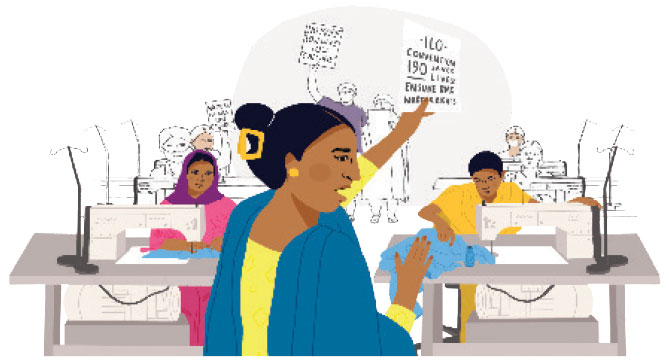
The stigma around external childcare has also shaped how workplaces operate. Many employers assume that childcare is a private matter rather than a workplace issue. While Bangladesh Labour Law 2006 mandates day-care centres in factories with over 40 female workers, enforcement is nearly nonexistent. Many businesses assume that women are more likely to quit than demand childcare, reinforcing the cycle of caregiving being solely on women and limiting the demand for structured childcare services. As a result, the very industries that depend on female labour—such as the garment sector—continue to operate without adequate childcare support, despite overwhelming evidence that workplace day-care facilities improve worker retention and productivity. In a country where 60% of garment workers are women, failing to provide childcare services results in higher attrition rates and lower economic output.
Investing in childcare goes beyond supporting women’s employment; it also drives broader economic growth. The sector presents a significant opportunity to create new job opportunities. According to the International Labour Organization (ILO), universal early childhood care and education (ECCE) in Bangladesh could create seven million new jobs by 2035. Every dollar invested in childcare brings multiple returns—higher workforce participation, reduced absenteeism and better outcomes for children. Yet, the country’s economic potential remains stifled by outdated gender norms discouraging families from supporting childcare solutions.
Many countries have recognised the importance of integrating childcare into their economies to boost female labour force participation and promote family well-being. In Sweden, day-care is affordable and fathers must take parental leave, promoting shared caregiving. France incentivises businesses to provide day-care, helping women return to work after childbirth. In Vietnam, onsite childcare in factories supports the female workforce. As a result, female labour force participation rates stand at 62% in Sweden, 52% in France and 70% in Vietnam, whereas Bangladesh lags at 44%.
For childcare to be recognised as a necessity rather than a privilege, there must be a cultural shift in how we view motherhood. It is time to create supportive measures that allow women to pursue their careers and motherhood without fear. Fathers must share caregiving—not just for their children’s well-being but for a healthier marriage. Parenthood is a shared choice, so let sacrifice not fall solely on mothers. Employers must see childcare not as charity but as a smart investment. The government must treat it as a pillar of economic growth. Above all, society must move past the stigma that childcare replaces parenting and recognise it as a support system that empowers mothers without compromising their children’s well-being. Childcare is not a privilege; it is a right.
_________________________________
The writers are a Research Associate and an Assistant Professor at Bangladesh Institute of Governance and Management (BIGM), respectively