


 For all latest news, follow the Daily Sun's Google News channel.


Textbook Crisis
Many Students Still Waiting
Nafew Sajed Joy
Published: 26 Feb 2025, 11:18 PM

Around two months have passed since the new academic year began. But many students are yet to receive their textbooks. And surprisingly, textbooks are now being sold in the market at high prices. A total of 401.5 million books were supposed to be distributed among primary and secondary students, but as of 2 February, only 181.5 million books had been distributed.
This means that 220 million books had still been undelivered. According to the National Curriculum and Textbook Board (NCTB), there are 40 million students at the primary and secondary levels. Secondary schools require 309.6 million books, but only 111.7 million had been supplied by 1 January, leaving 170 million yet to be printed. In primary schools, the total requirement is 91.9 million books.
Experts believe it could take until March to distribute all the required books. It is unacceptable that more than half of the books are yet to reach students even as the academic year progresses. Students in grades one to three and ten have received most of their books. However, the longest delays remain in grades six to nine, with only 34% of their books being printed so far. Authorities may justify delays for books with revised curricula, but what can be a valid excuse for the delays in books with unchanged contents? Well, this year, a shortage of paper has been cited as a major reason behind the delay in printing. But, the authorities should have taken proactive action to avoid this shortfall.
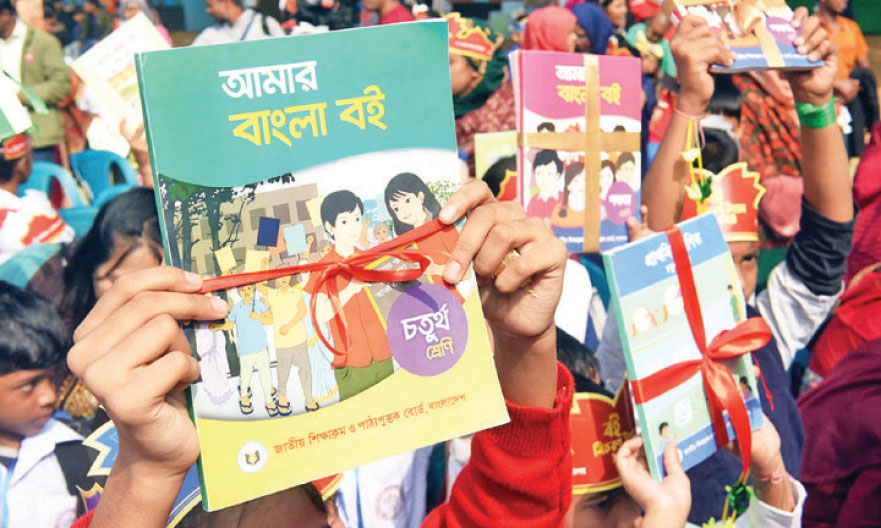
It is mentionable here that printing for grades one to three began in early November, while printing for grades six and seven started in mid-December. Meanwhile, printing for grades four, five and eight began in the third week of December, and grades nine and ten were processed in the last week of December. But, as printing progressed, a severe paper shortage emerged. Additionally, many printing companies took on more work than they could handle, which slowed the production.
Meanwhile, teachers report that the issue of textbook shortage has caused students to lose interest in attending school. Many schools are unable to hold full-scale classes owing to the shortage of textbooks. As sports competitions concluded in January, academic disruptions became more obvious. Teachers are using old books for lessons, while students are turning to photocopy shops to print PDFs of their textbooks. Teachers and parents worry that this delay is hurting students’ enthusiasm for learning. Although authorities assure that books will arrive within February, frustration is growing. Some frustrated parents argue that if supplementary books were available, students could at least continue their studies. However, these books are also scarce in the market.
Fourth and fifth graders are still missing key books. The situation is worse for secondary students— as ninth graders have received no book yet, while seventh, eighth and tenth graders have got only a few books. Madrasa students are the most affected, with many receiving little to no books, which has led to a decline in attendance. This uneven distribution of books, particularly between schools and madrasas, raises concerns about fairness. Parents in low-income areas are facing additional financial burdens. Experts are urging the government to treat education as a priority and ensure that students receive their books as soon as possible. Without urgent action, the future of millions of students remains uncertain.
Well, this is not the first time textbook distribution has been delayed. But it should be the last. To prevent this crisis from repeating in future, some changes need to be made. The NCTB should start evaluating newly published books as soon as they reach students. By mid-year, they should identify mistakes and make improvements for the next batch. Besides, a dedicated committee, including government officials, teachers and even students, should be formed to monitor the entire printing and distribution process. This would help keep things on track and hold responsible parties accountable.
Instead of rushing everything at the last minute, the work of preparing textbooks for the next academic year should begin by the middle of the current year. To stop books from leaking into markets before schools get them, NCTB should designate officials to oversee the printing presses. Besides, a dedicated law enforcement team including education officials should be formed to prevent book piracy and distribution failures. If these changes are made, we hope students will not have to start their school without books.
_________________________
The writer is a researcher.
Email: [email protected]