


 For all latest news, follow the Daily Sun's Google News channel.


Padma water declining faster than previous years
BSS, Rajshahi
Published: 16 Feb 2025, 12:25 AM
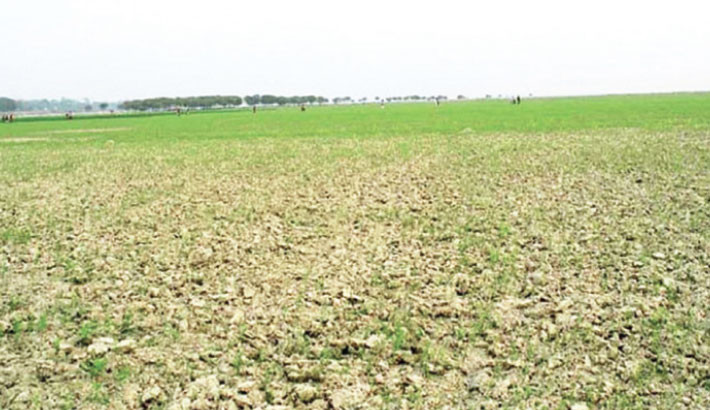
Normal water flow in the river is now visible only for three to four months a year. The water level drops to its lowest ebb at other times creating long sandy char across the river, making the living and livelihood of the people of char areas vulnerable. Photo: BSS
The water level has reached the lowest mark during the current dry season, causing the emergence of a large number of big sandbanks in the riverbed
The water flow in the River Padma has been declining abnormally, leading to the drying up of its mainstream and tributaries, which is significantly impacting the environment in the drought-prone Barind tract.
Experts have expressed concern that the entire northern and southern regions of the country, particularly the vast Barind tract, are experiencing ecological disruption due to the gradual decrease in the Padma’s water levels.
Prof Redwanur Rahman of the Institute of Environmental Sciences at Rajshahi University (RU) stated that the water level is dropping at an accelerated rate, reaching its lowest point during the current dry season. This has caused the emergence of large sandbanks in the riverbed, further reducing navigability in some channels, both upstream and downstream.
Currently, normal water flow is only visible for three to four months a year. During other times, the water level drops to its lowest ebb, creating long sandy char areas along the river. This situation is making the lives and livelihoods of people in the char areas increasingly vulnerable.
Prof Rahman added that this season, the decline in water levels has been more significant compared to the last few years. If the trend continues until the monsoon season begins in July, it could worsen the situation, leading to even more disastrous consequences in the northern and southern regions, he warned.
The declining water levels are also contributing to a rapid decrease in the groundwater level in the Barind tract, rendering many hand-driven tube wells non-functional.
Prof Mijanur Rahman of the Department of Geography and Environmental Sciences at RU explained that the drying up of the river is causing the underground water level to drop, which is severely affecting irrigation systems.
The traditional livelihoods dependent on the river basin are at risk, with navigation, the environment, and biodiversity all facing significant threats, Prof Rahman said. If this trend persists, the desertification process will intensify, leading to a crisis in the agricultural sector.
This situation is particularly alarming for those whose livelihoods are heavily reliant on agriculture, especially rice production. Many water bodies, including canals, ponds, and wetlands, have dried up due to the disappearance of surface water, creating a disastrous situation for the irrigation sector.
"The groundwater recharge process is being severely affected by the shortage of surface water," said Prof Mijanur Rahman.
Experts have raised concerns that the River Padma is essentially a "dead river" at this point, with more than 25 of its tributaries now dry due to the lack of water flow. Many other tributaries have lost their course, making these areas unsuitable for habitation or cultivation.
In response to the situation, officials at the Barind Multipurpose Development Authority (BMDA) are worried about the functioning of deep tube wells during the ongoing IRRI-Boro season. BMDA Additional Chief Engineer Abdur Rashid stressed the importance of maintaining the sustainability of the Barind irrigation sector to ensure uninterrupted food production.
To reduce dependence on deep tube wells, he mentioned that farmers are being encouraged to grow less water-intensive crops as an alternative to water-consuming Boro paddy. He also emphasized the urgent need for rainwater harvesting to provide water throughout the year.