
 For all latest news, follow the Daily Sun's Google News channel.


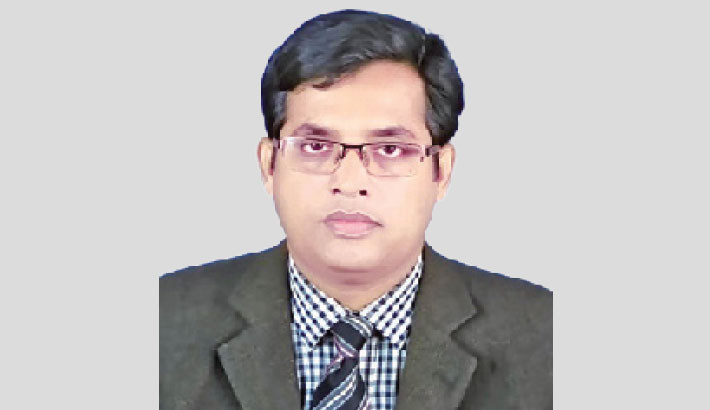
Dr. Pranab Kumar Panday
As part of a Bangladeshi think tank group, my recent trip to China was a rather eye-opening event. The Embassy of China in Bangladesh kindly invited us to see two of the most well-known cities in the nation: Beijing, the centre of political life in China, and Chengdu, the vibrant capital of Sichuan province.
Our trip provided us with the opportunity to meet and interact with several think tank organisations and government representatives, therefore acquiring knowledge and building new relationships.
Having just heard about China's enormous growth, personally witnessing it was startling. I was particularly struck by the combination of the contemporary infrastructure, verdant surroundings, and kind people. Notwithstanding some linguistic and logistical difficulties, the trip was a rewarding one which I will gladly recall.
Beijing and Chengdu have among their most remarkable features the harmonic cohabitation of modern infrastructure and natural areas. Beijing epitomises the fast urbanisation China has seen in recent years with its tall buildings, broad boulevards, and effective public transportation networks. The architectural buildings of the city are remarkable, serving as evidence of China's technological prowess and creative vitality.
Conversely, Chengdu presents a rather distinct but equally striking metropolitan scene. Renowned for its relaxed way of life and rich cultural legacy, Chengdu has modernised without losing any historical appeal. The city features several parks, green belts, and riverfront promenades that provide both locals and guests a welcome diversion from the metropolitan bustle.
In both cities, including nature in the urban design improves not only their visual attractiveness but also the quality of living for their citizens.
The locals were always quite kind and hospitable to us during our visit. Whether it was the hotel personnel, retailers, or regular residents, the individuals we came across in both towns made great efforts to help us. Our visit was far more pleasant and fun because of their friendliness and helpful nature. I valued and found very moving this degree of hospitality.
Another striking feature was the sensation of security. Beijing and Chengdu seemed shockingly safe, with clear public monitoring systems and police enforcement visible.
This great degree of security lets us explore the cities without restrictions, free from the customary fears occasionally accompanying foreign travel. The whole enjoyment of our journey was much enhanced by the guarantee of safety.
Our path did not, however, lack difficulty. The linguistic barrier stood among the most important challenges we encountered. English is not readily understood in China even if it is extensively spoken in many other countries. This was especially clear in markets and hotels, when often communicating became a demanding chore.
Simple tasks like ordering meals, seeking directions, or haggling over costs needed a lot of time and patience.
To close the distance, we discovered we were mostly depending on nonverbal communication and translating applications. Although these instruments were somewhat useful, their accuracy or efficiency were not always perfect.
This encounter made clear how crucial it is to pick up simple local language phrases before visiting a nation with a non-English speaking population. It also underlined the necessity of more extensive English language instruction in China's tourist-oriented regions to suit foreign tourists.
The exchange of money presented even another difficulty. Unlike many nations where simple and easily available currency exchange facilities are, we found it somewhat challenging to convert dollars for the Chinese Yuan.
The retail complexes lacked the option of using a master card or visa. Markets and smaller businesses that did not take foreign credit cards or other popular electronic payments used by visitors especially felt this hassle.
Negotiating the financial terrain needed meticulous preparation and occasionally resulted in lost chances for shopping and visiting neighborhood markets. This difficulty suggests a more general demand for more inclusive financial services that serve foreign visitors, therefore enabling more seamless transactions and a more pleasurable experience generally.
Notwithstanding these challenges, our cultural encounters were instructive and enriching. Every city has a different pace and character; Beijing and Chengdu were no exception.
Though occasionally shocking, the cultural variations were what added to make the trip unforgettable. Every moment, from the gastronomic excursions of sampling real Sichuan hotpots in Chengdu to the magnificent historical places like the Forbidden City in Beijing and the panda base in Chengdu, presented a teaching moment.
Experiencing the local customs, traditions, and daily life helped us to respect Chinese culture more fully. Although we did have some cultural shock, it was really mild and readily eclipsed by the good features of our trip. These events were good reminders of the need for cultural interaction and understanding in building world ties.
Ultimately, as part of a think tank group, my visits to Beijing and Chengdu were a deep and unforgettable event. The trip was amazing in many respects: the great development, the mix of modernism and nature, the kind welcome, and the great degree of security. Although language problems and money conversion presented difficulties, these did not greatly diminish the general good experience.
Traveling to new locations often has some difficulties and surprises. Still, these difficulties make the road valuable as they offer chances for development, education, and fresh ideas.
In addition to increasing my respect for China's accomplishments, my trip to the nation strengthened the need for cultural interaction in the linked globe of today. Notwithstanding the few challenges, I look back on the journey with appreciation and nostalgia, excited about the next chances to discover more of this interesting nation.
_____________________________________
The writer is a Professor, Department of Public Administration, University of Rajshahi