



 For all latest news, follow the Daily Sun's Google News channel.


Bangladesh has gained three additional years before graduating from the United Nations’ Least Developed Country (LDC) category. The UN General Assembly’s decision taken on 29 October 2026, extending graduation period to 24 November 2029, offers valuable breathing space. Yet postponement cannot resolve the structural weaknesses threatening sustainable development. The real question is whether Bangladesh can use this period to redefine its development partnerships and build an economy capable of sustaining progress beyond LDC privileges. Much of the debate has focused on export diversification, banking reform, domestic revenue mobilisation and institutional accountability. These priorities are essential. Yet another question deserves equal attention: can a development cooperation model traditionally organised around financing individual projects support the economic transformation Bangladesh now requires?
For five decades, international cooperation has supported Bangladesh’s progress in education, healthcare, infrastructure and poverty reduction. Today, the country needs competitive industries, technological capabilities, productive employment and stronger public institutions. Meanwhile, international development financing is changing. According to Organisation for Economic Co-operation and Development (OECD), official development assistance from Development Assistance Committee members and associates declined by 23.1% in real terms in 2025, falling to USD174.3 billion. Bilateral grants declined more sharply than loans, while contributions to multilateral development banks increased. Defence expenditure, domestic fiscal pressures and geopolitical competition are reshaping donor priorities. Development cooperation is increasingly influenced by strategic, commercial and security interests. Thus, Bangladesh faces growing financing pressures. Economic Relations Division (ERD) figures show that foreign assistance commitments declined from USD8.32 billion in FY2024-25 to USD 5.24 billion in FY2025-26, approximately 37%. Disbursements fell from USD8.57 billion to USD8.07 billion, while external debt servicing increased from USD4.09 billion to USD4.49 billion. Consequently, net inflows after debt servicing declined from approximately USD4.48 billion to USD3.58 billion, a reduction of around 20%. Although these trends cannot be attributed solely to global aid reductions, they demonstrate why financing quality, affordability and repayment obligations now matter as much as financing volumes.
Under such circumstance, Bangladesh’s National Roadmap for Smooth, Sustainable and Irreversible LDC Graduation 2026-2029 proposes financing 40% of implementation expenditure through the national budget, 30% through development partners, 25% through private investment and 5% through blended or green finance. These are proposed shares, not secured commitments, and the total financing requirement remains unspecified. So, mobilising the proposed 30% from development partners presents considerable challenges. Traditional grants are becoming less predictable, while greater reliance on loans could increase debt-servicing pressures. Development partners also face competing priorities, political scrutiny and growing expectations of measurable results. Even approved financing does not guarantee timely implementation. Weak project preparation, procurement delays, fragmented institutional responsibilities and complex approval procedures can obstruct disbursements. Different reporting systems and safeguards create additional administrative burdens. The political economy of reform further complicates these challenges. Overlapping institutional mandates, weak accountability and resistance to difficult reforms can undermine development outcomes. Development partners themselves sometimes contribute to fragmentation through competing priorities and parallel implementation arrangements. The challenge, therefore, extends beyond attracting external resources. Bangladesh must negotiate affordable financing, strengthen domestic institutions and ensure that cooperation produces measurable economic and social returns.
Bangladesh must increasingly assess development partnerships by the domestic capabilities they create rather than assistance disbursed. Multilateral institutions such as World Bank and Asian Development Bank can support financial governance, domestic revenue mobilisation, industrial competitiveness and infrastructure. Bilateral partners can contribute through technical education, institutional development, research and technology transfer. Trade and investment partners can strengthen market access, regional connectivity and productive enterprises. These relationships require differentiated approaches. Concessional financing should prioritise essential public services and investments with substantial social returns. Commercially oriented financing should support economically viable activities without creating excessive public liabilities. Technical cooperation should strengthen institutions capable of functioning independently after external assistance ends.
In this regard, regional experiences offer useful lessons. Bhutan integrated its post-graduation priorities into national development planning. Vietnam demonstrates the importance of combining investment, industrial policies and technological learning. Cambodia illustrates the vulnerability associated with concentrated export industries. Their experience suggest that international cooperation works best when supporting coherent domestic strategies. Economist Amartya Sen’s Development as Freedom provides an important perspective. Development should expand people’s capabilities and opportunities rather than merely increase national income. Partnerships must therefore protect education, healthcare, social protection and climate resilience alongside industrial transformation.
So, Bangladesh needs a nationally owned partnership compact built around shared outcomes, differentiated responsibilities and mutual accountability. Economic Relations Division (ERD) should coordinate a costed financing framework distinguishing pledges, signed agreements, disbursements and measurable outcomes. Government and development partners should jointly identify priorities, responsibilities and implementation milestones. Joint programming, harmonised procedures and greater use of national systems could reduce duplication and improve accountability. The compact should prioritise export diversification, workforce productivity, technological adoption, domestic revenue capacity and institutional performance. Universities, enterprises and technical institutions should participate directly, ensuring that knowledge and capabilities remain within Bangladesh.
A practical timetable is essential. By 2027, Bangladesh should establish a costed financing and partnership framework. By 2028, government and partners should jointly assess commitments, implementation progress and institutional reforms. Before graduation in November 2029, an independent assessment should examine whether cooperation has strengthened economic resilience and reduced structural vulnerabilities. Development partners should provide predictable multi-year engagement and greater alignment with national priorities. Bangladesh must reciprocate through credible reforms, stronger financial governance, efficient procurement and transparent accountability. Private investment and blended finance should complement public resources without transferring disproportionate risks to taxpayers.
Above all, geopolitical competition must not fragment national priorities or encourage unsustainable borrowing. National ownership must remain central to partnership negotiations. The extension to 2029 offers an opportunity to replace fragmented cooperation with a more purposeful development relationship. Bangladesh cannot depend indefinitely on external assistance, but graduation should not justify its premature withdrawal. The ultimate measure of success is whether development partnerships help Bangladesh build competitive industries, productive employment, stronger institutions and greater capacity to finance its own development. Graduation changes a country’s international classification, but only genuine economic transformation can secure its development future.
_____________________________________
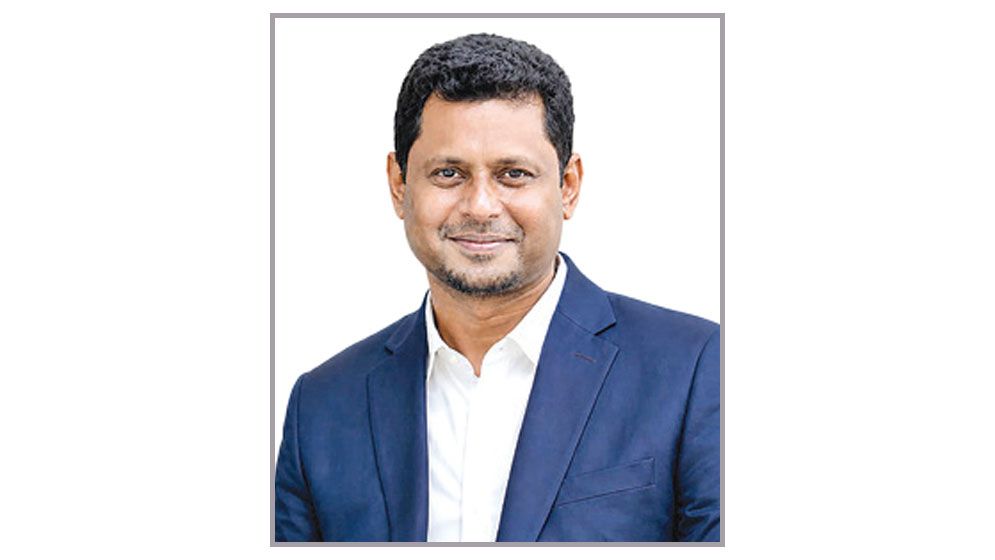
The writer is an academician and development strategist, currently serving at a foreign diplomatic mission in Dhaka.
He can be reached at [email protected]