


 For all latest news, follow the Daily Sun's Google News channel.


From Shaheed Zia to Tarique Rahman: 7 November to the ’24 Mass Uprising
Special Correspondent
Published: 07 Nov 2026, 12:00 AM
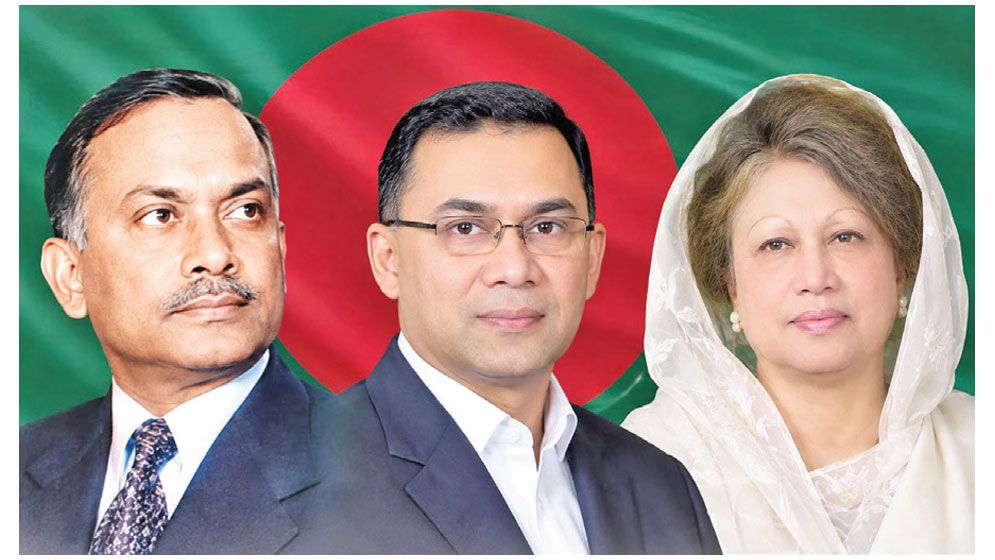
Today is 7 November. In the history of Bangladesh, there are certain days that are not merely dates on a calendar, but significant milestones. These days have influenced our national trajectory, and 7 November is one such day. Following the political shift on 15 August, the nation plunged into extreme uncertainty. Amidst this, on 3 November, a counter-coup occurred led by Brigadier Khaled Mosharraf. His stated objective was to restore discipline or the "chain of command" within the army. However, this coup plunged the country into an even deeper crisis. From 3 November to 6 November, there was effectively no government in the country. In this stateless condition, deep anxiety, concern, and fear took root in the public mind.
Against this backdrop, Ziaur Rahman emerged as the saviour of the nation. After midnight on 6 November, soldiers staged an uprising at the Dhaka Cantonment. Their first act was to free the then-Army Chief Major General Ziaur Rahman from house arrest, where he had been confined following Khaled Mosharraf's coup. Subsequently, the soldiers took to the streets with tanks. The streets of Dhaka echoed with their slogans—"Naraye Takbeer, Allahu Akbar", "Bangladesh Zindabad", "Ziaur Rahman Zindabad", "Sepoy-Janata Revolution Zindabad". Thousands of ordinary people spontaneously joined the streets to greet the soldiers, placing floral garlands on the barrels of the tanks. The entire nation seemed to burst with joy at being saved from a massive crisis.
Through leading the historic 7 November Sepoy-Public Uprising, Ziaur Rahman saved Bangladesh. He was reinstated as Army Chief and assumed the duty of Deputy Chief Martial Law Administrator. Although Justice Abu Sadat Mohammad Sayem served as President, the centre of power became Ziaur Rahman. This uprising proved that while the desire for freedom among the independence-loving people of Bangladesh could be temporarily suppressed, it could not be quelled forever. At the same time, it was a robust expression of the people's yearning for democracy against one-party rule. Overall, 7 November was a collective manifestation of our desires for independence, sovereignty, and democracy. Had this event not occurred, the political course of Bangladesh might have been entirely different.
Another major contribution of 7 November was that it filled the political vacuum of the time. Following 7 November, the practice of multi-party democracy began, political parties were revived, and the Bangladesh Nationalist Party (BNP) was formed under the leadership of Ziaur Rahman. In this way, 7 November filled the political void and initiated a new journey for politics in the country.
Rising to the centre of power through this revolution, Ziaur Rahman was a statesman born of destiny. Despite being a military ruler, he restored multi-party democracy to the country, held elections, and respected the people's voting rights, freedom of speech, and press freedom. He initiated efforts to place a fragile economy on a firm foundation. Two of his groundbreaking steps were exporting manpower abroad and laying the foundation for the readymade garments industry. As a result of the policies he adopted, Bangladesh today holds an important place globally in remittances and garment exports. Additionally, through the "Canal-Digging Program" (Khal Kata Kormosuchi) and agricultural revolution, he guided the country toward self-sufficiency in food.
Therefore, 7 November is a proud day in the history of Bangladesh, and the hero of this pride is Ziaur Rahman—the harbinger of Bangladesh's renaissance and the guide of the nation during crises.
Just as Shaheed President Ziaur Rahman took the helm during national crises and gave direction to a lost Bangladesh, Begum Khaleda Zia likewise emerged as an uncompromising leader to save a distressed nation. When BNP founder and President Ziaur Rahman was assassinated on 30 May 1981, Begum Khaleda Zia was simply a housewife. Far from contemplating politics, she was rarely even seen at political events.
After President Zia's death, Justice Abdus Sattar was elected President. The then-Army Chief Lieutenant General Hussain Muhammad Ershad seized state power on 24 March 1982, by issuing a military decree and removed Justice Sattar. Through the imposition of martial law, Ershad destroyed the multi-party democracy that Shaheed President Ziaur Rahman had established in Bangladesh. He stripped away the rights of the people. By seizing power through corruption and oppression, he turned the country into a failed state. In this situation, Begum Khaleda Zia stepped forward to restore the rights of the people.
Begum Khaleda Zia joined the BNP as a general member in 1982. She was elected Vice-Chairman in 1983 and Chairperson in August 1984. Upon taking responsibility for the party, Begum Khaleda Zia launched an all-out movement to restore democracy. In 1983, she led the formed Seven-Party Alliance. Due to her firm decision for the BNP not to participate in the controversial elections of 1986 and her leadership in continuous movements against Ershad's rule, the autocracy detained her several times between 1983 and 1990. During that period, several people were martyred at the hands of the Ershad government in the anti-autocracy movement. The movement began to gain momentum day by day. Under Begum Khaleda Zia’s foresighted leadership, the Nationalist Students' Union (Jatiyatabadi Chhatra Dal) won 270 out of 321 student unions, which further fortified the mass movement. Her leadership in the fall of Ershad on 6 December 1990, in the face of a fierce mass uprising was unforgettable. Through her long struggle and fight for democracy, Begum Khaleda Zia earned the reputation of an "uncompromising" leader. Democracy was re-established in Bangladesh under her leadership, and she gave full form to parliamentary democracy in the country.
In 2007, the rights of the people were stripped away once again through the military-backed 1/11 government. The Awami League came to power through a conspiratorial election, with their primary motives being corruption and looting. They stole the people's voting rights and sent the rule of law and human rights into exile. They established one-party rule by suppressing opposing views through forced disappearances and extrajudicial killings. Tarique Rahman voiced his resistance against this. Like his father and mother, Tarique Rahman led the movement for the liberation of the people of this country. Through 17 long years of arduous struggle under the leadership of Tarique Rahman, Bangladesh became free from fascism.
The ’24 movement was not built in a single day; it reached its ultimate form through a long struggle and fight. In reality, Tarique Rahman was behind the quota reform and anti-discrimination movement throughout July and August 2024. He inspired the students and the public with the core philosophy of claiming their rights. He encouraged the youth—who courageously stood up against the Awami government's oppression—by sending video messages. The historical weaving of exposing the autocratic regime through his resolute speeches captivated the students and the masses. As a result, the entire populace of the country united rapidly. Not just domestically, but the heroic soldiers of the mass uprising also emerged on foreign soil. Social media brought the distant near, shaking the world like a spark of fire and bringing victory to the dream-chasers of the revolution.
Over 50 false cases were filed against Tarique Rahman. During his life in exile, along with the stripping of his freedom of speech, his physician wife, Dr Zubaida Rahman, was also unlawfully dismissed from her job. Despite being a non-political individual, a staged sentence was handed down in a false case against Dr Zubaida Rahman. Tarique Rahman deeply understood the challenging nature of political life.
For this reason, he never became disheartened himself. Instead, he became a beacon of inspiration for the party during tough times. Ever since the abolition of the "Caretaker Government System" in 2011, Tarique Rahman had continuously called upon ordinary citizens to take to the streets in protest of the destroyed electoral system and serious human rights violations. During those days of July, even while living in exile far away in London, Tarique Rahman, the then-Acting Chairman of BNP, constantly provided guidance.
In the political history of Bangladesh, the Zia family has acted as a guide toward liberation during every crisis. In 1971, when the people of this country were bewildered by the attack of the Pakistani occupation forces, Shaheed Zia delivered the historic Declaration of Independence. The freedom-loving people of Bangladesh were energized by this declaration and courageously jumped into the Liberation War.
The Zia family works like a vigilant guardian in establishing and safeguarding the independence of Bangladesh. Whenever the country is distressed, whenever the independence and sovereignty of the nation are threatened, the Zia family steps forward. They stand by the people at the risk of their own lives and give their all for the country.
Therefore, today on the historic 7 November Sepoy-Public Revolution and Solidarity Day, just as we will remember Shaheed President Ziaur Rahman with deep respect, we will also remember the contributions of the Zia family in safeguarding the independence and sovereignty of the country and establishing the rights of the people. The Zia family remains the vigilant, ever-awake guardian of Bangladesh's democracy. Whenever the existence of Bangladesh faces a crisis, the Zia family stands beside the people.