


 For all latest news, follow the Daily Sun's Google News channel.


Climate-displaced families face severe food insecurity in Satkhira
Study finds 75% of surveyed families severely food insecure, with over half sometimes going an entire day without food
Daily Sun Report, Dhaka
Published: 04 Nov 2026, 12:00 AM
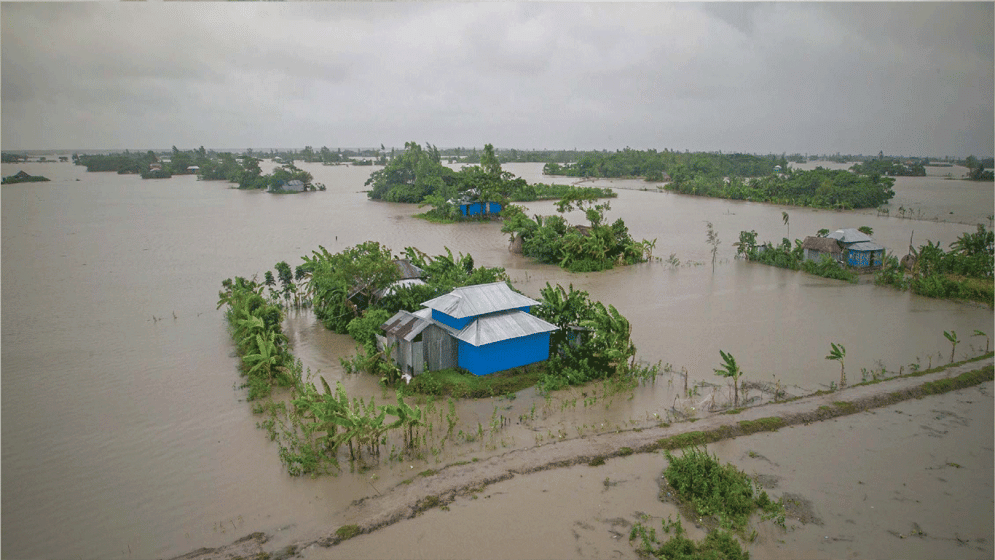
File Photo
Nearly 75% of climate-displaced families living in informal settlements in Satkhira face severe food insecurity, with many going without meals for an entire day, according to a new study.
The report, titled Displaced and Deprived, found that none of the surveyed households had adequate food security, highlighting the worsening living conditions of families forced from their homes by climate-related disasters.
Jointly published by the Bangladesh Food Security Network (Khani Bangladesh) and Participatory Research and Action Network (PRAN), the findings were presented at a press conference titled “COP31 and Climate Justice for Displaced People” at the National Press Club in Dhaka on Tuesday.
The study estimates that 7,573 climate-displaced families live in 47 informal settlements across Satkhira municipality.
A survey of 358 families in 35 settlements found that 74.9% faced severe food insecurity, while another 23.2% experienced moderate food insecurity.
More than half of the surveyed families (52.2%) reported having gone an entire day without food at times, while 90.8% had either no food stocks or enough to last no more than three days. In 95.2% of households, adults had reduced their food intake to ensure their children could eat.
The study also revealed widespread shortages of safe drinking water, insecure housing and limited access to government assistance.
Around 96.9% of households relied at least partly on saline or iron-contaminated water, while 59% of families living on government land faced eviction or threats of eviction.
Only 7.5% of surveyed families received government social protection benefits, and 92.7% did not know where to file complaints if they were denied assistance.
Speaking at the event, Fatema Khatun, convener of the newly formed Forum for the Rights and Development of Climate-Displaced People, described the hardships faced by displaced families.
She said many had initially sought shelter on embankments after disasters before moving to Satkhira town in search of housing and employment.
“We have no dustbins, no jobs, no water and no homes. There are no factories where people can work. Men have no jobs and return home expecting food, but there is no food because we have no income,” she said.
Madhab Chandra Dutta, executive director of Swadesh, Satkhira, said displaced families continued to face severe deprivation, lacking permanent addresses and access to employment opportunities.
Amit Ranjan Dey, manager of ActionAid Bangladesh, said communities that had contributed little to climate change were bearing its consequences.
He noted that many people displaced by Cyclone Aila were still living in difficult conditions and urged Bangladesh to raise their concerns at the upcoming global climate summit.
Mohammad Abdul Wazed, former director general of the Department of Disaster Management and senior fellow at the Power and Participation Research Centre (PPRC), criticised the government’s largely reactive approach to disasters.
He stressed the need for preventive measures rather than responding only after disasters occur.
Disaster Forum Founder Gawhar Nayeem Wahra called for investigating rising salinity in coastal areas and proposed reserving seats for informal settlement residents in municipal elections to ensure their representation in local decision-making.
Speakers urged Bangladesh to make food and nutrition security for displaced communities a priority at COP31, scheduled for 9-20 November in Antalya, Türkiye.
Presiding over the programme, Khani Bangladesh Vice-President Rezaul Karim Siddique called on Bangladesh’s COP31 delegation to highlight the demands of climate-displaced communities.
The report recommended providing permanent housing on government-owned khas land and preventing evictions without proper rehabilitation.
It also called for ensuring children’s access to education regardless of documentation, preventing child labour and expanding social protection for displaced families.
The organisations urged the government to implement the National Strategy on the Management of Disaster and Climate-Induced Internal Displacement 2021 through district- and municipal-level action plans backed by adequate budget allocations.
Other recommendations included enacting a comprehensive food rights law to guarantee food and nutrition security for all citizens.
Ahead of COP31, the organisations called for greater attention to non-economic losses and support for implementing the national displacement strategy through the Loss and Damage Fund.