


 For all latest news, follow the Daily Sun's Google News channel.


Mideast now in grave peril
Agencies, Riyadh/Tehran/Amman
Published: 25 Oct 2026, 12:00 AM
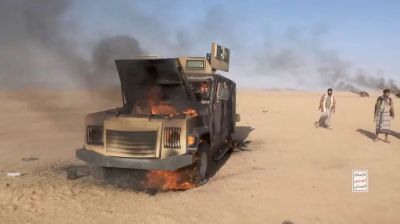
Active hostilities, including US-Iran war, Saudi-Houthi fighting, and Israeli atrocities against Palestinians, have put the Middle East in serious peril. Two strikes killed 16 people, including a woman and child, in the Yemeni capital of Sanaa, according to the Health Ministry run by Iran-backed Houthi rebels. A strike on a cement factory killed seven and another on a home killed four. And an airstrike hit homes in Hodeida province on the Red Sea, killing at least five people, Houthi health authorities said.
The Houthi media center said a wave of strikes hit the coastal city of Mokha in Taiz province, which the rebels captured in September. The Associated Press couldn’t independently verify the claims.
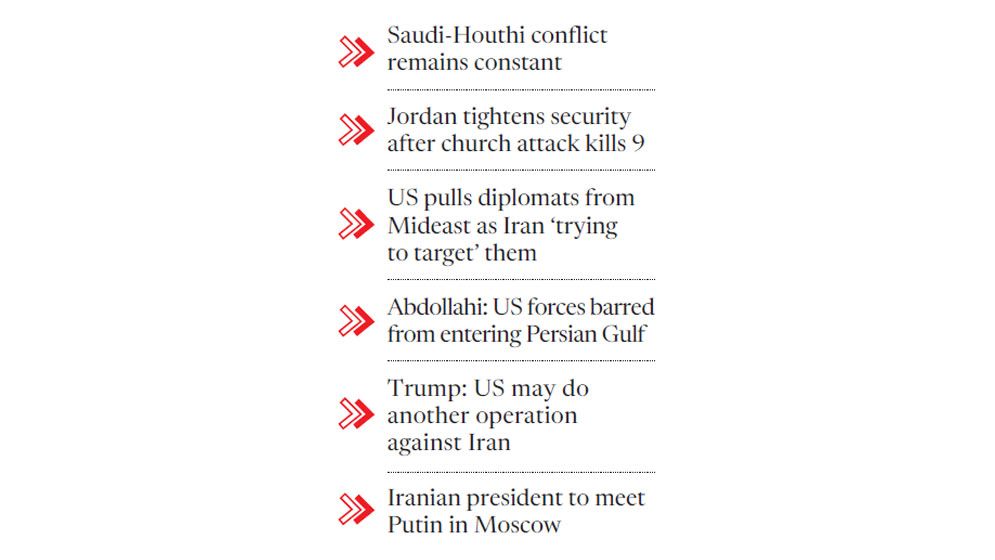
The Houthis blamed neighboring Saudi Arabia as fighting has escalated. Saudi Arabia did not respond to a request for comment. The Saudi-led coalition said it destroyed two ballistic missiles fired by the Iran-aligned group towards Taif and Yanbu on Saturday, as fighting between the sides continued.
Saudi Arabia's Civil Defense briefly issued alerts warning residents of potential danger in Taif and Yanbu, as well as in the holy city of Mecca and the kingdom's second-largest city, Jeddah.
About 10 minutes later, the agency said the threat had passed.
The interceptions came two days after the Houthis said they had attacked Saudi Arabia's defence ministry in Riyadh, facilities belonging to oil giant Saudi Aramco in the Red Sea city of Yanbu and King Fahd International Airport in Dammam, where Saudi authorities said two people were killed. Saudi authorities have not confirmed the reported attacks in Riyadh and Yanbu.
Security was stepped up at malls, foreign embassies and other locations across Jordan, the US embassy in Amman said on Saturday, as authorities searched for gunmen who killed eight people and wounded 40 in a church attack.
The assailants fired for several minutes in broad daylight during a funeral at a Greek Orthodox church in Karak governorate on Friday, in what Jordanian authorities described as an act of extremist terrorism. There was no immediate claim of responsibility.
Such attacks are rare in Jordan, although authorities in the US-allied kingdom say they have repeatedly foiled plots by Islamist militants in recent years. Meanwhile, the US was withdrawing diplomats and their family members from multiple Middle Eastern posts amid growing fears of regional escalation.
The moves came after a US intelligence memo warned that alleged Iranian efforts to target American personnel have advanced, underscoring Washington’s growing security concerns.
Chief of Staff of the Iranian Armed Forces Major General Ali Abdollahi said Iran will never allow US military vessels to enter the Persian Gulf, stressing that American forces are no longer capable of approaching Iran’s territorial waters.
Pointing to successive defeats suffered by the US military in West Asia, Major General Abdollahi said Iran’s Armed Forces have rendered the US Navy ineffective, despite Washington’s reliance on it as a symbol of American power to threaten the region and the world.
The top commander noted that the US navy has lost its ability to approach the Persian Gulf and Iran’s territorial waters.
US President Donald Trump said on Friday the US may carry out another military operation against Iran just as the Iran war nears its eight-month mark and rising fuel prices weigh on the US midterm elections.
"We may do another little Epic Fury," Trump told a rally in Florida, using the US military's term for its war on Iran. He did not elaborate.
Trump said earlier in the day the US could end the war quickly but questioned whether Washington should seek a swift conclusion or allow the conflict to gradually wind down. Iranian President Massoud Pezeshkian will meet his Russian counterpart Vladimir Putin in Moscow next week, Iranian media reported.