


 For all latest news, follow the Daily Sun's Google News channel.


Aside from his mother, Ameenah, Muhammad (PBUH) was blessed with the maternal love and care of another fortunate woman: Umm-e-Ayman (Ra). It is narrated that the Messenger of Allah used to say, “Umm-e-Ayman is my mother after my mother.” It is also narrated that the Prophet (PBUH) used to address her as Ya Ummah (O mother!), and whenever the Messenger of Allah (PBUH) looked at her, he would say, “She is the remaining soul of my family” (Mustadrak Hakim: 6963).
Umm-e-Ayman was first named Barakah. She was among the captive children taken from the remnants of a camp and brought into the city to be sold into slavery. Before the birth of our beloved Prophet (PBUH), his father, Abdullah, went on an important trading journey to Syria, which would take him through Madinah. One day, prior to setting out on this long business trip, he went down to the marketplace in Makkah to buy essential travel goods. Suddenly, his eyes fell upon a young, frail Abyssinian girl. She was visibly weak, her body thin and worn out from the hardships of captivity, but her face radiated a profound, innocent sweetness and gentle warmth.

Abdullah’s heart melted with deep compassion, and he decided to purchase the girl. According to the books of Seerah (the biography of our beloved Prophet, PBUH), the girl was nine years old at that time. He looked at her and thought of his young, pregnant wife, Ameenah, who would soon be left alone in Makkah during his long business trip. He realised that this gentle girl could provide much-needed companionship to Ameenah to ease her loneliness, and that she would eventually be a wonderful caretaker for the child when it was born.
Finally, Abdullah paid her price and brought her home. When Abdullah arrived at the house with the girl, her gentle presence brought an immediate sense of peace and comfort (Barakah) to the household, and both Abdullah and Ameenah felt immensely blessed. Recognising her as a source of good fortune, they decided to name her “Barakah”, which means blessing or divine grace.
When Ameenah was giving birth to the infant Muhammad, Barakah stayed closely by her side and held him in her arms. She served Ameenah as a trusted caregiver, offering comfort and physical support. When the boy Muhammad reached the age of six, Ameenah went to Yathrib (Madinah) along with her son and Barakah to visit the grave of her husband, Abdullah. While they were returning, Ameenah fell severely ill and passed away at a place called Al-Abwa, where she was buried.
The young Muhammad (PBUH) was left completely orphaned in the middle of the desert, and Barakah (Umm-e-Ayman) gently brought him back to his grandfather, Abdul Muttalib, in Makkah. During the boyhood of Muhammad (PBUH), Umm-e-Ayman enveloped him in fierce maternal love, treating him exactly like her own biological son. She would frequently hug him, weep over his orphaned status, bathe him, groom his hair, wash his clothes, and meticulously prepare his meals.
After his blessed marriage to the fortunate lady Khadijah, the mother of the believers, our beloved Prophet (PBUH) encouraged Barakah to get married. He gently asked her, “How would you feel if someone came to propose to you?” She replied, “I shall never leave you. Does a mother abandon her son?” With gentle persuasion from Khadijah, Barakah eventually agreed to marry, and finally wedded Ubayd. After her marriage, she moved to Yathrib, gave birth to her firstborn son, and named him Ayman. From then on, Barakah became known to everyone as Umm-e-Ayman (the mother of Ayman). Ayman (Ra) grew up to become a companion of the Prophet (PBUH) and was martyred (Shaheed) at the Battle of Hunayn. Umm-e-Ayman accepted Islam immediately after the Prophet (PBUH) received the first revelation in the Cave of Hira.
Her husband, Ubayd, passed away shortly after. Following his death, the Messenger of Allah announced publicly one day, “Whoever wishes to marry a woman from the people of Paradise, let him marry Umm-e-Ayman.” When the Prophet (PBUH) made this announcement, his deeply loved adopted son, Zayd ibn Harithah, came forward to marry Umm-e-Ayman, desiring the blessings of Paradise. Although their ages differed, their marital life was peaceful and highly blessed. Umm-e-Ayman gave birth to a son, Usamah ibn Zayd, who grew up to become a famous companion of the Prophet (PBUH), lived in his household, and narrated many hadiths from him.
Although Umm-e-Ayman (Ra) did not migrate to Madinah with the Prophet (PBUH) initially, she migrated there alone on foot. Despite being elderly, she distributed water to thirsty soldiers and treated the wounded in the Battles of Uhud, Khaybar and Hunayn. Umm-e-Ayman was so devoted that most of her family members were martyred for the sake of Allah: her son Ayman was martyred at the Battle of Hunayn, and her second husband was martyred at the Battle of Mutah. After the death of our beloved Prophet, Abu Bakr and Umar also used to visit her and take care of her.
Anas ibn Malik (Ra) narrated, “After the death of Allah’s Messenger (PBUH), Abu Bakr said to Umar, ‘Let us visit Umm-e-Ayman as Allah’s Messenger (PBUH) used to visit her.’ As we came to her, she wept. They said to her, ‘What makes you weep? What is in store (in the next world) for Allah’s Messenger (PBUH) is better than this worldly life.’ She said, ‘I weep not because I am ignorant of the fact that what is in store for Allah’s Messenger (PBUH) in the next world is better than this world, but I weep because the revelation which came from the heavens has ceased to come.’ This moved both of them to tears, and they began to weep along with her.” (Sahih Muslim: 2454).
After living a remarkably long and dedicated life, she passed away in Madinah and was buried in Jannat al-Baqi, the first and oldest Islamic graveyard in Madinah.
____________________________________
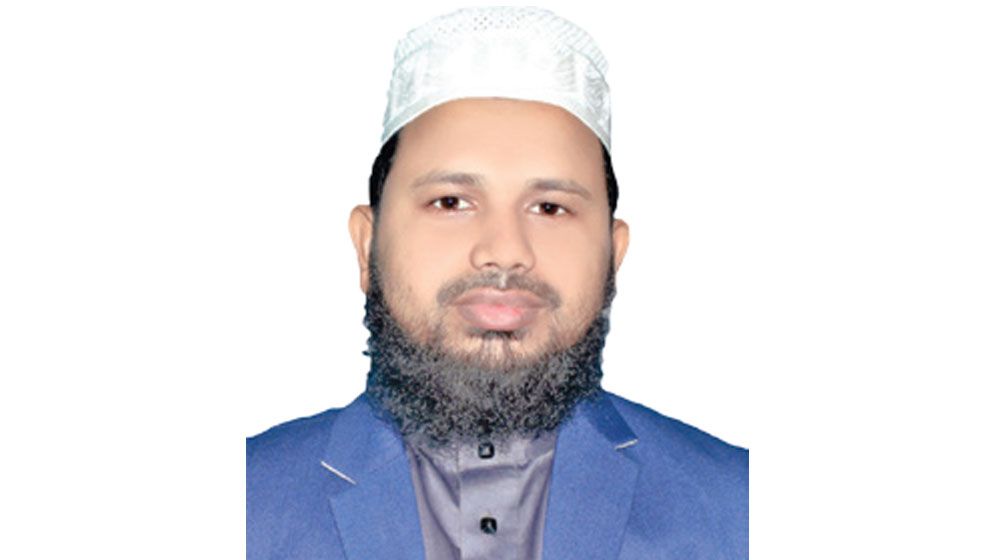
The writer is an M.Phil researcher, Kahtib of Baitus Shafiq Mosque and principal of Baitul Hikmah Academy, Gazipur