


 For all latest news, follow the Daily Sun's Google News channel.


El Nino may bring heat, rainfall shifts
Experts urge early planning for farming and water management as WMO forecasts December peak

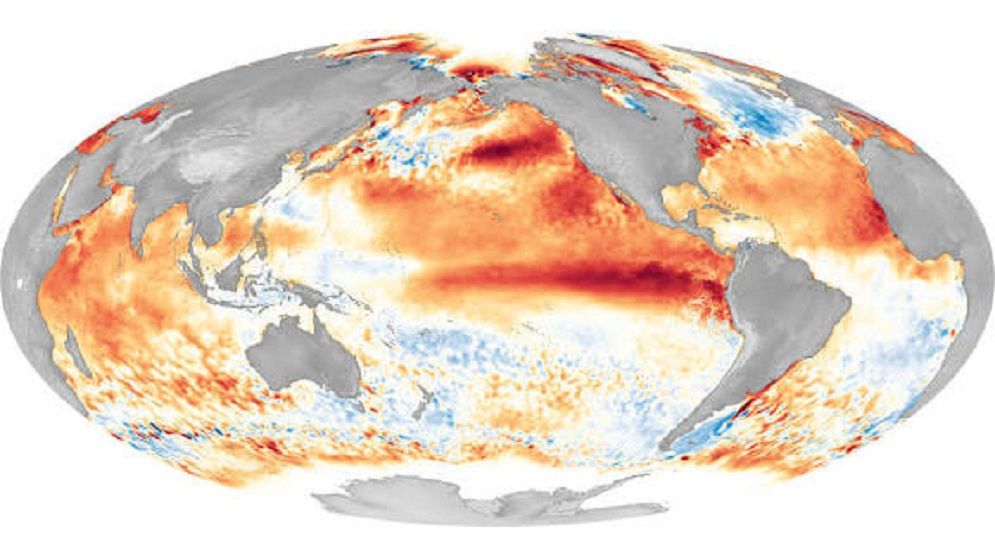
The strengthening El Nino, which the United Nations has warned could become one of the strongest since at least 1950, may bring higher temperatures and altered rainfall patterns to Bangladesh, adding pressure on agriculture, irrigation and water resources, experts have said.
The World Meteorological Organization (WMO) has forecast that the phenomenon will continue to intensify before peaking in December, with its effects likely to persist into early 2027.
It projects sea-surface temperatures in the central and eastern tropical Pacific will reach about 3.7 degrees Celsius above normal during October-December 2026, potentially the highest since records began.
It also puts the likelihood of El Nino persisting through February 2027 at close to 100%.
Dr Mohan Kumar Das, Joint Editor of the South Asian Meteorological Association and Executive Director of the Hydro-Climate and Ocean Centre, Dhaka, said several studies had linked El Nino to temperature, rainfall and dry periods in Bangladesh.
"El Nino can cause changes in temperature and rainfall patterns in Bangladesh. However, its impact is not the same in all regions and seasons," he told the Daily Sun.
Citing a study using data from 1951 to 2017, he said maximum temperatures in five coastal districts were, on average, about 0.5 degrees Celsius higher in El Nino years than in normal years, while rainfall was lower. "Such a situation could create additional pressure on water management in agriculture," he said.
He cautioned, however, that El Nino alone cannot explain the country's rainfall. A study of 35 weather stations from 1948 to 2012 found the relationship between El Nino and rainfall was not uniform across the country or through the year, and identified significant links between rainfall in some areas and the Indian Ocean Dipole.
Another study, covering 1958 to 2017, found that effects varied by region and season, and that the type of El Nino could also shape its impact.
"To understand rainfall in Bangladesh, the condition of the Indian Ocean and the behaviour of the monsoon need to be considered alongside ENSO in the Pacific," Mohan Kumar said.
Dry-spell trends
A recent study of 34 weather stations from 1985 to 2022 found rising trends in short, moderate and long dry spells at 82.35%, 73.53% and 50% of stations respectively. It also compared dry spells under El Nino, La Nina and neutral conditions.
"Therefore, once an El Nino forecast is available, it is important to prepare in advance for agriculture and water management," Mohan Kumar said.
He recommended stronger irrigation planning, water conservation, timely crop-management advice for farmers and preparations for temperature-related risks, along with regular monitoring of the Bay of Bengal, Indian Ocean and monsoon conditions.
"Bangladesh should not rely on a single index to understand the impact of El Nino. Regional weather data, ocean conditions and seasonal rainfall forecasts need to be considered together," he said.
El Nino typically alters global wind, pressure and rainfall patterns, raising the risk of drought and floods in different regions. For Bangladesh, its interaction with the Indian Ocean, Bay of Bengal and monsoon system will be key to determining the extent and nature of its impact.