



 For all latest news, follow the Daily Sun's Google News channel.


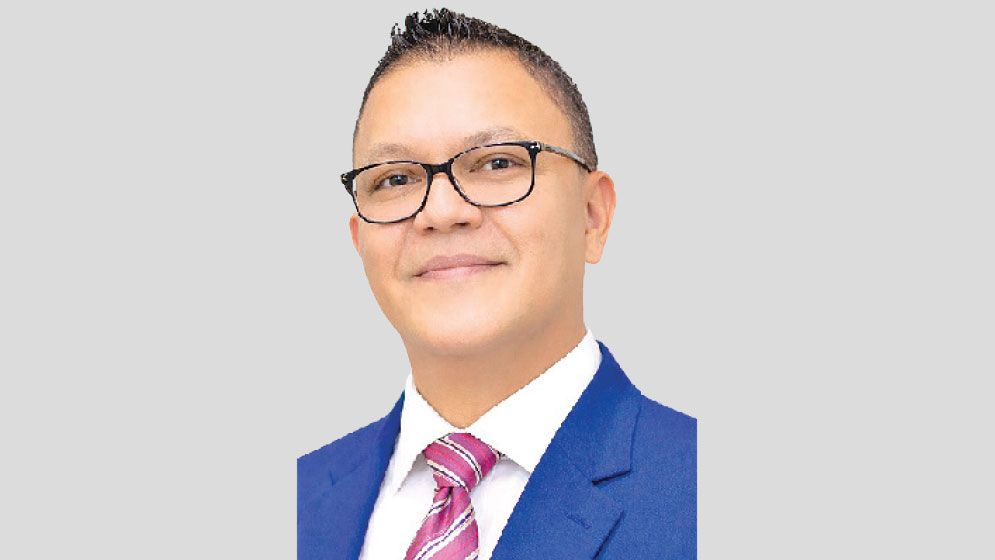
Can a diplomat from Bangladesh navigate among China, Russia, India, Europe and Africa without becoming hostage to any of them? Dr Khalilur Rahman’s presidency of the 81st session of the United Nations General Assembly (UNGA) may provide an intriguing answer.
Only weeks into the job, he appears to understand an uncomfortable truth about contemporary diplomacy: influence does not always belong to the country with the largest economy, the greatest military or a permanent seat on the Security Council. Sometimes it belongs to the player capable of keeping competing powers talking.
He assumed the UNGA presidency on 8 September under the theme ‘Restoring Trust, Managing Transformation: A United Nations That Delivers for All’. His promise to seek common ground without ignoring differences may sound like familiar UN language, but behind it lies a difficult geopolitical balancing act.
China must be engaged without allowing the presidency to appear tilted towards Beijing. Russia remains central to global security despite its confrontation with the West. Washington remains indispensable to the international system. Europe matters politically and economically. India, meanwhile, seeks a larger role in global governance.
And then there is Africa. It is here that Khalilur’s diplomacy becomes particularly interesting. For years, Security Council reform has been discussed partly through the aspirations of India, Brazil, Germany and Japan. Each has arguments for greater representation. But there is a more fundamental question: how can Africa, with 54 UN member states, remain without a single permanent seat?
He has chosen not to leave that question at the margins. He has placed Security Council reform prominently within his presidency and strongly emphasised Africa’s demand for permanent and equitable representation. That position has consequences. It would be an overstatement to portray Khalilur’s support for Africa as an attempt to block India’s aspiration for permanent membership. But diplomacy is also about political arithmetic. Putting Africa firmly at the centre of Security Council reform inevitably changes that arithmetic.
If new permanent seats are created, who gets them? India? Japan? Germany? Brazil? African states? How many seats should be added, and should new permanent members receive veto power? The simple argument that today’s emerging powers should join yesterday’s great powers quickly becomes more complicated. Perhaps it should.
The Security Council continues to reflect much of the distribution of power that emerged after the Second World War. The world has changed dramatically since 1945. Its principal security institution has changed far less. This is where Khalilur’s focus on Africa becomes strategically important. It reframes Security Council reform from a competition among individual aspirant powers into a larger question of representation and legitimacy.
For India, this creates a more complex diplomatic environment. New Delhi has a substantial case for greater representation based on its population, economic weight, international role and contribution to the UN system. But Africa can make an equally fundamental argument: an entire continent cannot indefinitely remain outside permanent representation.
The challenge for Khalilur Rahman is to navigate these competing claims without turning the presidency into an instrument for or against any particular country. His engagement with China, Russia, Europe and other major actors should be viewed through the same prism. A successful General Assembly president cannot afford to become identified with a geopolitical camp. His influence depends on maintaining access and credibility across competing centres of power.
This requires more than ceremonial diplomacy. He brings decades of experience within the UN system. He understands that multilateral diplomacy is rarely conducted through dramatic speeches alone. Much of it happens through negotiation, procedural knowledge, coalition building and the painstaking search for language that governments with conflicting interests can accept.
His election itself demonstrated that ability. He secured the presidency in a closely contested secret ballot, returning Bangladesh to the UNGA presidency four decades after Humayun Rashid Choudhury held the position. Now comes the more difficult task: converting electoral success into diplomatic relevance. There is also a lesson here for Bangladesh.
Bangladesh’s foreign policy debate is too often reduced to simplistic binaries: India or China, Washington or Beijing, West or East. The emerging international order is considerably more complicated. China can be an important economic partner without determining Bangladesh’s strategic orientation. India can remain an indispensable neighbour without defining Dhaka’s relationships with other powers. The United States and Europe can remain crucial partners while Bangladesh strengthens ties with Africa, the Middle East and the wider Global South.
This is not equidistance. It is strategic autonomy built around national interest. Khalilur Rahman’s presidency offers an interesting demonstration of that principle on a global stage. His performance should not be measured by photographs with Emmanuel Macron or other powerful leaders, nor by the number of bilateral meetings during UN week. The real measure will be whether Beijing, Moscow, Washington, New Delhi, European capitals and African governments continue to regard his office as a credible platform for dialogue.
The UNGA president cannot abolish the veto, redesign the Security Council or compel great powers to compromise. But he can influence the debate, bring neglected questions to the centre and create political space in which competing interests must confront one another. For Bangladesh, there is something quietly significant about this moment. A Bangladeshi is holding the gavel while the world debates who should hold power.
If Khalilur Rahman can keep the major powers engaged while ensuring that Africa and the wider Global South are not treated as spectators, his presidency could carry significance beyond personal diplomatic achievement. In an increasingly multipolar world, diplomatic strength may no longer lie simply in choosing the strongest camp. It may lie in having the confidence, credibility and strategic judgement to keep a seat at every table.
____________________________________________
The writer is a political analyst, private banking financial crime compliance specialist, columnist and poet based in Geneva, Switzerland. He can be reached at [email protected]