



 For all latest news, follow the Daily Sun's Google News channel.


The government has stepped up efforts to ensure the quality of textbooks for the 2027 academic year, but concerns over printing standards persist, with allegations that some printing presses are using substandard paper.
The concerns have emerged despite a series of measures taken by the education ministry as well as the National Curriculum and Textbook Board (NCTB), including meetings with paper mill owners and printing press operators and closer monitoring of the textbook printing process.
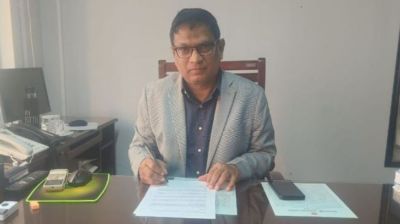
In July, Education and Primary and Mass Education Minister Dr ANM Ehsanul Hoque Milon met with paper mill owners and printing press operators.
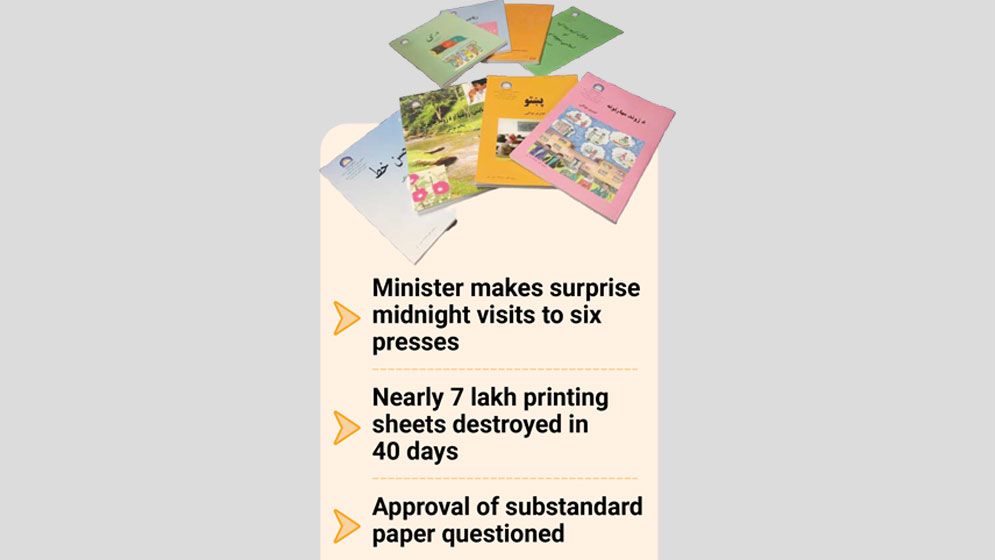
In the early hours of Tuesday, the minister visited six printing presses in the capital to inspect the quality and progress of textbook printing. The presses are Mousumi Offset Press, Faiza Printing Press, Shaili Printers, Barnashikha Offset Printers, Sonali Web Printers and National Printers.
The minister made the unannounced visits to assess the actual situation of textbook printing for the new academic year. During the inspections, he visited the printing facilities and spoke to officials and workers involved in the process.
He also inspected the overall quality of the books and the progress of printing. The minister stressed maintaining the prescribed standards and completing the printing and supply of textbooks on time so that students receive quality books at the beginning of the new academic year.
NCTB Member (Text) Professor Mohammad Abu Naser Tuku told the Daily Sun the printing of textbooks for the new academic year is now progressing in full swing.
“We have taken a specific plan to deliver the textbooks to every educational institution as well as to maintain the quality," he added.
Md RakiburRahman, public relations officer (additional duty) of NCTB, told the Daily Sun that checking the paper quality is a continuous process.
Nearly seven lakh textbook printing sheets were destroyed in 40 days.
In previous years, some presses were accused of creating an artificial shortage by failing to supply textbooks on time and then delivering them later.
With little time left for distribution, adequate quality checks were often difficult, allowing some printers to take advantage of the situation.
Tofail Ahmed, former president of the Printing Industries Association, echoed this statement.
He told the Daily Sun that many printing presses are supplying good-quality paper, while others are using poor-quality paper.
“But despite the presence of inspection and monitoring teams, why do we have to discard printed forms after identifying quality problems at the printing stage?”
“If the quality was unacceptable, how were the paper and printing materials approved in the first place,
particularly after the paper had already been purchased?” he asked.
He also alleged that the work of presses that received smaller printing orders was being deliberately delayed to favour presses with greater production capacity.
“As a result, when the deadline approaches, there will be pressure to deliver the books at the last moment, which may lead to compromises in quality. We want good-quality textbooks, and the authorities should ensure quality rather than putting pressure on printers to meet deadlines,” he said.
According to the latest NCTB data, around 30.92 crore textbooks are being printed for pre-primary to Class IX students and learners from ethnic minority communities for the 2027 academic year.
Of the total, about 8.22 crore copies are being printed for pre-primary, primary and ethnic minority students, while 3.33 crore copies are being produced for students from Class I to V at the Ebtedayee level at madrasas.
Recommended Stories