


 For all latest news, follow the Daily Sun's Google News channel.


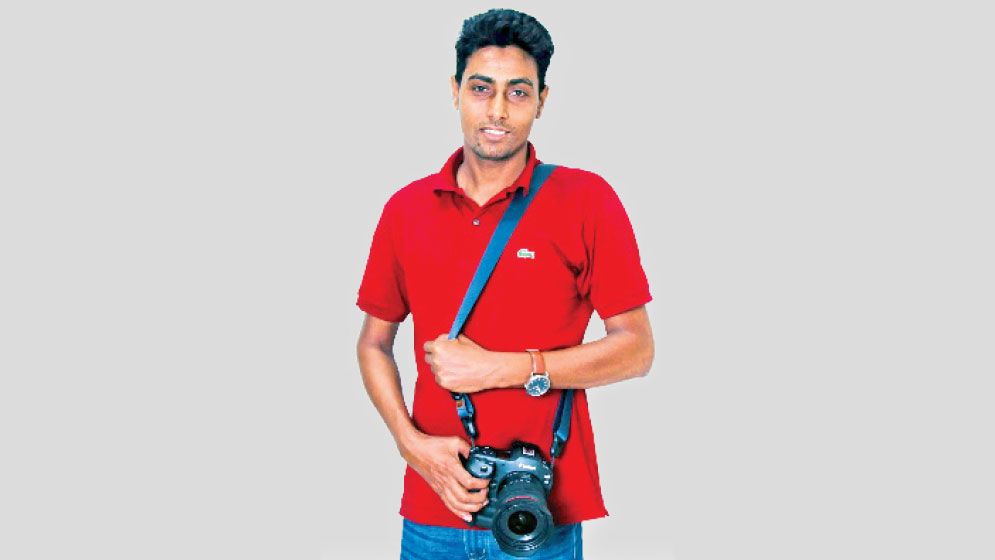
A photograph can transcend time, preserving fleeting moments and allowing their stories to live on for generations. Guided by this belief, Bangladeshi documentary photographer, photojournalist and author Farid Ahammad Rony has built an internationally recognised career.
Hailed from Feni District, Rony developed an early fascination with photography that gradually evolved from a hobby into a professional pursuit. Now based in Europe, he has spent years documenting people, places and major international events, while continuing to explore ways of telling meaningful stories through images.
One of the major milestones of Rony’s career is his trilingual photography book, “Images of Paris”, published in Bengali, English and French. The book brings together 100 significant photographs of the French capital, accompanied by descriptions and addresses in all three languages. Combining architecture, history and everyday life, the publication presents Paris from both artistic and documentary perspectives.
The book also earned international recognition, including appreciation from French President Emmanuel Macron. During the Change NOW Summit at the historic Grand Palais in Paris, Rony presented copies of the publication to Prince Albert II of Monaco, former French Prime Minister and COP21 President Laurent Fabius, and UN Under-Secretary-General Melissa Fleming. Copies were also presented to former French President François Hollande and Paris Mayor Anne Hidalgo. The mayor’s office expressed appreciation for the initiative, recognising its contribution to cultural dialogue.
However, the journey behind the book was far from simple. “Initially, the plan was simply to create a book consisting solely of photographs. Later, I shared the concept with an acquaintance named Kazi Anayetullah, who suggested that I include some text as well. Another acquaintance, a foreigner, suggested that presenting the content in two or three languages would make it even better,” Rony said.
“As a result, the project, which was originally planned to take five years, eventually took seven years to complete,” he added.
Reflecting on his photographic journey, Rony said he began taking photographs out of personal interest before gradually developing his skills and professional identity.
“Like most people, I started out of a hobby. It remained a hobby as I gradually developed my skills. However, I also pursue another profession alongside this. I primarily focus on documentary photography. My approach is to take a single photograph and then write a full page about it,” he said.
Looking ahead, Rony hopes to turn his camera toward his homeland with the same dedication.
“I represent Paris through my photography, and my next plan is to represent Bangladesh in a similar way,” he said.
For aspiring photographers, Rony emphasises the importance of understanding the subject behind the image.
“I believe photography is a pursuit driven by passion--capturing what the heart desires and then reflecting on it. It is important to understand the context of the images one captures--where they belong and how they fit into the bigger picture. That is why I believe newcomers should study the subject alongside the actual act of taking photos,” he said.
Beyond photography, Rony has contributed to diplomatic and cultural initiatives, including efforts that led to the official naming of “Place du Professeur Muhammad Yunus” in France, honouring Nobel Laureate Professor Muhammad Yunus and strengthening people-to-people ties between France and Bangladesh.
Over the past decade, Rony has documented major global events, including the Cannes Film Festival, UN Climate Conferences (COP), Paris Peace Forum, Paris 2024 Olympic Games, French Open and Ballon d’Or ceremony.
His work has earned him several honours, including the AJFB Star Award, TRAB Award, Bangladesh Excellence Awards and Best Photographer recognition from Dreams In Frame Production House.
For Rony, photography is more than the act of pressing a shutter. It is a way of preserving memory, understanding society and building bridges between cultures--one frame at a time.