


 For all latest news, follow the Daily Sun's Google News channel.


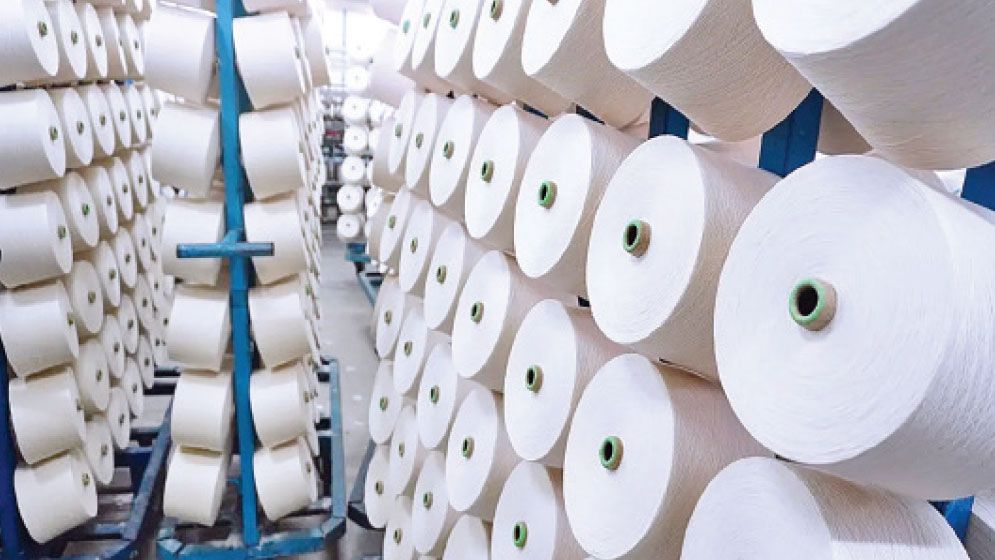
The National Board of Revenue (NBR) has tightened rules for importing 10-30 count cotton yarn under the bonded facility, requiring exporters to furnish bank guarantees, triggering strong opposition from the garment exporters.
Under a new general order issued on Monday, imports of 10-30 count cotton yarn under HS codes 5205, 5206 and 5207 will be subject to bank guarantees instead of the existing bond facility. The order, signed by NBR Second Secretary (Customs: Export and Bond) Kazi Raihanuzzaman, took effect immediately.
The move means bonded export-oriented factories will now have to follow a process similar to that used by non-bonded factories for importing raw materials against bank guarantees.
The Bangladesh Garment Manufacturers and Exporters Association (BGMEA) and Bangladesh Knitwear Manufacturers and Exporters Association (BKMEA) have strongly protested the decision, saying it was taken without adequate consultation and could raise financing costs, disrupt supply chains and weaken the competitiveness of the readymade garment (RMG) industry.
In a joint letter to the commerce ministry on Monday, BGMEA President Mahmud Hasan Khan and BKMEA President Mohammad Hatem demanded immediate withdrawal of the decision.
The associations said an inter-ministerial committee meeting on 20 August proposed withdrawing bond facilities for 10-30 count cotton yarn and allowing imports against bank guarantees. The meeting minutes also proposed that export-oriented industries source at least 50% of their yarn requirements from local spinning mills, with the remaining 50% allowed to be imported.
However, the garment leaders claimed the issue was not discussed at the meeting and expressed surprise that it was later included in the minutes.
They warned that abruptly changing the long-standing bonded system could send a negative signal to foreign buyers and disrupt export activities.
BKMEA President Mohammad Hatem said the decision was particularly unwelcome while the government and industry were discussing revisions to the knit fabric import policy.
NBR sources said the measure followed recommendations from the commerce ministry, Tariff Commission and other stakeholders to prevent misuse of the bonded facility and protect local industry. A recommendation on the issue had earlier been sent to the NBR but was not implemented.
Textile millers welcomed the move
Meanwhile, textile millers welcomed the move, saying it could curb misuse of the bond facility, increase revenue collection and strengthen local spinning mills by boosting demand for domestically produced yarn.
Razeeb Haider Munna, a former director of the Bangladesh Textile Mills Association (BTMA), said the decision reflected a high-level government initiative aimed at improving revenue realisation while strengthening backward and forward linkage industries.
Textile millers also said greater use of locally produced yarn could help Bangladesh meet EU and US sourcing and value-addition requirements and maintain market access after LDC graduation.
The new restriction will not apply to consignments for which bills of lading were issued or shipments completed before the order was issued.