



 For all latest news, follow the Daily Sun's Google News channel.


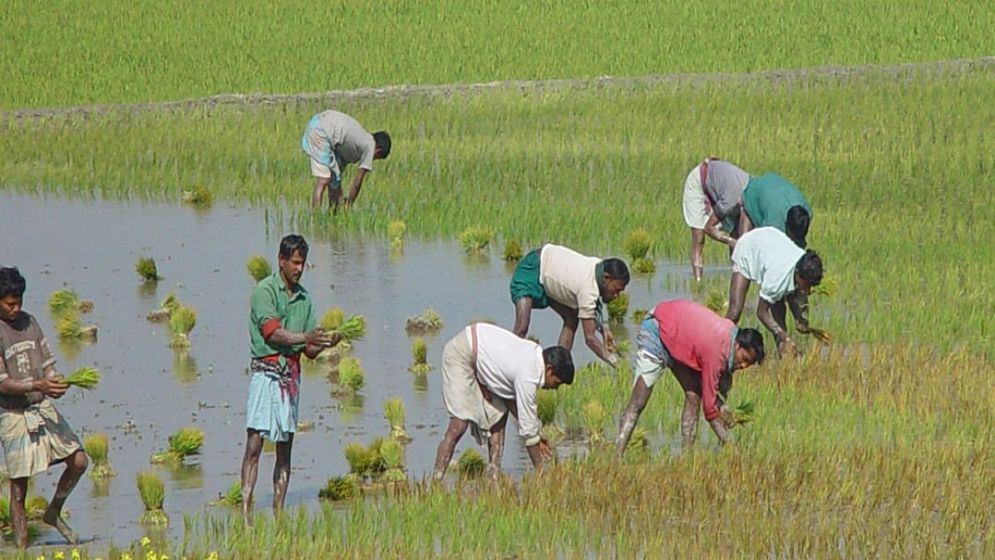
Photo: BORGEN Magazine
One of the most important realities of agriculture is that higher production does not always ensure higher incomes for farmers. When the production of a particular commodity increases significantly during the same season, an oversupply in the market often causes prices to fall. On the other hand, when production declines and consumers pay higher prices, farmers do not necessarily receive the benefits. In other words, agricultural production decisions in Bangladesh are still, in many cases, insufficiently aligned with actual market demand, expected prices, storage facilities and marketing systems. In this context, market-led farming can be one of the most effective approaches to ensuring fair prices for farmers.
The fundamental concept of market-led farming is simple: understand market demand first and then plan production accordingly. Under the conventional system, farmers often decide what to produce based on the previous year’s prices, the production decisions of neighbouring farmers or their own personal experience. In a market-led approach, however, production decisions are guided by information on which products are experiencing growing demand, when supply shortages are likely to occur, where potential markets exist, what types and qualities consumers prefer, and what requirements are emerging from processing industries and export markets.
The first requirement for market-led farming is reliable market information. Farmers need more than information about today’s market prices. They need to know about expected future demand, prices in different markets, anticipated production volumes, import and export conditions and potential market risks. In the digital age, providing such information has become much easier than before. The World Bank’s real-time food price datasets, for example, provide opportunities to monitor market prices across different regions of Bangladesh and can support analysis of regional market conditions.
Secondly, production planning should take into account area-specific market demand and agricultural suitability. The tendency for all regions to produce the same crops at the same time needs to be reduced. However, if production can be distributed more systematically across regions and seasons, a better balance between supply and demand can be maintained. This requires effective coordination among the Department of Agricultural Extension (DAE), agricultural research institutions and the Department of Agricultural Marketing (DAM).
Thirdly, the entire value chain from production to the final market needs to be strengthened. Developing improved crop varieties or increasing production alone will not necessarily increase farmers’ incomes. Every stage of the chain, including collection, sorting, grading, packaging, transportation, storage, processing and market linkage, needs to be modernised. Research by Asian Development Bank (ADB) has highlighted several weaknesses in Bangladesh’s horticultural value chains, including farmers’ relatively low share of consumer prices, price volatility and substantial post-harvest losses.
Reducing post-harvest losses is also crucial to ensuring fair prices. The FAO’s Bangladesh Hand-in-Hand Initiative has highlighted the limitations of storage and processing infrastructure and their contribution to losses of agricultural commodities. The initiative notes significant post-harvest losses in commodities such as domestic onions and tomatoes, with tomato losses reported to be particularly high. Investments in cold storage, collection centres, processing facilities and improved supply chains are therefore essential for reducing losses and stabilising farmers’ returns.
Another important component of market-led farming is strengthening farmers’ bargaining power. Smallholder farmers often depend heavily on local traders and intermediaries when they market their products individually. In many cases, advance loans or informal credit arrangements also limit their freedom to choose where and when to sell. Strengthening farmers’ cooperatives, producer organisations and collective marketing systems can enable farmers to access larger markets and negotiate better prices. Agricultural extension-related assessments have also identified limited access to market information, transportation and market linkages as major obstacles preventing farmers from obtaining fair prices.
Bangladesh’s National Agricultural Marketing Policy 2023 provides an important policy foundation for promoting a more market-oriented agricultural system. The policy emphasises farmers’ empowerment, improved market access, digital technologies, market infrastructure, storage, supply systems, e-agricultural marketing, fair prices, processing and value-chain development. Effective implementation of this policy could help transform Bangladesh’s agricultural sector from a predominantly production-centred system into one that is increasingly driven by markets and value chains. Therefore, ensuring fair prices for farmers requires more than policies aimed simply at increasing production.
What Bangladesh needs is the practical application of a simple principle: Produce what the market needs, not simply what farmers have traditionally produced. Agricultural research institutions need to develop technologies and crop varieties that are marketable and preferred by consumers. The DAE needs to support farmers with market-informed production planning, while the DAM must play a more effective role in improving market information, storage, collection and marketing infrastructure.
The next challenge for Bangladesh’s agriculture is not merely to produce more, but to produce the right products, at the right time, for the right markets. If production planning can be linked effectively with market demand, consumer preferences, processing industries and export opportunities, farmers’ risks will decline, post-harvest losses will be reduced and agricultural incomes will increase. In the true sense, market-led farming can become an important pathway to ensuring fair prices for farmers while making Bangladesh’s agriculture more profitable, competitive and sustainable for the future.
The writer is Principal Scientific Officer, BARI. He can be reached at [email protected]