



 For all latest news, follow the Daily Sun's Google News channel.


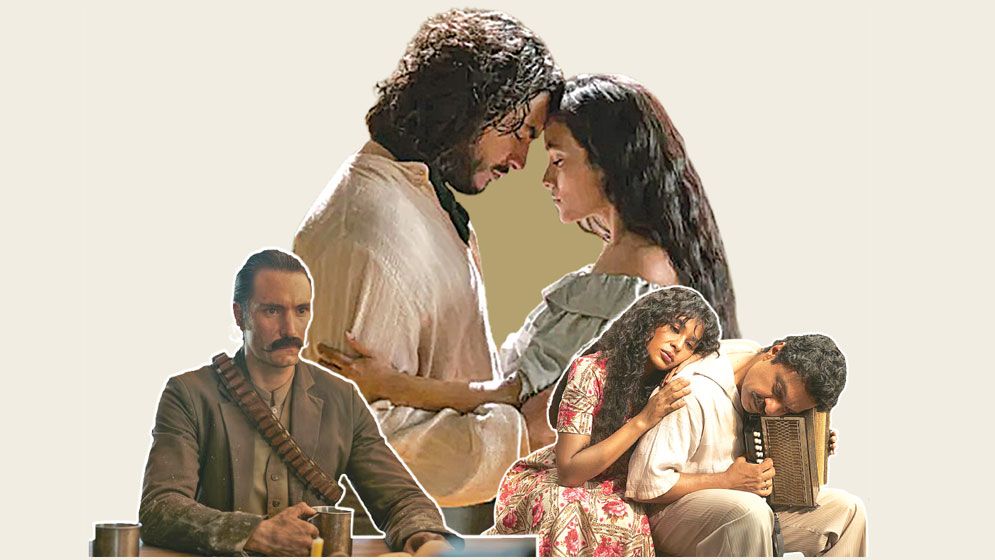
When I first heard that Gabriel García Márquez’s epic novel “One Hundred Years of Solitude” was coming to the screen, my immediate reaction was: What? How is that even possible? For decades, Márquez’s masterpiece was considered almost impossible to adapt. Its vast timeline, generations of characters with repeated names, shifting realities, magical events and deeply internal storytelling make it one of the most challenging works in world literature to translate into a visual medium.
Published in 1967, “One Hundred Years of Solitude” (Cien años de soledad) tells the multigenerational story of the Buendía family, whose patriarch, José Arcadio Buendía, establishes the fictional town of Macondo. The novel is widely regarded as one of the greatest achievements in world literature and one of the defining works of magical realism.
Naturally, I waited eagerly for the adaptation. The first season premiered on 11 December 2024, and I initially did not realise that the story would be divided into two parts. The first season consisted of eight episodes and concluded with the death of José Arcadio Buendía. After a long wait, the second and final season arrived this month, bringing the extraordinary journey of the Buendía family and the mythical town of Macondo to its conclusion.
The novel famously opens with the unforgettable line: “Many years later, as he faced the firing squad, Colonel Aureliano Buendía was to remember that distant afternoon when his father took him to discover ice.” The series begins with a devastated house, where a young man opens mysterious, ciphered parchments written by the gypsy Melquíades; a mysterious traveling gypsy who serves as the catalyst for Macondo’s connection to the outside world. The story then takes us back in time, where we meet Colonel Aureliano Buendía, introduced through the novel’s famous opening line.
The first part of the series begins with José Arcadio Buendía and his cousin, Úrsula Iguarán, who marry despite their families’ fears that their close relationship could result in a child born with a pig’s tail. After José Arcadio kills Prudencio Aguilar in a dispute following a cockfight, the couple leave their hometown. During their journey, José Arcadio dreams of a mysterious city called Macondo and decides to establish it beside a river.
Macondo begins as an isolated, almost utopian settlement. Its only connection with the outside world is through visiting Gypsies, led by Melquíades, who introduce scientific wonders such as magnets, telescopes, and ice. José Arcadio becomes obsessed with discovering the secrets of the universe, eventually losing his sanity and spending his final years tied to a chestnut tree.
As Macondo develops, it becomes involved in Colombia’s political conflicts. José Arcadio’s son, Colonel Aureliano Buendía, joins the Liberal rebellion against the Conservative government and becomes a famous revolutionary leader. After years of warfare and disappointment, he abandons politics and returns home, spending his remaining years making small gold fishes.
In the final part, we saw the arrival of the railroad brings modernisation, foreign settlers, and an American banana company. Although the town experiences economic prosperity, this period ends tragically when the Colombian army kills thousands of striking banana plantation workers. José Arcadio Segundo survives, but the massacre is later denied or forgotten by the people of Macondo.
Over time, Macondo declines into isolation and decay, while the Buendía family repeats patterns of loneliness, obsession, violence, and incest. In the final generation, Amaranta Úrsula and her nephew Aureliano unknowingly enter an incestuous relationship and have a child with a pig’s tail, fulfilling Úrsula’s long-feared prophecy. After Amaranta Úrsula dies and the family disappears, Aureliano deciphers Melquíades’ ancient manuscript. He discovers that the history of the Buendía family had been written in advance. As he reads the final lines, a powerful wind destroys Macondo, erasing the town and the Buendía family forever.
When it comes to the 16-episode Netflix series, the first thing I would like to say is that it is a remarkable triumph of visual artistry and literary storytelling. Adapting a novel as complex, layered and imaginative as “One Hundred Years of Solitude” for the screen was never going to be an easy task. Yet the series rises to the challenge with impressive confidence, preserving the spirit, atmosphere and emotional depth of Gabriel García Márquez’s extraordinary world.
The visual presentation is breathtaking, while the storytelling carefully balances the novel’s magical realism, family saga and historical undertones. Every frame seems thoughtfully crafted, bringing the fictional world of Macondo to life without losing the richness and mystery that made the original novel so timeless.
The actors, too, did complete justice to their characters. After reading several interviews with members of the cast, I came to understand just how challenging and demanding the series was for them. Bringing these iconic characters to life was clearly not an easy task, especially because generations of readers had already formed their own deeply personal images of them.
“It’s very intimidating to play a character in such a relevant and important work, and one that so many critics have said outright was impossible to film,” said Colombian star Margarita Rosa de Francisco, who plays Fernanda del Carpio.
Sebastián Osorio who stars as Aureliano Babilonia also agreed it was both exciting and intimidating to land a role in an adaptation of such a seminal novel.
And talking about sets and costumes; everything seemed to fall into exactly the right place; almost as I had imagined it while reading the novel. For those of us who have read the book, Macondo is not merely a fictional setting; over the years, each of us has built our own version of it in our minds. We have imagined its houses, its streets, its people, its colours, and the strange, magical atmosphere that surrounds it. That is why visually bringing Macondo to life was perhaps one of the most difficult challenges of the adaptation.
The attention to detail in the production design, locations, sets and costumes makes the world feel authentic, lived-in and almost magical. For me, it does not try to replace the Macondo we created in our minds. Instead, it invites us to step into another version of it; and somehow makes us believe that this, too, could be Macondo.
It is undoubtedly one of the finest literary adaptations in recent years and a powerful example of how literature can be transformed into compelling visual storytelling when handled with imagination, sensitivity and respect for the original work. Hats off to directors Alex García López, Laura Mora and Carlos Moreno for taking on such an ambitious challenge and delivering a series that feels both visually magnificent and deeply faithful to the soul of García Márquez’s masterpiece.