


 For all latest news, follow the Daily Sun's Google News channel.


Bhabadah basin emerges as fish farming hub in Manirampur
Daily Sun Report, Manirampur
Published: 23 Aug 2026, 12:00 AM
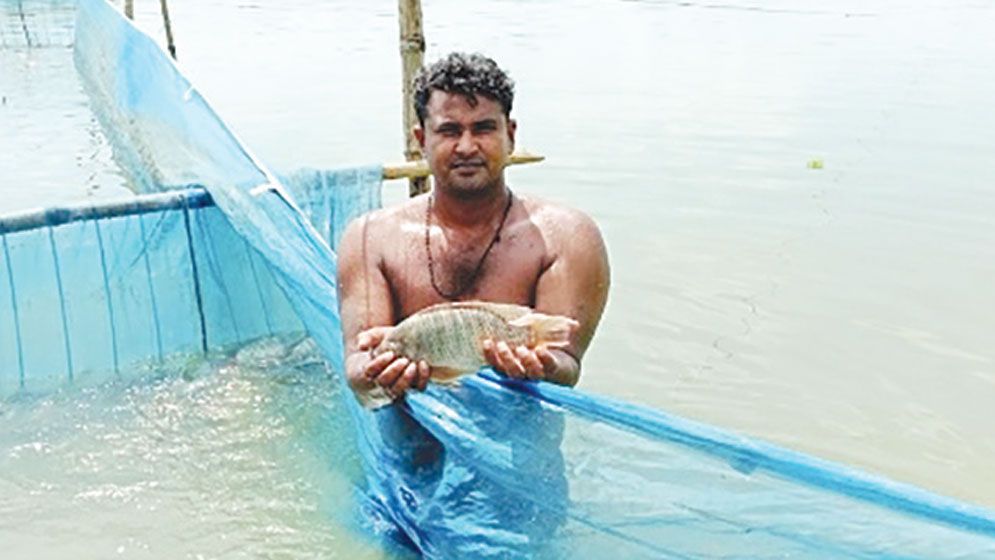
The waterlogged Bhabadah and Kapotaksha basin areas, once a major source of suffering for people in Manirampur upazila of Jashore, have now emerged as a hub of fish production, creating employment opportunities and boosting the local economy. Farmers are using rivers, canals, ponds and fish enclosures across the upazila, including the Bhabadah area, to cultivate various species of fish. Annual production is more than four times the local demand, enabling farmers to supply a large surplus to markets in different parts of the country.
According to the upazila Fisheries Department, Manirampur has three rivers, 12 canals, 13 beels, five haors, around 5,000 ponds and nearly 11,000 fish enclosures across an area of about 446 square kilometres.
Around 39,000 tonnes of fish are produced annually from nearly 16,000 hectares of water bodies, while the upazila’s annual demand stands at about 9,142 tonnes.
Farmers cultivate various species, including pabda, shing, magur, tengra, tilapia, pangas, rui, katla, mrigel, grass carp, common carp and lobster. A large section of the agriculture-dependent population is now directly or indirectly involved in fisheries, creating employment opportunities and improving household incomes. Successful fish farmer Abdul Halim said the water of Bhabadah, once considered a curse, had now become a source of livelihood. “We are now using the water to cultivate fish, support our families and create employment. With proper training and technical support, fish farming in Manirampur can expand further,” he said.
Upazila Senior Fisheries Officer Selim Reza said fisheries had developed into a promising industry in the area.
“The Fisheries Department is working to promote modern technologies, provide training and technical assistance, ensure safe fish production and help farmers secure fair prices,” he said. Upazila Executive Officer Md Samrat Hossain said the fisheries sector had significant potential to generate self-employment and strengthen the local economy.
Fisherman and farmer Sameer Halder said regular training, technical advice and support from the Fisheries Department, combined with farmers’ experience and interest, had contributed to sustained growth in fish production.
As a result, the water that once caused prolonged hardship in Manirampur has now become an important source of livelihood and economic opportunity for many residents.