


 For all latest news, follow the Daily Sun's Google News channel.


Providing strong dynamism for world economic growth, economic globalisation is an unstoppable and overwhelming historical trend that promotes the flow of goods and capital, progress of science and technology and civilisation, and exchanges among nations. As an important dimension to economic globalisation, industrial cooperation is a key pathway to continuous global economic recovery and common development shared by all. In recent years, international economic and trade landscape has gone through profound shifts, with global industrial and supply chains reshaping quickly. Some countries have politicised economic and trade issues. Hyping the so-called excess capacity of China, they accuse the country of flooding the world market with Chinese capacity and have used this as an excuse to ramp up restrictions on China. It has been China’s belief all along that the capacity issue requires a rounded, objective and just approach that combines historical perspective with dialectics to address contradictions and differences together in the spirit of openness, cooperation, mutual benefit and win-win outcome.
Global Capacity and the So-Called Excess Capacity Should Be Viewed in a Rounded and Objective Manner
The evolving global capacity landscape is the result of international industrial labour division and cooperation. Since the first industrial revolution, continuously improving productivity and deepening economic globalisation have accelerated the flow of various factors of production worldwide. As global centres of production and demand shift among countries and regions, industrial capacity also moves from country to country and region to region. This has formed three regional manufacturing centres in North America, Europe and East Asia, with their manufacturing value-added, respectively, accounting for 17%, 17% and 38% of the global total. It is by actively integrating into economic globalisation and taking part in international labour division that China has become “the workshop of the world” and a key component of the global manufacturing network. Excess capacity is a dynamic phenomenon in the market economy and is by no means unique to China. Capacity supply and demand in the world economy goes through the dynamic cycle of “balance-imbalance-rebalance”, without lasting capacity balance. There is no definition of excess capacity in the World Trade Organization (WTO) agreements. According to the International Monetary Fund (IMF), excess capacity is a complex concept which should be approached from the perspective of macroeconomic scenarios. There are no universally applicable standards for determining excess capacity. Some economies attempt to impose on others various criteria they have invented for defining the so-called excess capacity in a simplistic, mechanical or blanket fashion to serve their specific geopolitical and protectionist ends. These so-called concepts and criteria do not hold water, as they are inconsistent with the laws of development and the actual conditions of countries.
China’s Industrial Competitiveness Is Driven by Innovation, Not Trade Surpluses
The rapid growth of China’s modern industries is driven by innovation. During the 14th Five-Year Plan period, the total R&D expenditure nationwide grew by an average of 10% annually, making China the world’s second-largest R&D spender. In 2025, basic research accounted for more than 7% of total R&D expenditure, setting a new historical record for China. Domestic new energy vehicle manufacturers have carried out consistent investment in R&D and industrial layout for over two decades, cultivating a unique technological edge. Since 2018, the energy density of power batteries has risen by more than 50%, while production costs have fallen by over 60%. China supports enterprises in adopting digital and smart technologies to drive industrial optimisation and upgrading and promoting higher-end, smarter and greener industries. Of all industrial enterprises above the designated size, 89.6% have launched digital transformation and 57.7% have installed digital equipment.
Large exports or trade surpluses are not synonymous with excess capacity. The global history of economic development suggests that manufacturing powerhouses like the UK, the US, Japan and Germany all recorded trade surpluses for a long time. The exports of emerging markets also grow fast, making Indonesia and Mexico countries with surpluses and enabling Brazil and Vietnam to run trade surpluses for ten years in a row. As a result of the global division of labour and supply and demand pattern, trade surplus does not mean excess capacity. Meanwhile, China actively promotes the balanced development of import and export. As the primary export destination for nearly 80 countries, China’s scale of import has ranked second in the world for 17 years in a row. China has extended zero-tariff treatment to 63 countries. During the 14th Five-Year Plan period, China’s total imports exceeded RMB90 trillion, ample proof that China is not only “the world’s workshop" but also “the world’s market”.
China’s Commitment to Building a Modern Industrial System through Opening Up and Cooperation
China’s industrial modernisation is “China opportunity 2.0” to the world, not “China shock 2.0”. For more than a decade, China has contributed around 30% of the global growth, making it a critical engine driving the world economy. According to a report from the International Renewable Energy Agency (IRENA), over the past decade, the average cost per kilowatt-hour of global wind projects has decreased by more than 60%, and PV power projects by more than 80%. The reductions are largely attributable to China’s innovation, manufacturing and production capacity. China’s exports have made manufacturing more accessible for developing countries. From 2012 to 2024, the value of China’s exports of textile machinery to developing countries exceeded USD 30 billion, helping developing countries, including Bangladesh, become major textile manufacturers and exporters. China’s investment has enhanced developing countries’ industrial production capabilities. More than 50,000 Chinese businesses have been established overseas, and China’s outbound investment has exceeded USD 3 trillion, with nearly 90% in developing economies. This has helped many developing countries move from the margins of supply chains to serve as key nodes in the global manufacturing network.
Economies make progress through exchange and interconnectivity and fall behind because of seclusion and closeness. China cannot develop in isolation from the rest of the world, nor can the world as a whole maintain prosperity without China. China stands ready to work with all parties, including Bangladesh, to safeguard the global free trade system, the stability and smooth functioning of global industrial and supply chains, and an open and cooperative global environment so as to make the global economy more sustainable and universally beneficial, promote common prosperity for the world, and ensure that development outcomes benefit all peoples.
_____________________________________
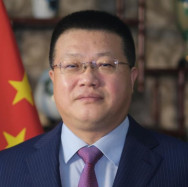
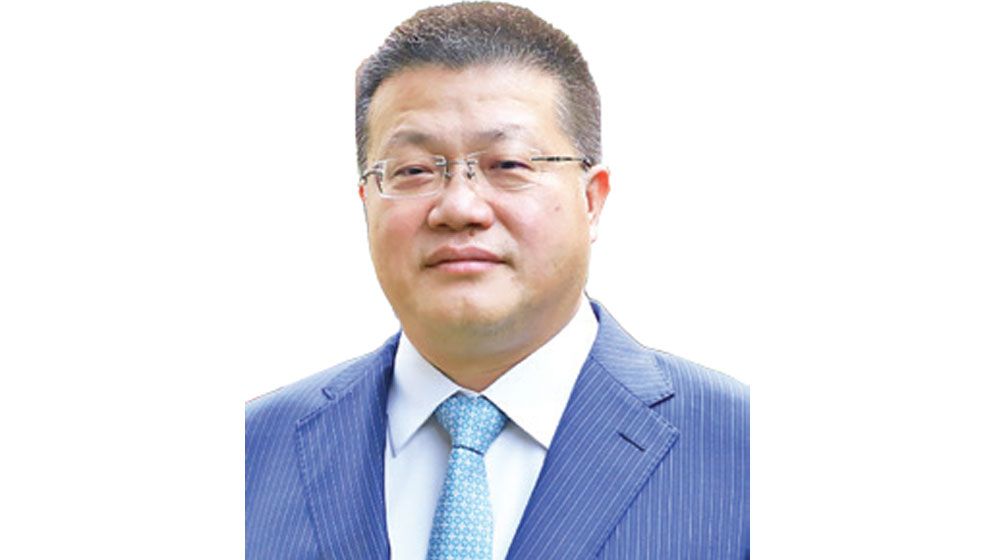
The writer Ambassador of China to Bangladesh