


 For all latest news, follow the Daily Sun's Google News channel.


Interview
‘Bangladesh on path from fragility to prosperity’
Mousumi Islam, and Ariful Islam
Published: 21 Aug 2026, 12:00 AM
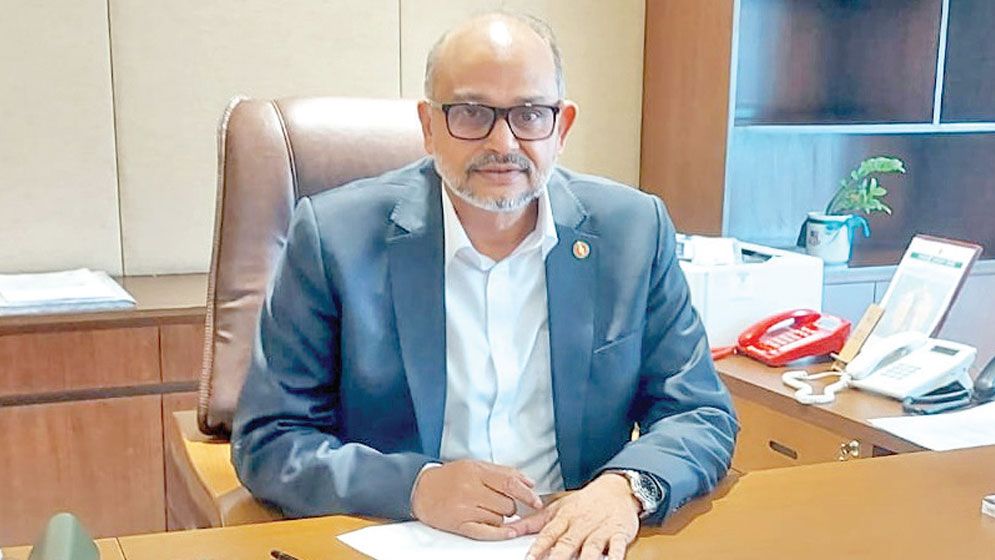
Bangladesh is moving towards economic recovery after inheriting a fragile economy, weak institutions and rising poverty, Prime Minister’s Adviser on Finance and Planning Dr Rashed Al Mahmud Titumir has said. In an exclusive interview with Mousumi Islam and Ariful Islam of the Daily Sun, Titumir said the government’s immediate priority is to restore macroeconomic stability and public confidence while laying the foundations for medium-term growth. He said the government is also working on revenue reform, investment, energy security, banking discipline and a new social protection framework.
daily sun: What were the biggest challenges the government inherited?
Titumir: We inherited a cumulative crisis. The economy was fragile, society was under pressure, institutions were weak and poverty was increasing. Our first task, therefore, was to restore confidence and lay the foundation for economic recovery.
We needed to address poverty immediately while maintaining macroeconomic stability and preparing a medium-term development strategy.
daily sun: What measures have been taken to support vulnerable people?
Titumir: We have taken measures such as debt relief for farmers, benefiting a large number of farmers and involving around Tk1,430 crore.
We are also implementing the Family Card programme. Even under a conservative assessment, it could reduce poverty by around 5%. Our objective is to create a more effective and targeted social protection system.
daily sun: How do you assess the current state of macroeconomic stability?
Titumir: Several indicators are important. Our foreign exchange reserves are now at a comfortable level, while the exchange rate is moving towards greater stability and has shown signs of appreciation.
At the same time, we face a significant debt-servicing burden. That makes revenue mobilisation and debt management extremely important.
We need to gradually increase development spending, reduce unnecessary operational expenditure and improve the overall composition of government spending.
daily sun: Revenue mobilisation remains a major challenge. What is the government’s strategy?
Titumir: Our strategy is not simply to increase tax rates. We want to expand the tax base, reduce harassment and prevent tax evasion, fraud and avoidance.
The income tax, VAT and customs systems are being digitised. We are also rationalising tax rates and expanding the tax base.
The results are already visible. Revenue growth was around 2% last year, while between mid-February and 30 June this year, growth reached around 12%.
daily sun: How will you encourage private investment?
Titumir: Investors need predictability, access to finance, energy security, deregulation and seamless connectivity.
First, we are ensuring policy continuity. Under the budget framework, we are providing greater predictability in tax rates so investors can plan over several years.
Second, we are reducing bureaucratic delays. A committee has been formed to bring different stages of the approval process within specific time limits, while investors will be able to track their applications.
Third, financing is being made available, including through refinancing schemes, so businesses can access credit at more affordable rates.
daily sun: Energy shortages remain a major concern. What is the government’s plan?
Titumir: Energy security is one of our biggest priorities. We inherited an import-dependent energy system without adequate strategic reserves.
Our approach has three stages. First, we want to stabilise the existing power and gas situation as quickly as possible. Second, we must prepare for higher summer demand. Third, we want sufficient energy supplies for an economy growing at around 8% by the third quarter of 2029.
We are assessing requirements for oil, coal, LNG and LPG and want clear benchmarks for strategic reserves. Our target is reserves equivalent to around three months, or one quarter.
daily sun: What is the government’s vision for investment and industrialisation?
Titumir: We want to transform Bangladesh into a manufacturing hub and regional gateway. This requires predictable policies, finance, energy security, deregulation and seamless connectivity.
We are already seeing interest from Chinese, Korean, European, Middle Eastern and ASEAN investors. Chattogram, Mongla and other economic zones can play an important role in creating this regional gateway.
daily sun: What changes are planned in the social security system?
Titumir: We are moving towards universal, life-cycle-based social protection, covering people from childhood to old age.
The existing system had three major weaknesses: some people who should not have been included were included; some deserving people were excluded; and the selection process was not sufficiently scientific.
We are using BBS data and proxy means testing to make the system more evidence-based. We also want to move towards a One Card, One Citizen, One Digital World framework and develop a system suited to Bangladesh.
daily sun: What is your assessment of banking sector reforms and the IMF programme?
Titumir: The IMF recommendations are broadly consistent with reforms we had already identified. We need discipline in the banking system, recapitalisation where necessary and a reduction in non-performing loans.
Financial sector discipline takes time. But as private investment and credit growth recover, the overall ratios will also improve.
On revenue, the key issue is not simply collecting more taxes. Citizens need to know where their taxes are being spent. Greater accountability will encourage compliance.
daily sun: When can people expect to see the benefits of the government’s economic reforms?
Titumir: We have inherited a fragile economy, so there has to be a recovery period before transformation and reconstruction.
The first two years will be the recovery period, followed by a three-year transition period. Within five years, our objective is to rebuild the economy with greater momentum.
Our broader vision is to move Bangladesh from fragility to prosperity and build a democratic, humane and welfare-oriented state.
daily sun: The government is considering changing the fiscal year. How could this affect economic management?
Titumir: The government has given in-principle approval to shift the fiscal year from July-June to April-March. A committee will examine the constitutional and administrative changes required.
The first transition year would be nine months, followed by a full 12-month fiscal year.
This would allow the government to organise institutional and administrative activities more effectively around the country’s seasonal cycle. It could also improve project implementation because three full quarters would be available for implementation before the monsoon.
Improved implementation of the Annual Development Programme would ultimately contribute to higher GDP growth because public expenditure is an important component of economic activity.
daily sun: Finally, what is your message to investors and citizens?
Titumir: Our message is clear: Bangladesh is moving towards stability, predictability and investment-led growth.
We want to create an economy where investors have confidence, citizens receive better services and economic growth translates into greater welfare.
The objective is not simply to recover from the crisis but to build a stronger Bangladesh capable of moving from fragility to prosperity.