



 For all latest news, follow the Daily Sun's Google News channel.


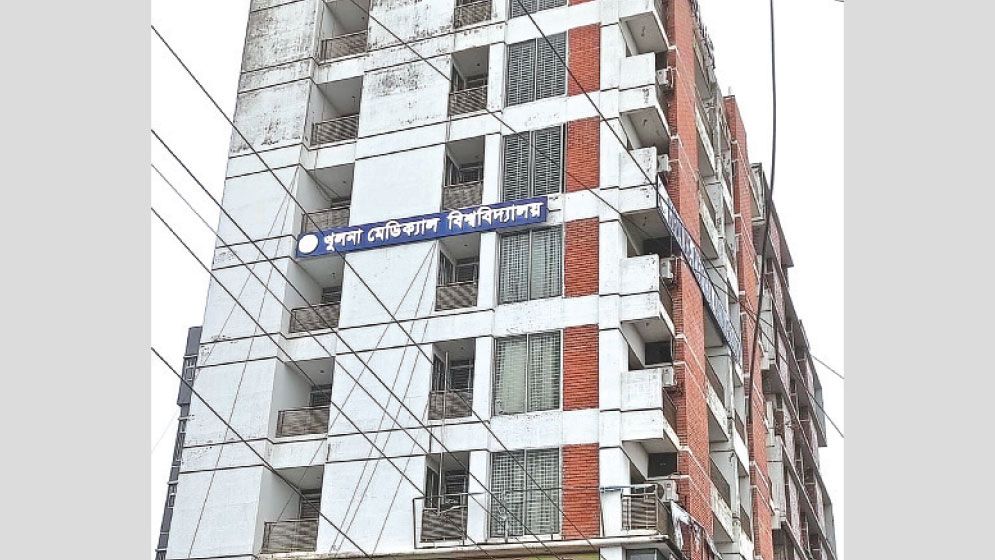
Academic activities of Khulna Medical University (KMU) are set to begin five years after its establishment, as the Khulna Specialized Hospital has been approved as a temporary campus for its medical education, research and administrative activities.
Established in 2021, KMU has so far operated its administrative activities from a rented building in Khulna city’s Nirala area as it has no permanent campus. Around 36 officers and employees are currently working there.
Vice-Chancellor Prof Dr Rafiqus Salehin said admission to the university’s master’s programmes is expected to begin in January 2027 after necessary preparations are completed.
The Health Services Division of the Ministry of Health and Family Welfare issued a government order on 12 August approving the use of Khulna Specialized Hospital as the university’s campus. The order was signed by Joint Secretary Dr Mohammad Mostafizur Rahman.
The university could not launch full-fledged postgraduate education and research activities due to the lack of a designated campus. Prof Salehin, who was recently appointed vice-chancellor, said approval to use the specialised hospital was a major achievement. He said a sufficient number of professors and associate professors were already posted or deputed at the hospital. Additional teachers would be appointed if necessary, he added.
Khulna Specialized Hospital provides advanced treatment for heart, kidney, cancer and neurological diseases. However, patients often face difficulties due to limited beds and inadequate allocations, with ICU and CCU patients frequently having to wait for beds. Delays in diagnostic tests are also common. Officials and stakeholders hope the university’s activities will help expand specialised healthcare and medical research and improve access to advanced treatment for people in the southern region.
Meanwhile, land acquisition is underway for the first phase of KMU’s permanent campus. Under a three-phase master plan, the proposed campus will include a 1,000-bed hospital, academic and administrative facilities, residential accommodation for doctors and employees, a dedicated cancer treatment unit and preventive healthcare facilities. Khulna-3 lawmaker Rakibul Islam said the university would eventually move to its permanent campus, but that process would take time. “Instead of delaying academic activities, we are going to start them at Khulna Specialized Hospital,” he said, adding that the move would help transform healthcare services in the region. Bakul said an independent robotic surgery unit would be established at the hospital, while plans were also underway to introduce open-heart surgery, stent placement, dialysis and affordable cancer treatment for low-income patients.