


 For all latest news, follow the Daily Sun's Google News channel.


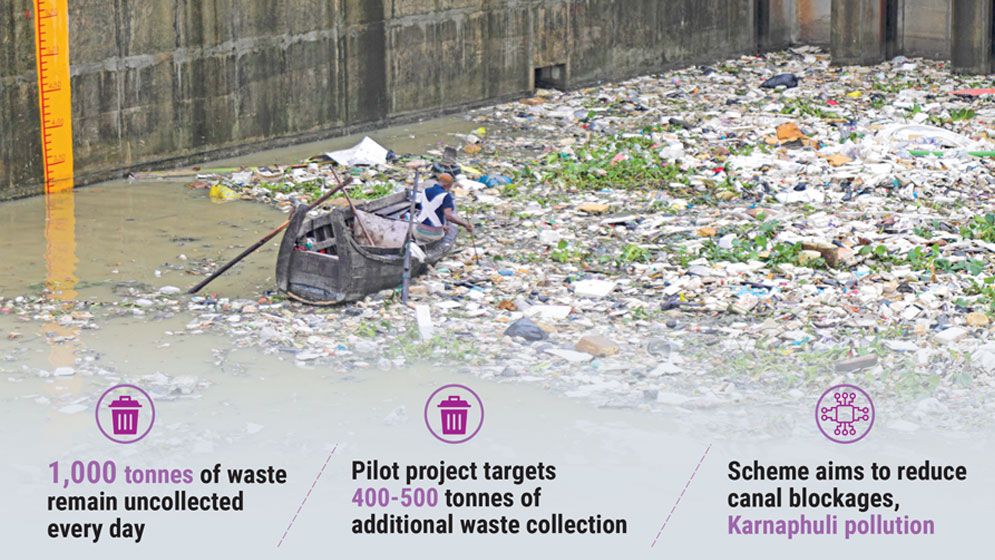
Chattogram City Corporation (CCC) is set to launch free door-to-door waste collection services in 25 wards in a bid to reduce chronic waterlogging and protect the environment and the River Karnaphuli from pollution.
The initiative will be implemented as a pilot project through the engagement of private firms as part of efforts to transform Chattogram into a clean, healthy and environmentally friendly city.
City Mayor Dr Shahadat Hossain said private firms would be appointed in the 25 wards located near canals, where waste management remains inadequate.
"The firms will collect waste door-to-door. After appointing them, the existing conservancy workers will be redeployed to the remaining wards to strengthen waste management services across the city," the mayor said.
He said nearly 1,000 tonnes of waste remain uncollected in the city every day.
Many residents dispose of garbage indiscriminately, making it one of the main causes of clogged drains, waterlogging and pollution in the River Karnaphuli, Dr Shahadat said.
"The free waste collection programme will cost around Tk15 crore to Tk20 crore annually, but it will provide long-term benefits for city residents," he said.
"If we can collect an additional 400-500 tonnes of waste, it will create opportunities to establish waste-to-energy and biogas projects in the future," he added.
CCC Chief Conservancy Officer Captain Ikhtiar Uddin Ahmed Chowdhury said residents generate around 3,200 tonnes of waste every day, while the existing waste management system enables the corporation to collect around 2,200 tonnes.
"We have already selected the 25 wards, and preparations for the pilot project are underway," he said. Experts say uncollected waste, particularly plastic, blocks the natural flow of water through canals, contributing significantly to waterlogging. Much of the waste eventually reaches the River Karnaphuli, causing severe water pollution.
According to a study conducted last year, the more than five million residents of Chattogram generate around 257,913 tonnes of plastic waste annually, of which nearly 70,833 tonnes, or 27%, remain unmanaged.
The unmanaged waste ultimately finds its way into rivers and the Bay of Bengal, posing a serious threat to marine biodiversity and human health while exacerbating the city's long-standing waterlogging problem.
Plastic waste in rivers and on the seabed gradually breaks down into microplastics, which enter the food chain through fish, increasing the risk of cancer, hormonal disorders, infertility and other health complications.
The findings were revealed by a multidisciplinary research team comprising eight professors and a group of research students from the Institute of Marine Sciences and the Departments of Economics and Marketing at the University of Chittagong.
The study, titled “Community-based Reduction of Plastic Pollution: Case of Circular Economy and Biodegradable Products in Bangladesh”, was conducted under the “Plastic Free Rivers and Seas for South Asia (PLEASE)” project, supervised by the United Nations Office for Project Services (UNOPS) and the South Asia Cooperative Environment Programme (SACEP).
According to the study, of the 257,913 tonnes of plastic waste generated annually across CCC's 41 wards, around 73%, or 187,079 tonnes, is collected and recycled by more than 20,500 workers and entrepreneurs.
The remaining 70,833 tonnes, due to inadequate waste management, clog drains, canals and other water bodies, worsening the city's persistent waterlogging before eventually ending up in rivers and the sea.
The researchers also found that the Chittagong Port Authority had identified layers of polythene and plastic waste, measuring between two and seven metres thick, accumulated on riverbeds, complicating dredging operations.