



 For all latest news, follow the Daily Sun's Google News channel.


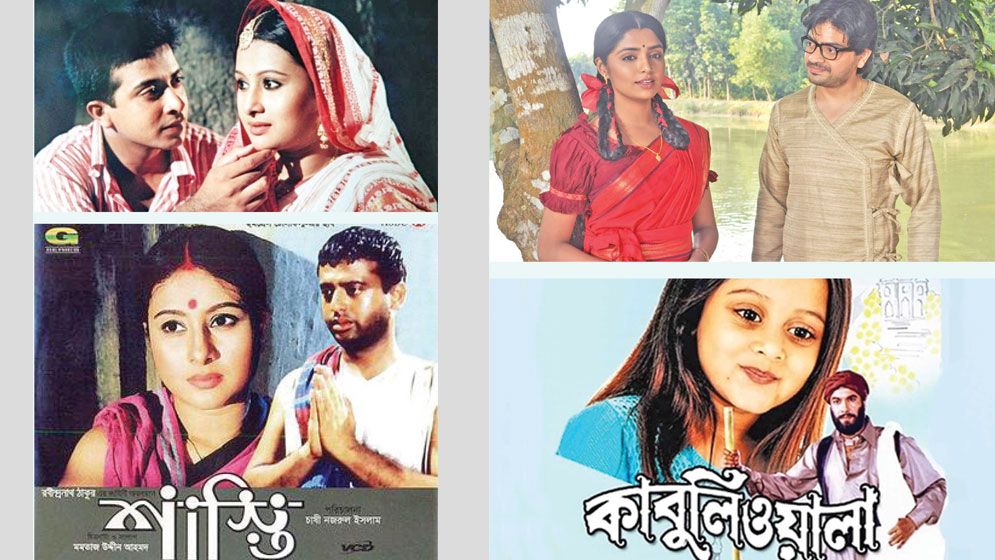
While Indian cinema has produced numerous adaptations of Rabindranath Tagore’s novels and short stories, Bangladesh has also made a significant contribution by bringing several of his timeless works to the silver screen. These films have not only preserved the essence of Tagore’s narratives but have also introduced his humanist ideals and social commentary to newer generations of audiences.
Shasti
Among the most acclaimed adaptations is “Shasti” (2004), directed by Chashi Nazrul Islam and based on Tagore’s 1893 short story “Shasti” (Punishment). The film stars Riaz, Purnima, Ilias Kanchan and Champa. Remaining faithful to the original story, it explores themes of injustice, poverty, sacrifice and patriarchal oppression in rural Bengal. The film received widespread critical appreciation for its powerful performances and sensitive direction.
In addition, Bangladeshi filmmaker Leesa Gazi is set to helm another adaptation of “Shasti” with an international production lineup. The upcoming film stars Pori Moni, Chanchal Chowdhury, Aanon Siddiqua and Arka Das in lead roles. Production is slated to begin in Dhaka in October and November, 2026.
Shuva
Chashi Nazrul Islam returned to Tagore’s works with “Shuva” (2006), adapted from the short story Subha. Featuring Purnima and Shakib Khan in lead roles, the film narrates the poignant story of a mute village girl whose inability to speak becomes a barrier to love and acceptance. The adaptation was praised for its emotional depth and Purnima’s moving portrayal of the title character.
Kabuliwala
Another notable adaptation is “Kabuliwala” (2006), directed by Kazi Hayat. Based on one of Tagore’s best-known stories, the film stars Manna as the Afghan fruit seller and child actress Dighi as the little girl Mini. The story highlights the touching bond between the expatriate trader and a Bengali child while exploring universal themes of fatherhood, separation and humanity. The film remains one of the most memorable screen adaptations of Tagore's work in Bangladesh.
Abujh Bou
In 2010, filmmaker Nargis Akter adapted Tagore’s beloved short story Samapti into “Abujh Bou”. Starring Ferdous, Nipun, Shakil Khan and veteran actress Bobita, the film presents a romantic coming-of-age tale centred on an independent young woman who gradually embraces married life without losing her spirited personality. The adaptation retained the warmth and emotional nuance that characterise Tagore's original narrative.
Hotath Dekha
Another notable adaptation is “Hotath Dekha”, a Bangladesh-India joint production directed by Reshmi Mitra and inspired by Rabindranath Tagore's celebrated poem of the same name. Produced by Bangladesh's Impress Telefilm in collaboration with Indian partners, the film explores themes of love, memory and the passage of time, reflecting the emotional depth of Tagore's poetry. The cast features acclaimed actors Debashree Roy, Ilias Kanchan and Deep Bhattacharya in pivotal roles.
Although the number of Bangladeshi adaptations of Tagore’s works remains limited, these films stand as important milestones in the country's cinematic history. They demonstrate the enduring relevance of Tagore’s writings, whose themes of love, justice, compassion, freedom and human dignity continue to resonate with contemporary audiences.