


 For all latest news, follow the Daily Sun's Google News channel.


Bangladesh once again stands at a turning point in its history. Born out of the Great Liberation War of 1971, this nation has repeatedly had to defend the meaning of its independence: sometimes against external pressure and sometimes against internal authoritarian rule. The 2024 uprising of students and the public, which culminated in Sheikh Hasina’s departure on 5 August, was not merely a change of government; it was a national verdict against fear-based rule, institutional capture and the shrinking of civil liberties. To many, it felt like a declaration that sovereignty is not merely a slogan but finds its true meaning in the dignity of citizens and accountable governance.
A kind of contradiction had been built up over the long years of rule. Alongside infrastructural development and economic growth came allegations of human rights violations, suppression of dissent, politicisation of the administration, and abuse of state machinery. When institutions become partisan tools instead of neutral guardians, public trust erodes, and a culture of fear and silence takes root in society. The 2024 movement was a unified protest precisely that culture. The new generation has made it clear that development without rights is not sustainable, stability without legitimacy is fragile, and power without checks ultimately harms the nation itself. If the current government seeks to diminish, deny or belittle the spirit of the July revolution, that would be a serious political and moral mistake. History bears witness that those who rise to power on the back of the people’s sacrifice and later try to deny that sacrifice do not meet a good end.
The fall of an authoritarian system did not happen overnight. It was the result of long-simmering grievances, repression, political struggle, weakened institutions and the courageous stance of the people. Many leaders and activists were imprisoned, and many went hiding and some into exile. If there is open discussion about elections today and if political parties can return to normal activity, this is no fair. To belittle this achievement or to rehabilitate the previous repressive structure in a new form, would be self-destructive. If partners or beneficiaries of the former authoritarian regime are quietly rehabilitated into administrative, security or policymaking positions, it will send a devastating message to the public that the change was merely a transfer of power, not of character. Once public trust is broken, it is extremely difficult to rebuild.
Another important matter is foreign policy. An excessively “sweetheart” relationship with, or one-sided dependence on, any single state is strategically risky for Bangladesh. An independent nation’s foreign policy should be balanced, multi-directional and grounded in national interest. If the government signals that it is falling unilaterally under the influence of any regional power, this will create suspicion and division within the country. Another major problem is the culture of “our people”. A revolution should never exist merely to replace one partisan patronage network with another. If appointments to important positions are made based on party loyalty rather than merit, competence and professional skill, institutions will weaken rapidly. If justice is compromised for short-term political convenience, the moral foundation will erode quickly.
Another major reality is the new generation. The July movement has made young society politically conscious. They are skilled in information technology, capable of organising quickly, and do not easily tolerate hypocrisy. If they come to believe that their sacrifice is being devalued, discontent will spread rapidly. A prudent government consolidates victory through reform, not through complacency and self-satisfaction. The government therefore needs to ensure: (1) full transparency in the process of transitional justice and reform; (2) a clear break from past repressive practices; (3) merit-based appointments and impartial vetting for important positions; (4) a balanced, sovereignty-based foreign policy; and (5) a firm stance against corruption regardless of party affiliation.
One of the government’s foremost responsibilities should be ensuring the safety and security of those associated with the July Movement. Whatever political opinions may exist, those who played visible roles during a significant national movement should be protected from violence, intimidation, unlawful retaliation or politically motivated attacks. If they become targets of organised violence or fear for their safety, it will send a dangerous message that democratic participation carries unacceptable personal risks. Their security should, therefore, be treated as a matter of national importance, with credible intelligence, preventive measures and impartial law enforcement deployed wherever genuine threats exist. At the same time, every political party must maintain discipline within its own ranks. Party activists and supporters should never take the law into their own hands. No government can build public confidence if unlawful actions by its own supporters are ignored or tolerated. The rule of law must apply equally to everyone, regardless of political affiliation. Those who engage in violence, intimidation, extortion or other criminal acts should face appropriate legal action based on evidence.
History is not linear. Democratic backsliding often begins quietly, through compromises wrapped in reasoning, opportunism and a gradual erosion of memory. The July uprising was a demand for dignity, accountability and sovereignty. To diminish it is to weaken not just the government, but the state itself. Alongside this political change, the question of India-Bangladesh relations resurfaces. The realities of history, geography and economics bind the two countries in a relationship of cooperation. India’s role in 1971 cannot be denied. But over time, a perception has taken hold among the public that the relationship is not balanced. Various agreements on transit, security cooperation, trade and border matters have seemed one-sided to many; meanwhile, sensitive issues like water-sharing have remained unresolved for a long time. When democratic space shrinks, foreign policy becomes an object of suspicion rather than public support. Bangladesh has seen this experience firsthand.
As a result, anti-India sentiment has emerged not merely as an emotion, but as a political message on the question of sovereignty. In this reality, with a BNP government potentially ahead, public expectations are clear: foreign policy must be centred on a “Bangladesh First” principle. But this principle does not mean hostility; rather, it is a strategic outlook of dignity, balance and safeguarding of interests.
Firstly, the republic must be rebuilt from within. To raise a confident voice on the international stage, internal legitimacy is essential. Free and fair elections, neutral administration, independent judiciary and freedom of expression are not merely democratic ideals, but the foundation of state strength. The public’s expectation now is that no undeclared power centre or individual-dependent decision-making process should ever again dominate the state’s policymaking.
Secondly, the relationship with India must be redefined based on equality. “Bangladesh First” does not mean “India last”; rather, it means examining every agreement and understanding considering national interest. Fairness in trade, protection of industrial sectors, transparent terms for transit, dignity in border management and reciprocity in security cooperation-firm positions are needed on all these questions. The public has long waited for the establishment of a scientific and binding framework for water-sharing, particularly on the Teesta issue.
Thirdly, diplomatic and economic partnerships must be diversified. Building balanced relations with South and Southeast Asia, the Gulf region, Turkey, the European Union, the United States, Japan and China will increase Bangladesh’s strategic capacity. Diversification does not mean taking a stand against anyone; rather, it means being free from excessive dependence on any one party.
Fourthly, the policy of non-alignment must be adapted to modern realities. In an age of information warfare, economic pressure and geopolitical competition, professional diplomatic skill, strategic communication and well-coordinated policymaking are essential. Only a strong foreign service and a constitutionally accountable security framework can carry the state forward with self-respect.
Fifthly, ensuring internal harmony and the security of minorities is part of the strategic interest. An inclusive state weakens external pressure and pretexts. Protecting the equal dignity of all citizens is not merely a moral duty; it is the foundation of national unity.
Sixthly, economic self-reliance must be strengthened. Strengthening the productive sector, expanding export markets, energy security and youth employment – all of these give foreign policy a solid foundation. It is undeniable that economic weakness turns into diplomatic weakness.
Bangladesh’s history teaches us that when power is unaccountable, sovereignty weakens. Authoritarianism weakens not only human rights but also the state’s diplomatic strength. The 2024 movement was both a warning and a pledge that the ultimate owner of power is the people. If the newly-elected BNP government accepts this message as its mandate, it must prove that “Bangladesh First” is not merely a slogan, but a policy commitment. The public’s expectation is clear: neither internal authoritarianism nor external dependence; what is wanted is dignified diplomacy, accountable governance and the protection of sovereign national interest. Prioritising citizens’ votes, rights and future is what true “Bangladesh First” means. Standing on this foundation, the post-2024 chapter can truly become a new dawn of a self-respecting, democratic and resolute Bangladesh, standing tall on the world stage because it has first strengthened its own house.
________________________________________
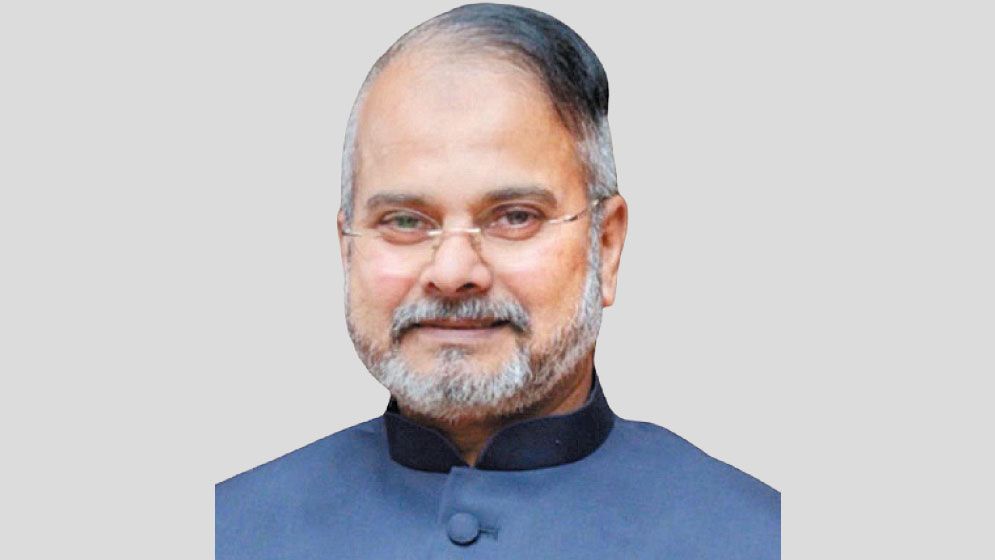
The writer is a former Major General, military diplomat, security and political analyst, researcher and author. He can be reached at [email protected]