


 For all latest news, follow the Daily Sun's Google News channel.


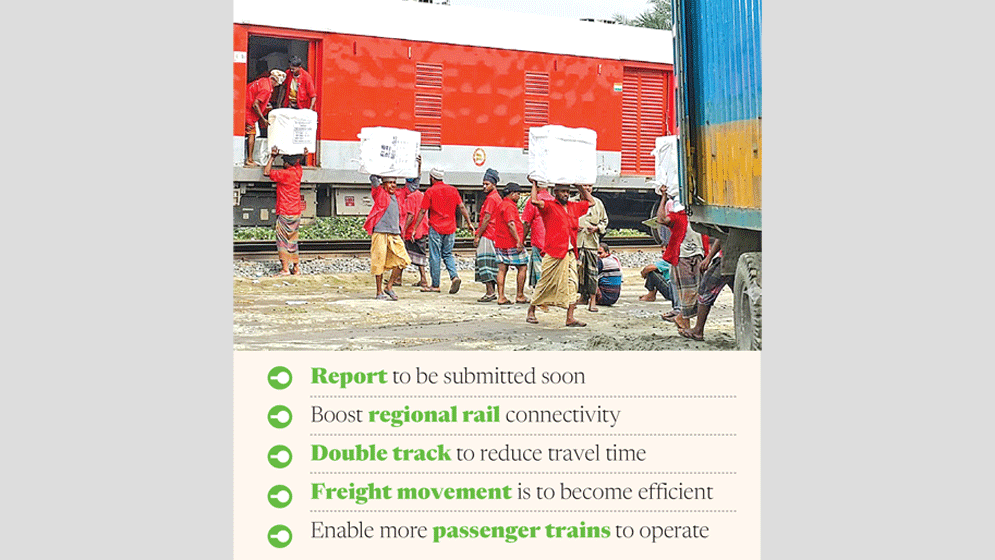
The feasibility study for the proposed double-tracking of the 38-kilometre Jashore–Benapole railway line is in its final stage, with the report expected to be submitted soon, paving the way for implementation of the project.
Once completed, the project is expected to significantly improve passenger transport, facilitate cross-border trade through the Benapole land port, and strengthen Bangladesh’s regional rail connectivity with India, Nepal and Bhutan.
A top-level Bangladesh Railway team recently inspected Jashore Junction, Benapole Railway Station and the existing rail infrastructure as part of the ongoing feasibility assessment, said Jashore Railway Junction Station Master Saiduzzaman.
The feasibility study, launched in 2024, is expected to be completed within the next six months. The final report will include recommendations on engineering design, land acquisition, resettlement and project financing.
Former Bangladesh Railway Additional Director General (Operations) Habibur Rahman, a member of the feasibility study team, said the project would play a vital role in expanding passenger and freight transport through Benapole.
“The feasibility study is now at its final stage, and we hope to submit the report to the government as soon as possible,” he said.
Railway officials said the proposed double track would eliminate the need for trains to wait at stations for oncoming traffic, reducing travel time on the Dhaka–Jashore–Benapole route.
The additional track will also allow Bangladesh Railway to operate more passenger services from Dhaka, Khulna, Chattogram and the northern districts to Benapole, easing the long-standing shortage of train tickets for international passengers travelling through the land port.
Officials said the project would also increase freight capacity at Benapole by allowing cargo trains to move in and out more efficiently, reducing delays and demurrage costs.
The Jashore–Benapole route is part of the Trans-Asian Railway Network, and the project is expected to boost regional trade and connectivity. Following the opening of the Padma Bridge rail link, passenger demand on the Dhaka–Jashore corridor has increased significantly, making the double-tracking project a priority under Bangladesh Railway’s Connectivity Improvement Preparatory Facility.
According to project sources, the new track will largely be constructed within Bangladesh Railway’s existing land corridor, limiting the need for fresh land acquisition.
However, private land will be required at some station yards and curve sections to facilitate higher train speeds.
A major component of the project will be the construction of a new broad-gauge railway bridge parallel to the existing bridge over the Kopotakkho River at Jhikargacha. The design will ensure that river navigation remains unaffected.
The project will also require the removal of illegal structures built on railway land around Jhikargacha station and nearby market areas. Bangladesh Railway is preparing a resettlement plan and compensation package for affected landowners and residents.