


 For all latest news, follow the Daily Sun's Google News channel.


Guiding the Steed with Reins, Governing AI with Rules
How China Keeps Artificial Intelligence on a Steady and Sustained Course

Nowadays, a new round of scientific and technological revolution, represented by artificial intelligence (AI), is profoundly reshaping the course of human civilisation. AI is like a fine steed that has just begun to gallop. It has shown astonishing speed and potential, but also carries the risk of running loose if left unchecked. How to promote rapid technological progress while keeping the right direction, maintaining a proper pace and ensuring safety is a question that every country must answer with care. In practice, China has explored a path that places equal emphasis on AI’s development and governance, and promotes synergy between innovation and regulation. China stands ready to share its experience and work with Bangladesh and other Global South countries to seek sound solutions together.
A Galloping Steed: Unprecedented Opportunities and Challenges That Must Not Be Overlooked
Artificial intelligence is advancing at remarkable speed. It has long moved beyond the laboratory and is now deeply integrated into all aspects of production and daily life. In China, the scale of the core AI industry has exceeded RMB 1 trillion, or around US$139 billion. The number of AI enterprises has surpassed 6,200, and the scale of intelligent computing power has reached 2,185EFLOPS(FP16). Among industrial enterprises above designated size, one in every three has applied AI technology. China is home to more than 140 humanoid robot manufacturers, and domestically developed open-source large models have recorded over 10 billion downloads worldwide. Like a powerful engine, AI is accelerating transformation across manufacturing, services, agriculture and many other fields.
If AI is compared to a car that is speeding up, it is now at a critical stage of climbing slopes, overcoming obstacles and shifting into a higher gear. On the one hand, rapid technological upgrading and wide-ranging application have injected strong momentum into economic growth and social progress. On the other hand, algorithmic bias may undermine fairness and justice; information cocoons may narrow people’s horizons; and data misuse may directly threaten personal privacy and security. More seriously, without necessary guidance and constraints, existing development gaps may widen further, and some countries may be left behind in the fast lane of the intelligent era. As President Xi Jinping pointed out at the opening ceremony of the 2026 World Artificial Intelligence Conference, it is important to “make sure that AI is safe, secure and controllable, and that this fine steed of AI gallops with both speed and stability.” This important statement points the way for technological development and makes clear that governance must keep pace. Speed matters for a fast-moving car, but the steering wheel, brakes and bumper are equally indispensable. This is precisely the role that a governance system is meant to play.
The Steering Wheel on the Road Ahead: Development Requires Speed, and Security Must Be the Bottom Line
For AI to run fast, it needs independent innovation, industrial synergy and real-world application scenarios. China has vigorously advanced the “AI Plus” initiative and promoted the deep integration of AI with the real economy. In the photovoltaic industry, leading enterprises have introduced AI into the screen-printing process. By intelligently adjusting printer parameters to optimise the quality of silver paste lines, a single production line can save 1.5 milligrams of silver paste, and a 15GW annual production base can cut costs by more than RMB 45 million a year(about US$6.26 million). In home furnishing manufacturing, smart factories rely on a full-chain digital system. Intelligent production scheduling systems can automatically work backward from product production cycles to determine start times, while data from sorting, quality inspection and warehousing are linked in real time. As a result, overall costs have been reduced by 15 per cent, and production efficiency has increased by 30 per cent. In pharmaceutical sorting, embodied-intelligence production lines have enabled industrial robots of different brands to “team up” across systems. Five robots from different manufacturers are connected through one intelligent platform, allowing task flows to be freely disassembled like building blocks. They can identify adaptively and learn autonomously for production changeovers. In the past, adjusting a production line took two to three days; now, half an hour of training is enough. These vivid examples show that only by mastering key and core technologies and expanding application scenarios can technological potential be truly translated into development momentum.
Yet speed alone is not enough. A sound “control system” is also needed to ensure a smooth and steady journey. For AI to run steadily, the key is to uphold a people-centred approach and ensure that AI is developed for good. The requirements of improving human well-being, upholding fairness and justice, and protecting security and rights must be embedded in every stage of technology research and development, model training, deployment and application, as well as supervision and management. China has already put in place a multi-tiered legal and regulatory framework, including the Provisions on the Administration of Algorithmic Recommendations, the Interim Measures for the Management of Generative Artificial Intelligence Services, the Interim Measures for the Management of AI-Generated Synthetic Content and Anthropomorphic Interactive Services, and the newly revised Cybersecurity Law. China is also promoting tiered and category-based regulation and improving mechanisms for risk assessment and emergency response. Clear and stable rules are like traffic lines and signal lights on the road. They define the boundaries of conduct and provide innovators with a predictable environment. The better development and security are coordinated, the broader the space for innovation will be, and the stronger the foundation for technological progress will become.
Good Partners on the Journey: China and Bangladesh Share Similar Visions and Enjoy Broad Prospects for Cooperation
AI governance is not a matter for any single country; it is a global issue. At present, the global intelligence divide still exists. Many developing countries face clear constraints in computing power, data and talent. Attempts to erect technological barriers and politicise scientific and technological cooperation will only widen the gap and increase risks. China has always believed that AI should become an international public good that benefits all humanity, not an exclusive privilege enjoyed by a handful of countries. China actively advocates a fair and equitable global AI governance system. It has promoted the adoption by consensus of a U.N. General Assembly resolution on strengthening international cooperation on AI capacity building, released the Action Plan for Inclusive AI Capacity Building and the Initiative on International Cooperation in “AI Plus,” and proposed the establishment of the World Artificial Intelligence Cooperation Organization. To date, 29 countries have become its founding members.
Bangladesh’s exploration of AI governance is highly compatible with China’s vision. During Prime Minister Tarique Rahman’s visit to China in June 2026, the two countries issued a joint communiqué, in which the two sides agreed to strengthen cooperation in scientific and technological innovation, information and communications, and other fields. Not long ago, Fakir Mahbub Anam, Bangladesh’s Minister for Posts, Telecommunications and Information Technology, and Minister of Science and Technology addressed the 2026 World Artificial Intelligence Conference and High-Level Meeting on Global AI Governance. He stated that, under the leadership of Prime Minister Tarique Rahman, Bangladesh is committed to building an AI governance system based on human rights, ethics and inclusive development, and is actively formulating and advancing its national AI policy. Minister Anam also put forward four priorities for global AI governance: safety, equity, adaptability and international cooperation. He stressed that the future of AI should not be measured by technological progress alone, but must also reflect human values, justice and inclusiveness. These propositions are highly consistent with China’s long-standing commitment to a people-centred approach and AI for good. The two sides enjoy broad space for cooperation in governance philosophy, institutional design and capacity building.
China has announced that it will provide 5,000 AI-themed training opportunities for developing countries over the next five years, helping more countries train AI governance professionals and technical experts. At the same time, international cooperation centres for AI application, oriented toward ASEAN, the League of Arab States, the African Union, the Community of Latin American and Caribbean States, the Shanghai Cooperation Organization and BRICS countries, are being developed at a faster pace. These centres will provide institutionalised platforms for Global South countries to participate in the alignment of governance rules, technology transfer and experience sharing. China stands ready to walk hand in hand with Bangladesh to seize opportunities, meet challenges and ensure that the dividends of the intelligent era benefit all countries and peoples aspiring for development.
____________________________
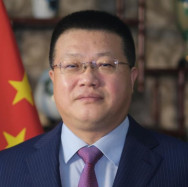
The writer is the Ambassador of China to Bangladesh